

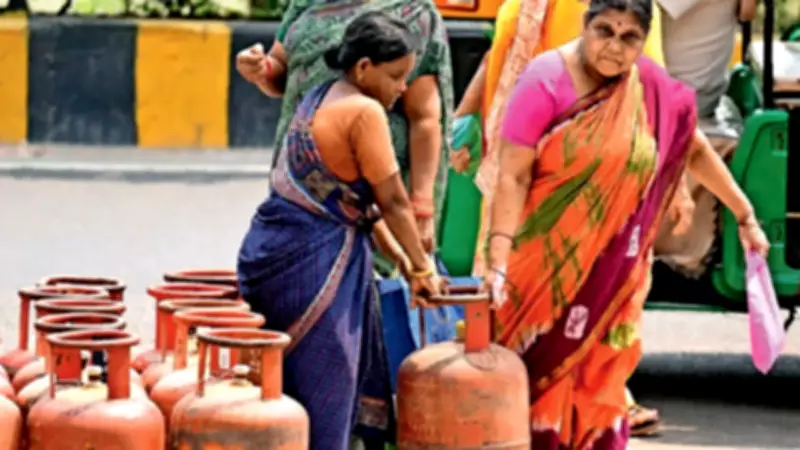
India's LPG Supply Chain Under Severe Pressure Amid Geopolitical Tensions
India is currently navigating a critical phase in its liquefied petroleum gas (LPG) supply chain as escalating geopolitical tensions in West Asia continue to disrupt global energy flows through the strategically vital Strait of Hormuz. The situation has created significant challenges for both domestic consumers and commercial establishments across the country, with the government implementing emergency measures to manage the crisis.
Strategic Tanker Movements Offer Temporary Relief
In a significant development that provides some temporary relief, two India-flagged LPG tankers - Jag Vasant and Pine Gas - successfully crossed the Strait of Hormuz on Monday, carrying approximately 92,600 tonnes of cooking gas. According to shipping ministry officials, these vessels are expected to reach Indian ports by Saturday, which would increase the total imported LPG volume to over 2.9 lakh tonnes.
The safe passage of these tankers is particularly crucial given the ongoing risks in the region. Ship tracking data revealed that both vessels sailed between Iran's Larak and Qeshm islands, possibly to signal their identity to Iranian authorities before completing their transit. Since the Iran conflict began on February 28, this marks the fourth instance of India-flagged vessels navigating through this conflict-affected choke point.

The government's immediate focus remains on ensuring the safe transit of 20 remaining India-flagged ships and Indian crew members operating west of the strait. Several oil and gas carriers have been chartered by major Indian companies including Petronet LNG Ltd, Indian Oil Corporation (IOC), Bharat Petroleum (BPCL), Hindustan Petroleum (HPCL), and private firms like Reliance Industries and BGN International.
Government Considers Rationing Measures Amid Supply Constraints
With domestic LPG availability remaining critically tight, oil marketing companies (OMCs) have been exploring various measures to ensure more equitable distribution of cooking gas. The most significant proposal under consideration involves supplying reduced quantities of LPG in domestic cylinders as a temporary rationing measure.
The Ministry of Petroleum and Natural Gas had earlier directed Indian Oil Corporation, Bharat Petroleum, and Hindustan Petroleum to explore the feasibility of supplying 10 kg of LPG in standard 14.2 kg cylinders. Officials confirmed that the ministry had even considered a 7 kg option before narrowing discussions to the 10 kg model. However, petroleum ministry officials have since dismissed reports about implementing smaller refills as "highly speculative," though industry sources maintain the proposal remains under active consideration.
Sujata Sharma, joint secretary in the Ministry of Petroleum and Gas, addressed the speculation directly, stating: "There cannot be any comment or explanation to any speculation, please don't believe in rumours. This is highly speculative." She noted that bookings for refilling domestic cylinders had eased to nearly 50 lakh, while supply continued normally. Sharma also highlighted that refiners have increased LPG output, with 50-60% of demand now being met through domestic production, up from 40% earlier.
Political Response and Regional Impact
The LPG crisis has drawn sharp political criticism, with Samajwadi Party president Akhilesh Yadav launching a strong attack on the BJP government. Speaking to media after paying floral tributes to social thinker Ram Manohar Lohia at Lohia Park in Gomti Nagar, Yadav alleged that farmers in Uttar Pradesh have been pushed into distress while rising prices and administrative failures have worsened public hardship. He specifically mentioned that potato farmers have suffered heavy losses due to extremely low market prices.
In a positive development for Rajasthan, the state has received a 10% extra commercial LPG quota to help mitigate the impact of shortages on businesses and industries. This allocation comes as part of broader efforts to manage distribution across different regions facing varying degrees of supply constraints.

Businesses Bear the Brunt of Supply Disruptions
The cascading impact of the LPG shortage is being felt acutely across multiple commercial sectors, particularly in the hospitality industry. Restaurants and caterers in cities like Pune are grappling with inflated cylinder prices, overcharging, and supply inconsistencies. Many establishments have begun passing the burden onto customers through additional "gas surcharges" to offset rising operational costs.
The situation is particularly severe in Hyderabad, where eateries report losses estimated at 40-45% due to high commercial LPG prices ranging between ₹4,000 and ₹7,000 per cylinder. The financial strain has forced many establishments to reduce operating hours or implement cost-cutting measures that affect service quality.
Beyond the hospitality sector, the fuel shortage has also impacted transportation. The Telangana Gig and Platform Workers' Union (TGPWU) has raised serious concerns about alleged disruptions in the supply of compressed natural gas (CNG) and auto LPG, claiming that irregularities at filling stations are affecting drivers across multiple cities. Union president Shaik Salauddin noted that auto-rickshaw drivers and app-based cab operators are among the worst affected, as many rely entirely on CNG for daily operations. Drivers are spending long hours waiting to refill vehicles, reducing their working time and income, which has placed significant financial strain on those dependent on daily earnings.
Evolving Geopolitical Situation Influences Policy Decisions
With signs of easing tensions in West Asia and reports of a potential ceasefire, the Centre has advised oil marketing companies to proceed cautiously with rationing measures. The government is closely monitoring the evolving geopolitical scenario, which will continue to play a decisive role in shaping India's energy security and domestic fuel availability.
The current crisis underscores India's vulnerability to global energy disruptions and highlights the urgent need for more efficient supply management systems, greater diversification of energy sources, and stronger safeguards to protect both consumers and businesses from market volatility. As the situation continues to develop, the government faces the complex challenge of balancing immediate supply concerns with long-term energy security strategies.





