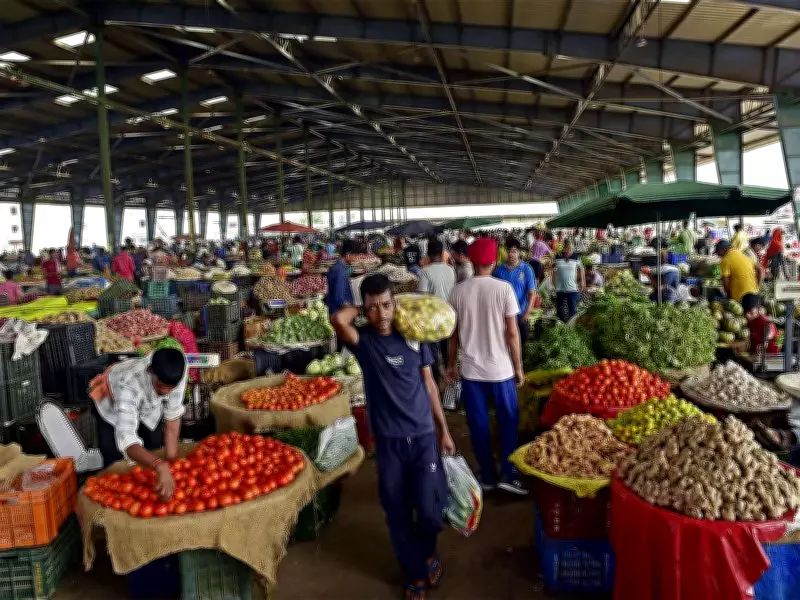
India's retail inflation rose to 3.93 per cent in May from 3.48 per cent in April, according to data released by the National Statistics Office (NSO) on Friday. Experts attribute the rise to broad-based pressures across food and non-food segments and warn of further increase in the coming months.
Expert Analysis on Inflation Trajectory
According to Dipti Deshpande, Principal Economist at Crisil Ltd, the impact of the West Asia conflict is starting to percolate household budgets. Crisil expects CPI inflation to rise to an average of 5.1 per cent this fiscal, up from 2.0 per cent last fiscal, with risks from higher fuel prices, currency depreciation, second-round effects, and potentially weak rainfall.
Sujan Hajra, Chief Economist and Executive Director at Anand Rathi Group, noted that the over 40 basis-point jump in retail inflation in May 2026 was largely anticipated. He stated that both food and fuel inflation are likely to remain on an upward trajectory in the months ahead. Hajra assessed that headline retail inflation could breach 6 per cent at some point over the next six months. However, he added that the Reserve Bank of India may refrain from adopting a decisively hawkish stance, provided core inflation remains anchored around 4 per cent and inflationary pressures do not become broad-based.

Urban vs Rural Impact
Debopam Chaudhuri, Chief Economist at Piramal Group, observed that inflation is accelerating faster in urban areas compared to rural regions. This could further erode purchasing power among urban households and weigh on discretionary consumption demand.
Real Estate Sector Remains Stable
For the real estate sector, the industry remains stable, according to Vivek Rathi, National Director of Research at Knight Frank India. He noted that housing inflation has continued to be moderate and the sector has not become a significant source of price pressures in the economy. Rathi emphasized that the interplay between global commodity prices and domestic inflation expectations will be critical in shaping the macroeconomic environment and the interest rate outlook.