India, backed by its strong domestic growth story, is the world's fastest growing major economy. However, it is not without vulnerabilities. The US-Iran war has caused industry-wide supply disruptions, oil and LPG supply restrictions, and fears of imported inflation through higher crude and raw material prices. Despite this, the domestic consumption story remains robust, say economists. The International Monetary Fund (IMF) has raised India's GDP growth forecast for this fiscal to 6.5%, while downgrading most other economies.
El Nino Threatens Monsoon
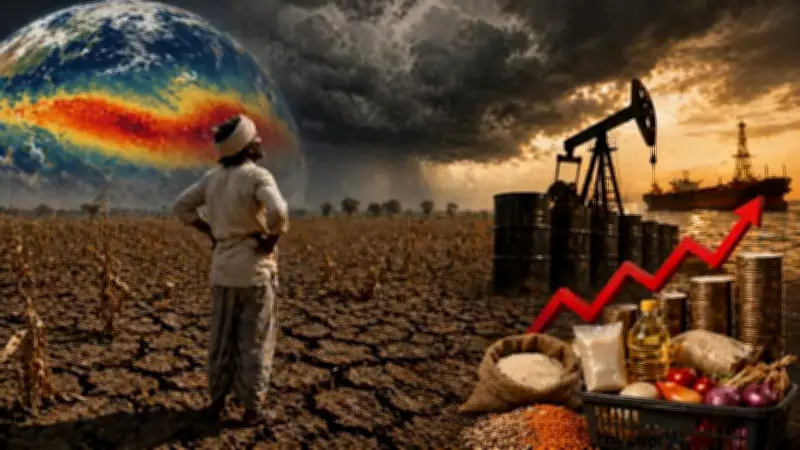
India faces a fresh risk of less than normal monsoons. The India Meteorological Department forecasts El Nino conditions during the Southwest monsoon season, with rainfall likely at around 92% of the Long Period Average. According to an SBI Research report, this is the lowest forecast since 2002. A weak monsoon could exacerbate woes from higher crude oil prices and fertilizer supply disruptions. Even if the US and Iran end the war, supply chain issues will not resolve immediately.
If a weaker monsoon impacts crop output, higher food prices will quickly feed into inflation. El Nino is the periodic warming of sea-surface temperatures in the central and eastern Pacific Ocean, disrupting global weather patterns. For India, it can weaken the Southwest monsoon, leading to below-normal rainfall and drought risk. Since 1950, there have been 16 El Nino years, with 7 impacting Indian monsoon rainfall below normal.

Impact on Crops and Prices
Yuvika Singhal, Economist at QuantEco, explains that El Nino around August could allow a timely monsoon onset and near-normal sowing for the Kharif season, but a rainfall shortfall in August-September could weigh on Kharif crop quality and quantity. This downside may be amplified by inadequate fertilizer stocks amidst the Middle East crisis, leading to higher food prices in the second half of FY27, especially for perishables, pulses, and oilseeds. Government offloading of buffer stocks may keep cereal prices in check.
A summer El Nino may pose a greater threat to the Indian monsoon, says SBI Research. Among tomatoes, onions, and potatoes, tomato prices are expected to shoot up due to El Nino, while onion prices tend to trouble even in normal monsoon years. Sachchidanand Shukla, Group Chief Economist at Larsen & Toubro, notes that commodities likely to see sharpest price rises are food-linked crops domestically and cocoa, coffee, sugar, and palm oil globally. High crude prices add pressure to energy-linked items like fuel, fertilizers, and logistics costs.
Inflation and GDP Projections
Back-to-back supply shocks from crude oil, gas, fertilizers, and possibly crops may lead to higher-than-expected inflation and lower-than-projected GDP growth. SBI Research estimates El Nino alone has negligible impact on GDP, but El Nino plus drought could reduce GDP by around 20 basis points in the median estimate and 65 bps in the extreme scenario. Ranen Banerjee, Partner at PwC India, warns that a full El Nino effect with a 8-10% monsoon shortfall, coupled with reservoir levels below half capacity, could spike food inflation for Kharif crops. Prolonged conflict-induced disruptions could also affect Rabi output.
Banerjee says headline inflation is likely to breach 5% but stay within the RBI's 6% tolerance band in Q3 and Q4. Yuvika Singhal notes that inflation depends on the conflict's intensity and duration. Even in the best case, normalizing energy supplies could take weeks. The pass-through to WPI inflation is already underway, with WPI inflation nearly doubling in March to 3.88% from 2.13% in February. CPI inflation has been restrained by government insulation, but if the conflict persists, high under-recoveries on petrol and diesel may force a price hike. A Rs 5 hike each could add 20-25 bps to CPI inflation. The government has currently ruled out such a hike.

Singhal advises awaiting the second long-range monsoon forecast from IMD to assess food inflation risks. Assuming average crude oil at $85 per barrel and below-normal monsoon, she forecasts FY27 CPI inflation at 4.5% and GDP growth at 6.6%. Sachchidanand Shukla believes persistently high crude oil prices pose a greater inflation risk than a weak monsoon. A weaker monsoon can hurt Kharif output, but key risk is if crude oil stays high, feeding into fuel, freight, and input costs. This may pressure real income and consumption if inflation rises faster than wages, slowing growth in the first half of the fiscal.
SBI Research remains confident, projecting GDP growth in the range of 6.8%-7.1% despite global uncertainties, driven by strong domestic consumption, infrastructure investment, and robust services sector. Geopolitical issues, oil prices, supply chain disruptions, and El Nino remain risks to the outlook.