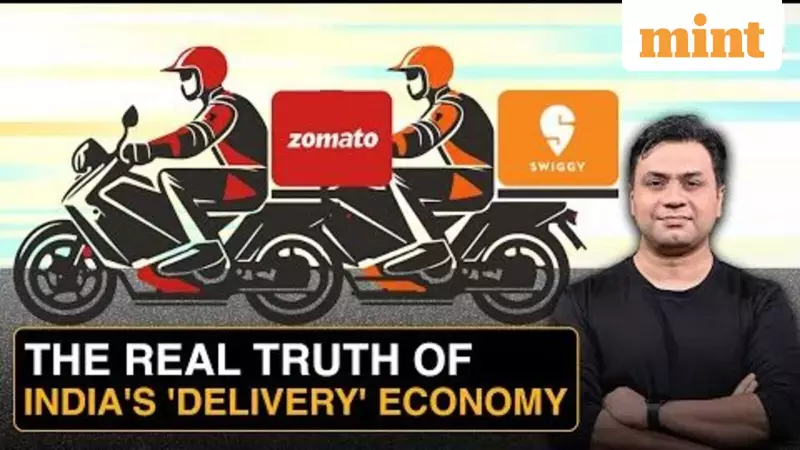
India's booming gig economy, powered by platforms like Zomato, Swiggy, Amazon, Blinkit, and Zepto, is facing a severe internal contradiction. While it promises flexibility and income, a harsh on-ground reality is choking the very workers who form its backbone—the delivery agents and gig workers. Updated analysis as of January 5, 2026, by Abhinav Trivedi, highlights a systemic failure where well-intentioned rules on paper are crumbling against entrenched economic problems.
The Fuel Behind India's Gig Economy Expansion
A unique confluence of factors is driving millions into the gig workforce. A critical lack of formal job opportunities pushes many towards platform-based work as a primary, not supplementary, income source. This is compounded by widespread poor financial security among a large section of the population, creating an urgent need for immediate cash flow, regardless of the working conditions.
Furthermore, there is a massive supply of young, willing workers across India. This vast demographic, often with a lack of specialized skill sets required for the formal sector, finds itself competing for gigs under the most demanding conditions. This oversupply of labor inherently depresses bargaining power and allows platforms to enforce stringent terms, knowing there is always someone else ready to take the spot.

The Great Disconnect: Paper Rules vs. Ground Realities
The core issue, as identified, is the stark failure of regulatory frameworks and company policies to address this complex reality. Rules formulated for worker safety, minimum earnings, or benefits often look robust in legal documents but become virtually impossible to implement effectively on the ground.
The economic desperation of workers means they often prioritize any earning over asserting their rights. The fear of being deactivated from the app by algorithms for complaining or missing targets is a constant threat. Consequently, issues like:
- Unpredictable and insufficient earnings after accounting for fuel and vehicle costs.
- Intense pressure from 10-minute delivery promises compromising safety.
- No access to health insurance, paid leave, or grievance redressal.
- Complete absence of job security or stability.
remain pervasive. The structural economic problems—scarcity of formal jobs and financial vulnerability—create a power imbalance that written codes cannot easily rectify.
Broader Implications and the Road Ahead
This situation presents a significant policy challenge for the Indian government, often discussed in contexts involving figures like Prime Minister Narendra Modi and Finance Minister Nirmala Sitharaman. The gig economy is a vital employment absorber, but its unsustainable model risks exploiting a generation of youth. The focus needs to shift from mere rule-making to addressing the root causes.
Solutions may lie in innovative social security frameworks portable across platforms, incentives for skill development to open formal sector avenues, and a national dialogue on fair platform work practices. The growth of e-commerce and online ordering is irreversible, but the welfare of the human engine driving it cannot be an afterthought. The on-ground reality demands a hybrid approach that merges pragmatic regulation with broader economic strategies to create dignified work in the digital age.
Until the fundamental issues of job creation and financial resilience are tackled, the cycle of exploitation within India's gig economy, especially for the delivery agent racing against the clock, is likely to continue, unabated by paper-based reforms.