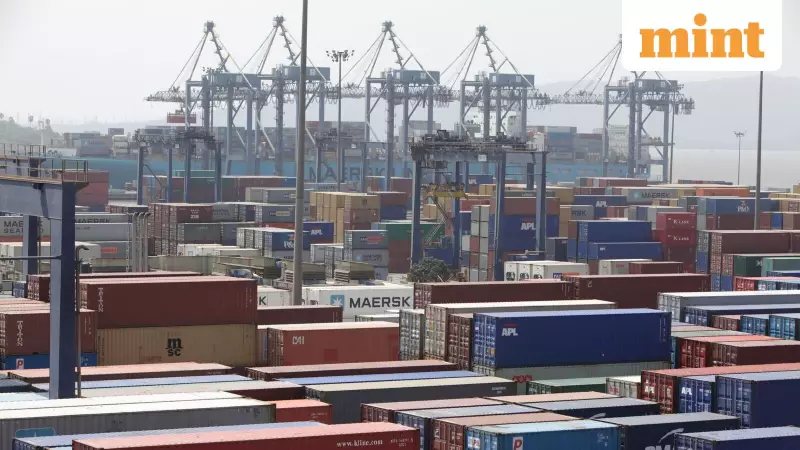
A recent analysis from Union Bank of India projects a significant widening of India's current account deficit (CAD) for the fiscal year 2025-26. The financial institution has revised its forecast upward, now anticipating the deficit will reach 1.7% of the GDP, a notable increase from its previous estimate of 1.2%.
Primary Drivers Behind the Widening Deficit
The primary catalyst for this adjustment is persistent pressure from global trade tariffs. According to the report, these tariffs are keeping the country's trade deficit elevated, overshadowing the potential benefits of weaker global demand and a decline in commodity prices. A current account deficit occurs when the total value of a nation's imports of goods, services, and capital surpasses the total value of its exports and foreign income, signifying a net outflow of capital.
The report also highlighted that India's merchandise trade deficit ballooned to a record $41.68 billion in October 2025. This figure marks a sharp increase from the $32.15 billion recorded in September and exceeded market forecasts. A massive surge in gold imports, fueled by festive and wedding season demand, was a major contributor to this record shortfall.

Mitigating Factors and Potential Risks
Despite the challenging outlook, the report identifies several factors that could soften the blow. Lower commodity prices, especially for crude oil, are expected to provide some relief. India's external balance is highly sensitive to oil price fluctuations. The analysis notes that every $10 per barrel move in oil prices impacts the annual current account balance by approximately $15 billion. Therefore, subdued oil prices are likely to have a salutary, or beneficial, effect.
However, significant risks remain. The outlook is clouded by volatile commodity prices, particularly for crude oil. Furthermore, a prolonged impasse in the US-India trade deal negotiations could lead to continued weakness in exports, exacerbating the deficit.
Hope on the Horizon: The India-US Trade Deal
On a more positive note, the Union Bank report pointed to a potential game-changer: the impending India-US Bilateral Trade Agreement (BTA). The agreement, which is reportedly nearing finalisation and could be sealed by late November, is expected to reduce tariffs from 50% to 15-16%.
While the immediate impact may be limited, the BTA is projected to strengthen India's export foundation over the medium to long term. This strengthening could partially alleviate the pressures on the trade balance in the coming quarters, offering a pathway to a more stable external account.