

Navigating Global Turbulence: India's Economic Resilience Strategy
In an era marked by dramatic structural breaks and regime shifts across the world, India stands at a critical juncture in its economic journey. The Economic Survey for 2025-26, released on January 29, arrives during unprecedented global pressures that demand innovative approaches to sustain growth momentum.
The Foundation of Currency Stability
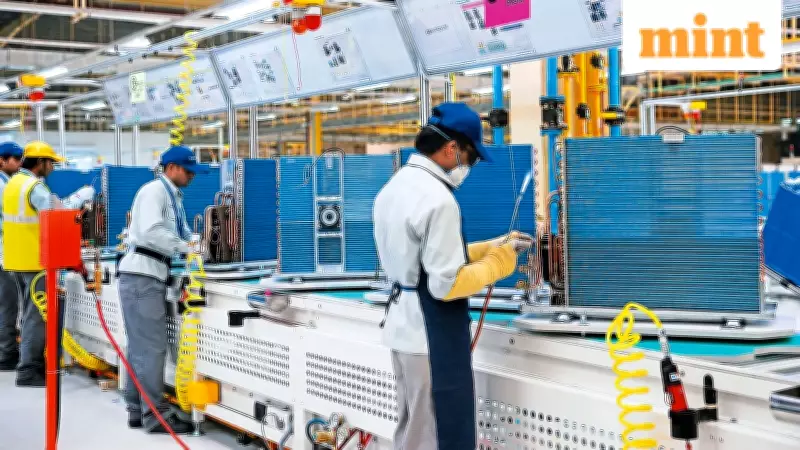
Countries that have established robust manufacturing bases, exported manufactured goods consistently, and maintained external surpluses have historically enjoyed strong and stable currencies in the post-Bretton Woods era. This fundamental principle remains relevant, though contemporary challenges have added layers of complexity that previous economic success stories did not face.
India's Current Economic Position
The current fiscal year continues to demonstrate India's economic resilience with estimated real growth at 7.4%. Since the pandemic, India has not only sustained growth but has made significant strides in fiscal management. The Union government has roughly halved its fiscal deficit as a proportion of GDP while simultaneously increasing public infrastructure investment substantially.

This dual achievement represents a remarkable improvement in the quality of fiscal expenditure, where deficit reduction has been achieved alongside enhanced public investment. This fiscal prudence and economic performance earned India three credit-rating upgrades last year, positioning the country for a potentially extended period of non-inflationary growth that has been elusive in previous economic cycles.
Geopolitical Challenges and Currency Pressures
The geopolitical environment presents significant headwinds. Since early 2025, the Indian rupee has depreciated by over 6% against the US dollar, though this performance must be viewed in proper context. When examined over a six-year window beginning February 2020, most major emerging-market currencies, including the rupee, have weakened against the dollar by similar magnitudes.
Countries running current account deficits face inherent vulnerability during periods of geopolitical discontinuity, as cross-border capital flows become increasingly sensitive to political signals rather than purely economic fundamentals. In today's world, money is no longer neutral—it responds to political currents and strategic considerations.
The Manufacturing Imperative in a Changed World
The traditional path to economic strength through manufacturing faces new challenges that earlier industrializing nations did not encounter:
- Climate concerns and energy-transition requirements that were distant considerations for previous generations
- The presence of a hyper-competitive manufacturing powerhouse like China, which posted a trade surplus exceeding $1 trillion in 2025
- Manufactured goods and intermediate inputs becoming instruments of strategic balancing between nations
These factors have created unprecedented urgency for indigenization—a priority that barely existed half a decade ago. Additionally, rapid advances in artificial intelligence raise crucial questions for a nation that needs to generate at least 8 million jobs annually to meet employment demands.
Key Questions for India's Economic Future
The Economic Survey grapples with several fundamental questions that will shape India's economic trajectory:
- Has India done enough to lift its growth rate and sustain it over the long term?
- How should India pursue the twin imperatives of indigenization and enhanced export competitiveness simultaneously?
- How can India achieve structural reduction in the cost of capital, which represents a critical input cost for businesses?
The State's Evolving Role and Collective Responsibility
The state must reorganize and equip itself differently to respond to these challenges in an unprecedented global environment. While public policy plays a crucial role in addressing national priorities, and democratic governments bear significant responsibility for shaping vision and guiding realization, nation-building remains a collective endeavor.

Wealthier nations reached their current positions not through state action alone but through corporate leadership that extended beyond narrow balance-sheet considerations. This raises a critical question: Can and will India's private sector leadership rise to the occasion with similar vision and commitment?
The Citizen's Role in Economic Progress
While leaders undoubtedly inspire people, the converse holds equal truth and possibility. Citizens play a vital role in national progress through their daily choices and expectations. The trade-off between instant and delayed gratification matters profoundly in both individual and public affairs.
Choices regarding food consumption, data usage, respect for public goods, and expectations of fiscal support from government directly influence policy decisions. These expectations and their fulfillment—or lack thereof—affect not only short-term growth trajectories but also long-term national prospects.
The Economic Survey as a Catalyst for Dialogue
The Economic Survey aims to inform the public about the economy's state while stimulating discussion on issues confronting both the governed and those governing. It explores potential paths forward and the decisions required to navigate them successfully. Given the depth and breadth of topics requiring coverage, this year's survey is longer than usual and organized differently from previous editions.
India offers unparalleled opportunities for policymakers, students, teachers, and practitioners to contribute to and learn from its exciting growth prospects. The latest Economic Survey serves as both a milestone marking progress made and a signpost indicating directions for future development in this remarkable journey of economic transformation.





