India's Core Infrastructure Growth Grinds to a Halt
India's crucial infrastructure sectors posted zero growth in October 2024, according to provisional data released by the commerce ministry on Tuesday. This represents the sector's weakest performance in 14 months, with output remaining completely flat compared to the same period last year.
The stagnation follows a steady deceleration pattern, with growth having eased to 3.3% in September and 6.5% in August (revised from 6.3%). This marks a significant drop from the 2.4% expansion recorded in September 2023.
Sector-Wise Performance Shows Mixed Trends
The eight core industries - coal, crude oil, natural gas, refinery products, fertilisers, steel, cement, and electricity - collectively account for over two-fifths of the country's total industrial production. October's performance revealed a deeply divided picture across these vital sectors.

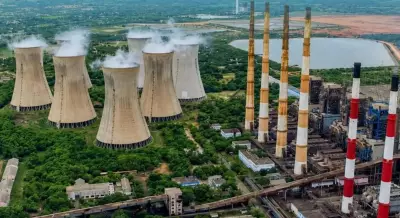
Four sectors experienced contraction: coal production declined by 8.5% in October, worsening from the 1.2% drop in September. Crude oil output shrank by 1.2%, maintaining similar negative territory from the previous month's 1.3% contraction. Natural gas production fell by 5%, deepening from September's 3.8% decline. Electricity generation slumped dramatically by 7.6%, reversing the 3.1% growth seen in September.
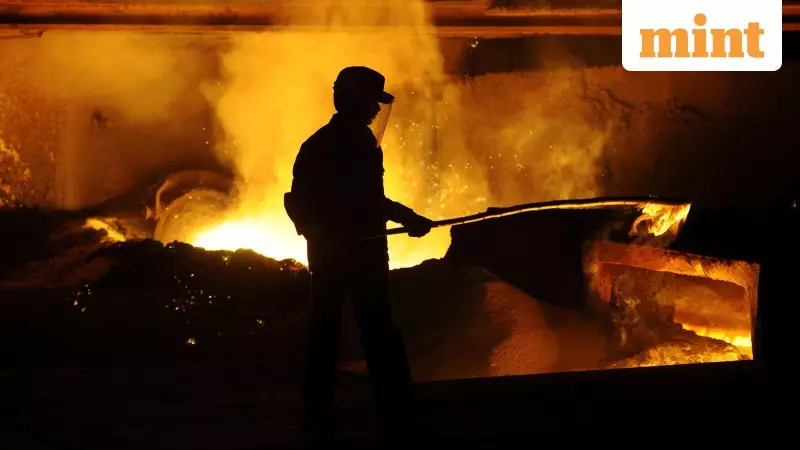
Meanwhile, steel production growth slowed substantially to 6.7% from the robust 14.4% expansion recorded in September. On the positive side, refinery production rebounded with 4.6% growth after declining by 3.7% in September. Fertiliser output strengthened significantly to 7.4% growth, up sharply from 1.6% in the previous month. Cement production maintained momentum with 5.3% growth, slightly above September's 5% increase.
Economic Context and Expert Analysis
Aditi Nayar, Chief Economist at ICRA Ltd, attributed the weak performance to multiple factors. "Excess rainfall impacted mining activity and power demand in October," she explained, adding that "growth in the steel sector decelerated owing to an adverse base and the early onset of the festive season."
Nayar further projected that "given the deterioration in the performance of the mining and electricity segments, ICRA expects the IIP (Index of Industrial Production) growth to ease somewhat to about 2.5-3.5% in October 2025 from 4% in September 2025." However, she noted that manufacturing growth is likely to remain healthy, aided by higher demand during the festive season due to GST rate rationalization and subsequent restocking.
The broader industrial landscape shows signs of strain, with India's industrial production growing 4% annually in September - its slowest pace in three months, primarily due to contracting mining output. The October IIP data will be released at the end of the month.
Manufacturing Shows Resilience Amid Challenges
Private surveys indicate that the manufacturing sector regained some momentum in October after cooling to a four-month low in September. The recovery was lifted by GST relief measures, improved productivity, and increased technology investments.
The HSBC India Manufacturing Purchasing Managers' Index (PMI), compiled by S&P Global, climbed to 59.2 in October from 57.7 in September. A reading above 50 indicates expansion in activity. However, the survey cautioned that external sales rose at the slowest pace in 10 months, signaling moderation in external demand.
External pressures continue to pose challenges, with the United States imposing steep tariffs of up to 50% on many Indian goods including textiles, jewellery, and machinery, effective from August 27. As a result, exports to the US stood at $6.3 billion in October, up from $5.8 billion the previous month but down from $6.9 billion the previous year.
The contrasting performance between contracting infrastructure sectors and resilient manufacturing highlights the complex economic landscape India navigates as it balances domestic consumption patterns with global trade challenges.