

Budget 2026: India's Economic Shield Against Trump's Trade War Tariffs
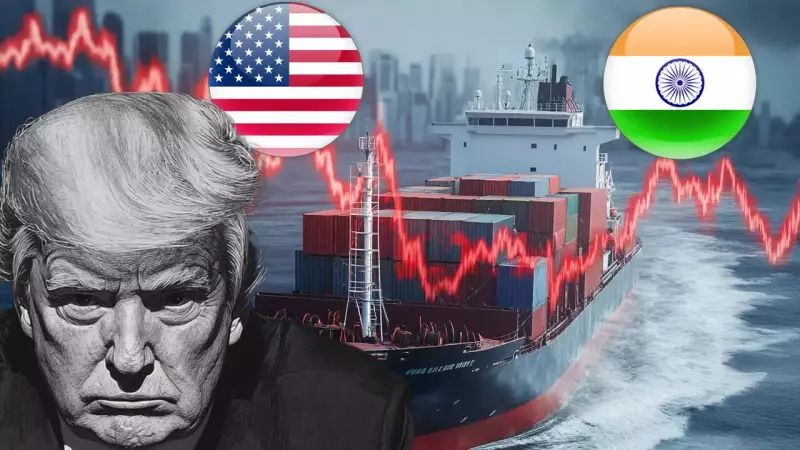
Finance Minister Nirmala Sitharaman is set to present the Union Budget 2026 against a challenging global backdrop marked by escalating trade tensions. The global economy faces significant headwinds due to the trade war initiated by US President Donald Trump, with India directly impacted through one of the steepest tariff impositions—a 50% duty on its exports to the United States. This development carries profound implications, given that America stands as India's largest trading partner, making the budgetary response crucial for economic stability.
India-US Trade Deal Stalemate and Strategic Stances
The negotiation for an India-US trade deal remains deadlocked, primarily over two contentious US demands:
- India must cease purchasing crude oil from Russia.
- India should open its agriculture and dairy sectors to American products.
India has maintained a firm and principled stance on both fronts. Regarding crude oil procurement, decisions are driven by economic considerations and strategic autonomy, ensuring energy security aligns with national interests. Similarly, the agriculture and dairy sectors have historically remained protected in trade agreements, reflecting a commitment to safeguarding domestic interests and livelihoods.

In this complex scenario, Budget 2026 assumes heightened significance. The central question is how the Modi government will devise policies to insulate the Indian economy from the adverse effects of Trump's trade tariffs, while sustaining growth momentum.
India's Economic Resilience and the Tariff Threat
India ranks among the world's top five economies in nominal GDP terms and is poised to become the third-largest, trailing only the US and China in the coming years. As the world's fastest-growing major economy, India's importance as a vast market is undeniable. A key strength lies in its domestic demand-driven growth model, which provides a buffer against external economic shocks.
Dr DK Srivastava, Chief Policy Advisor at EY, emphasizes this resilience: "The Indian economy is, in some sense, insulated from ongoing global uncertainties. India's strategy involves diversifying export destinations and enhancing competitiveness, allowing domestic producers to leverage cost advantages and scale from local demand before venturing into exports."
However, the 50% US tariffs pose a major impediment as India seeks to expand its export footprint. Recent data highlights the challenge: India's merchandise exports to the US declined by 1.83% year-on-year to $6.88 billion in December 2025, while imports rose 7.57% to $4.03 billion. Despite this, Commerce Secretary Rajesh Agrawal notes that exports continue on a positive growth trajectory, supported by ongoing bilateral trade negotiations.
Rishi Shah, Partner and Economic Advisory Services Leader at Grant Thornton Bharat, observes: "Over recent years, the Union Budget has played a constructive role in fostering a growth ecosystem, emphasizing productive public expenditure, balance-sheet repair, and macro stability. This approach has enabled India to absorb repeated global shocks with relatively limited disruption."
Budget 2026: Strategic Measures to Mitigate Tariff Risks
Economists surveyed by Times of India Online concur that India's economic growth story is predominantly domestic-driven, offering insulation from external headwinds. Nonetheless, sectors exposed to exports, which bear the brunt of the global trade war, urgently require relief. Experts advocate for:

- Enhancing export competitiveness and diversifying the export basket.
- Rationalizing customs duties to support trade flows.
- Providing targeted relief for MSMEs to sustain operations.
Additionally, economists stress the need for a continued capital expenditure push, coupled with efforts to reduce the fiscal deficit and prioritize job creation to bolster economic stability.
Ranen Banerjee, Partner and Government Sector Leader at PwC India, outlines actionable steps: "Sectors with higher exposure to externalities, many of which are labor-intensive and within the MSME segment, need support. The budget can lower their cost of doing business, reduce working capital costs, and lay foundations for competitiveness through higher allocations for credit guarantee schemes, reduced compliance burdens, and shared infrastructure for quality control."
He further suggests redirecting labor to construction via sustained capex allocations and housing incentives to mitigate short-term employment pressures in affected sectors.
An economist from an industry body adds: "Budget 2026 should aim to boost consumption by implementing policies that create jobs and lower the cost of living." This includes boosting public investment, attracting private capital, prioritizing affordable housing, and strengthening education and skilling initiatives to expand employment opportunities.
Expert Recommendations for Economic Resilience
Rishi Shah of Grant Thornton Bharat proposes a four-pillar strategy for Budget 2026:
- Strengthen businesses by durably lowering the cost of doing business through regulatory certainty, simpler compliance, faster dispute resolution, and logistics efficiency.
- Maintain elevated public sector capital expenditure to expand productive capacity and alleviate infrastructure bottlenecks.
- Sharpen focus on innovation, quality standards, and domestic value addition in manufacturing and MSMEs.
- Uphold fiscal credibility through transparent deficit management to preserve investor confidence.
Madan Sabnavis, Chief Economist at Bank of Baroda, warns that trade war uncertainties will persist until a deal is finalized. He advises: "The Budget can buffer vulnerable sectors, particularly MSMEs in industries like garments, leather, jewelry, and auto parts, which are susceptible to US tariff impacts."
Radhika Rao, Executive Director and Senior Economist at DBS Bank, highlights the need to prioritize strategic sectors such as defence, semiconductors, electronics, renewable energy, and AI/robotics. She notes: "Budget allocations for defence target modernizing indigenous manufacturing, with potential double-digit increases in FY27. Geopolitical uncertainties necessitate boosting domestic procurement and security apparatus, alongside developing core technologies through skilled workforce collaborations."
Yuvika Singhal, Economist at QuantEco, emphasizes diversification: "Diversification in products and geographies is the biggest insulation. 'Friend shoring' guides mutually beneficial trade deals. India has recently concluded deals with the UK, EFTA, Oman, and New Zealand. Finalizing the US-India trade deal may require revamping customs duties and non-trade barriers, which Budget 2026 could address."
Rumki Majumdar, Economist at Deloitte India, recommends reorienting policies toward supply-side resilience by easing compliance and expanding capacity. She advocates widening export markets through effective FTA implementation and sustaining public capex with debt-to-GDP discipline.
Sachchidanand Shukla, Group Chief Economist at Larsen & Toubro, advises: "The Budget should reiterate India's thrust to insulate growth by focusing on infrastructure, supporting tariff-hit segments, ensuring transparency, and clearly communicating the shift to debt/GDP as a fiscal anchor."
Fiscal Discipline and Growth Support
Economists unanimously call for fiscal discipline with an emphasis on capital expenditure. Sujan Hajra, Chief Economist at Anand Rathi Group, stresses sustaining high government capex to ease infrastructure bottlenecks and support growth amid softening global demand. Maintaining a credible fiscal consolidation path is essential to anchor investor confidence.
DK Srivastava of EY India adds: "Budget 2026 may include customs duty rationalization and reciprocal measures, but it will ensure continuity of growth drivers from FY26, emphasizing fiscal consolidation and stable government capex to support overall growth."
As India navigates the complexities of global trade tensions, Budget 2026 emerges as a pivotal tool to fortify economic resilience, foster competitiveness, and secure sustainable growth in an uncertain world.





