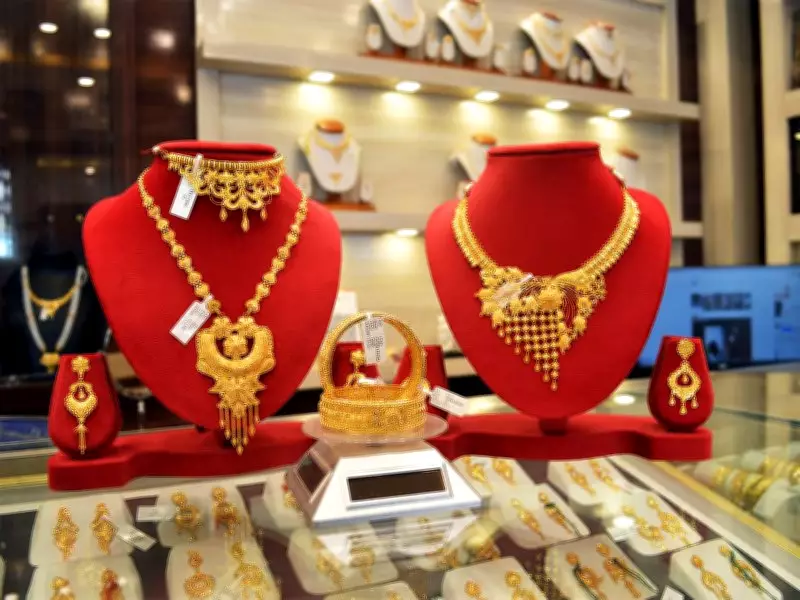
Indian Household Gold Stockpile Surpasses Top Central Banks' Combined Reserves
A recent report from the Associated Chambers of Commerce and Industry of India (ASSOCHAM) has unveiled a staggering statistic about the nation's affinity for the precious metal. According to the findings, the total gold holdings across Indian households are now larger than the combined gold reserves of the world's top ten central banks. This revelation underscores the immense scale of private gold accumulation in India, which has long been a cultural and economic cornerstone.
Massive Private Holdings Outpace Official Reserves
The ASSOCHAM report meticulously compares the estimated gold stored in Indian homes, temples, and private vaults against the official reserves held by central banks globally. It highlights that while countries like the United States, Germany, and Italy maintain substantial gold reserves as part of their monetary policies, the collective Indian household stockpile eclipses these figures. This private hoard is not just a symbol of wealth but also plays a critical role in the country's informal economy and financial security for millions of families.
The cultural and economic significance of gold in India cannot be overstated. For generations, gold has been integral to weddings, festivals, and inheritance practices, often viewed as a safe-haven asset during economic uncertainties. The report notes that this deep-rooted tradition contributes to the continuous accumulation, with annual gold imports and domestic recycling adding to the vast reserves. Unlike central bank holdings, which are managed for monetary stability and international trade, Indian household gold serves multiple purposes—from personal savings to collateral for loans.

Implications for the Economy and Policy
The sheer volume of gold in private hands presents both opportunities and challenges for India's economy. On one hand, it represents a massive latent financial resource that could potentially be mobilized through schemes like gold monetization programs. On the other hand, it highlights issues such as underutilization of assets and the need for better financial inclusion. The ASSOCHAM report suggests that policymakers should consider innovative strategies to leverage this gold for economic growth, such as encouraging gold-backed financial products or improving transparency in the gold market.
This finding also sheds light on India's position in the global gold landscape. While the country is one of the largest consumers and importers of gold, the concentration in households means that a significant portion of the metal is not actively traded or used in industrial applications. The report calls for increased awareness and initiatives to channel this gold into productive uses, which could help reduce reliance on imports and bolster the domestic economy.
Comparative Analysis with Central Banks
To put the numbers into perspective, the top ten central banks—including the Federal Reserve, Bundesbank, and Banca d'Italia—collectively hold gold reserves valued in the hundreds of billions of dollars. However, Indian households, driven by cultural practices and investment motives, have amassed an even larger quantity. This disparity highlights a unique aspect of India's economic fabric, where private wealth in gold often outweighs official holdings. The ASSOCHAM report emphasizes that this trend is likely to continue, given the enduring cultural importance and economic perceptions of gold as a reliable store of value.
In conclusion, the ASSOCHAM report provides a compelling insight into India's gold dynamics, revealing that household holdings exceed the combined reserves of the world's leading central banks. This underscores the need for targeted policies to harness this wealth for national development while respecting cultural traditions. As India continues to evolve economically, understanding and leveraging this massive private gold stockpile will be crucial for sustainable growth and financial stability.