

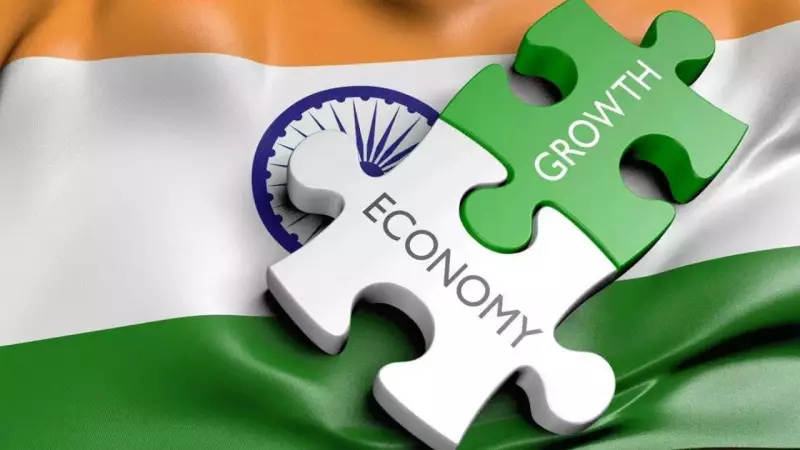
The Confederation of Indian Industry revealed on Friday that India was consistently highlighted as a dependable long-term growth anchor during conversations at the World Economic Forum's annual meeting. This recognition came against a backdrop of persistent geopolitical uncertainty that continues to cloud the global economic outlook.
Cautious Optimism Amid Strategic Focus
Describing the prevailing mood at Davos as "cautiously optimistic and strategically focused," CII director general Chandrajit Banerjee noted that while geopolitical tensions framed the discussions, they did not overwhelm economic priorities. "Geopolitics clearly shaped the backdrop, but it didn't crowd out the economic agenda, rather it sharpened it," Banerjee told PTI.
He elaborated that leaders and investors utilized this moment to fundamentally rethink several critical areas. These included enhancing supply chain resilience, diversifying trade relationships, and strategically allocating capital toward economies that offer stability, scale, and predictable policy environments.

India's Credible Positioning
Within this global context, Banerjee emphasized that India was frequently spotlighted as a credible long-term growth anchor. This positive assessment was attributed to several key strengths that India currently possesses. These include its demonstrated macroeconomic stability, the vast scale of its domestic consumer market, and the sustained momentum of its ongoing reform initiatives.
Artificial Intelligence as a Dominant Theme
Banerjee identified artificial intelligence as one of the most dominant and pervasive themes at this year's Davos gathering. The topic cut across traditional sector boundaries and permeated numerous policy discussions. He pointed out that India is widely perceived as exceptionally well-placed to benefit from this technological shift.
"Within this context, India is widely seen as well positioned to capitalise on this AI inflection point," Banerjee stated. He cited the country's unique combination of advantages: a large and increasingly digitally enabled market, one of the world's deepest pools of STEM (Science, Technology, Engineering, and Mathematics) talent, a rapidly expanding data ecosystem, and a strong foundational layer of digital public infrastructure.
Contributing to the Global AI Dialogue
Beyond merely benefiting from AI, Banerjee noted that India has also positioned itself as an active and constructive contributor to the global debate on responsible and inclusive artificial intelligence. The country is advocating for interoperable technical standards, trusted frameworks for cross-border data flows, and innovation partnerships that carefully balance the need for openness with considerations of digital sovereignty.
He added that a shared understanding is emerging among global leaders: AI is no longer merely a frontier technology for experimentation. It is rapidly becoming core economic infrastructure that will decisively shape national competitiveness, influence major investment decisions, and define growth strategies for the coming decade.
Navigating a Challenging Global Landscape
Highlighting the broader international environment, Banerjee acknowledged that India has demonstrated notable economic resilience despite a challenging external climate. However, he cautioned that sustaining this positive momentum will require an even sharper and more deliberate strategic focus from policymakers and business leaders.
He warned that supply-side disruptions are becoming increasingly likely across different regions and are evolving from temporary shocks into more structural challenges. Commodities with high supply concentration and limited short-term substitutability—spanning both essential food items and critical industrial inputs—are identified as the most vulnerable to these disruptions.
"This underscores the strategic importance of diversification, regionalisation, and resilience-building in global and Indian supply chains," Banerjee concluded, emphasizing the need for proactive measures to secure economic stability.






