

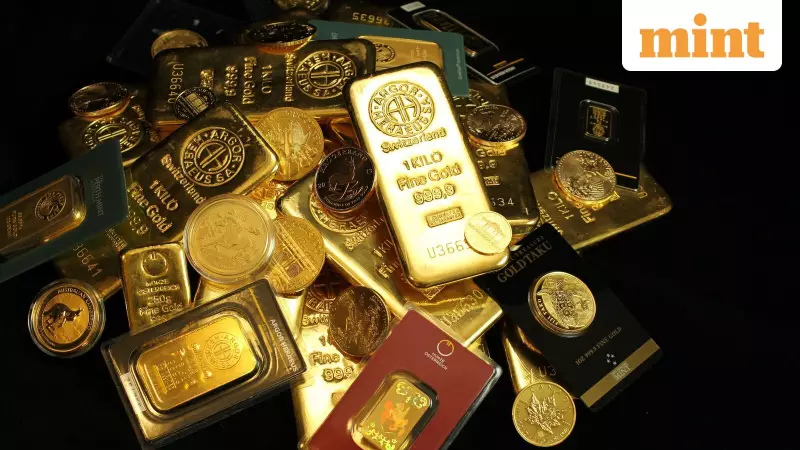
In a historic milestone for commodity markets, gold prices surged past the psychological barrier of $5,000 per ounce for the first time on Monday, January 26, propelled by intense safe-haven demand from investors worldwide. According to a Reuters report, spot gold climbed 1.98% to $5,081.18 per ounce by 0323 GMT, after briefly touching an intraday high of $5,092.71. US gold futures for February delivery mirrored this upward trajectory, gaining 2.01% to settle at $5,079.30 per ounce.
Geopolitical Tensions and Trade War Fears Fuel Gold Rally
The remarkable rally in gold prices continued unabated as risk-off sentiment gripped global investors amid escalating geopolitical risks and renewed trade war anxieties. A confluence of factors has created a perfect storm for the yellow metal, reinforcing its traditional role as a safe-haven asset during times of uncertainty. Over the weekend, US President Donald Trump escalated trade tensions by threatening to impose a 100% tariff on Canada if it proceeded with a trade deal with China. Additionally, he warned of 200% tariffs on French wines and champagnes, apparently to pressure French President Emmanuel Macron into supporting his Board of Peace initiative.
These developments follow a series of destabilizing events that have shaken investor confidence, including military intervention in Venezuela, threats to annex Greenland, and the Trump administration's persistent efforts to undermine the authority of the US Federal Reserve. The cumulative effect of these geopolitical flashpoints has driven capital into gold as investors seek shelter from market volatility.

Multiple Factors Supporting Gold's Meteoric Rise
Beyond geopolitical concerns, several fundamental factors have contributed to gold's sustained upward momentum. A weakening US dollar has made bullion more attractive for buyers holding other currencies, with a key dollar index falling nearly 2% over six sessions according to Bloomberg data. Central bank buying has remained robust, particularly from emerging market institutions diversifying their reserves away from traditional fiat currencies.
Exchange-traded fund (ETF) inflows have demonstrated persistent investor interest, while global economic uncertainty stemming from the ongoing Russia-Ukraine crisis and Israel-Iran conflict has maintained gold's appeal. Rising debt levels in advanced economies have provided another structural pillar supporting gold's long-term bullish case. The precious metal recorded its best annual performance since 1979 last year with a staggering 75% gain, and has already rallied 17% month-to-date in 2026, underscoring its role as a reliable fear gauge in financial markets.
Analysts Remain Bullish on Gold's Prospects
Market analysts maintain overwhelmingly positive outlooks for gold, with several institutions revising their price targets upward. Goldman Sachs recently raised its gold price forecast to $5,400 per ounce for December 2026, up from its previous target of $4,900, citing private-sector and emerging market central bank diversification into the metal. Philip Newman, director at Metals Focus, told Reuters that further upside appears likely, with prices potentially peaking around $5,500 later this year.
In a more speculative projection, Rich Dad Poor Dad author Robert Kiyosaki suggested gold could eventually reach $27,000, though he provided no specific timeline for this ambitious target. While such extreme forecasts capture attention, mainstream analysts generally agree that current market conditions support continued strength in gold prices.
Domestic Market Impact and Trading Outlook
Back in India, commodity markets remained closed on Monday in observance of Republic Day. Trading on the Multi Commodity Exchange (MCX) is scheduled to resume on January 27, with prices expected to gap higher as domestic markets play catch-up with the international rally. Market participants anticipate significant upward movement when trading recommences, reflecting the global momentum that has propelled gold to unprecedented levels.
Disclaimer: This story is for educational purposes only. The views and recommendations expressed are those of individual analysts or broking firms, not Mint. We advise investors to consult with certified experts before making any investment decisions.






