

Economic Survey 2026 Sounds Alarm on India's Gig Worker Crisis
The Economic Survey 2026, released on Thursday, has cast a stark spotlight on the growing vulnerabilities within India's rapidly expanding gig workforce. The report identifies rising income insecurity, profound social isolation, and widespread burnout as critical risks that threaten labour productivity and economic stability.
Explosive Growth Masks Deepening Distress
India's platform-based workforce has witnessed a staggering 55% growth in just four years, surging from 7.7 million workers in FY21 to approximately 12 million in FY25. This segment now constitutes more than 2% of the nation's total workforce, with projections indicating its share in non-agricultural employment could reach 6.7% by 2029-30, contributing an estimated ₹2.35 trillion to GDP.
However, beneath this impressive expansion lies a troubling reality. The survey highlights that many migrant workers who relocate to urban centres experience intense loneliness and social isolation, despite potential financial gains. This emotional toll severely impacts their mental well-being and workplace productivity, often leading to early attrition and increased costs for employers.

Voices from the Ground: Stories of Struggle
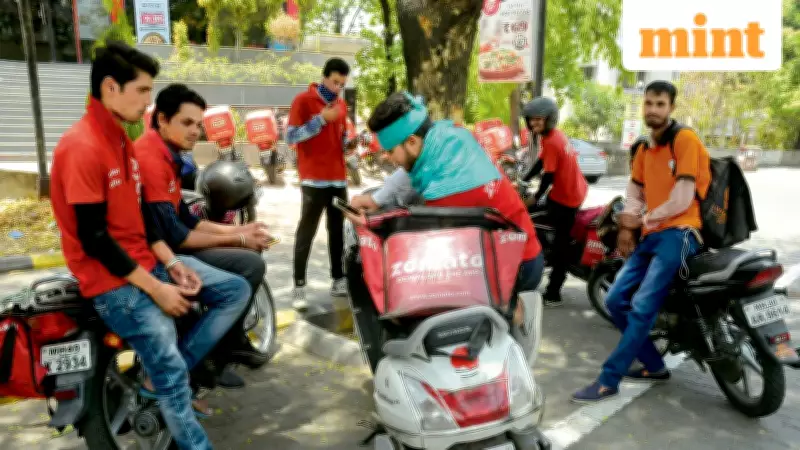
A poignant case emerges from a 26-year-old food delivery worker from Patna, now in Delhi, who describes the crushing pressure of customer ratings and prolonged separation from family. "I feel anxious because of customer pressure and I miss home very much. I haven't gone back home for over a year," he revealed, adding that after supporting his sisters and covering essential expenses, little remains for himself.
He pays ₹2,000 weekly to rent his electric bike and laments the lack of alternative skills that trap him in this profession. His narrative echoes the lives of millions of gig workers across metro cities, struggling to make ends meet while navigating algorithmic control and performance pressures.
The Algorithmic Misery: Low Pay and High Stress
The survey details the myriad difficulties inherent in platform-based work. Approximately 40% of gig workers earn less than ₹15,000 per month. Algorithm-driven systems now dominate work allocation, performance monitoring, wage determination, and supply-demand matching, exacerbating concerns around burnout and income volatility.
Shaik Salauddin, co-founder of the Indian Federation of App-Based Transport Workers, emphasises the mounting physical and mental stress. Workers endure long hours for low pay, remaining "dependent on customer ratings that directly affect their earnings and continued access to platforms." He describes a perpetual cycle of anxiety over ID blocks, loan repayments, household expenses, and even discrimination in housing societies.
Mental Health Toll and the Search for Solutions
The Economic Survey underscores the severe psychological impact, citing a study by Good Business Lab conducted in Bengaluru (2023-2024). The intervention paired newly arrived migrant women with experienced "buddies" who provided emotional first-aid. Results showed a 5.3% reduction in anxiety and a 5.9% drop in depression among newcomers, while productivity rose 6.4% among supported migrants.
Another study examining UK gig workers during the pandemic found they reported worse mental health and lower life satisfaction than full-time employees, largely due to higher loneliness and financial precarity. Researchers concluded that public policies must focus on providing social support to improve psychological well-being.
In response, some corporations are taking action. Zomato established a dedicated wellness centre in Gurugram with mental health counsellors, while Reliance Industries expanded its R-Swasthya program, certifying employees as mental health first-aiders.

Shifting Patterns and Future Projections
Neeti Sharma of TeamLease Digital notes a significant trend: "The migrant worker now prefers to stay closer to home." With more opportunities emerging in tier-2 cities, workers are increasingly considering these locations first, even accepting lower pay to avoid the high costs and isolation of metros.
The Economic Survey also highlights sharp skill-based segmentation within the sector. By 2030, high-skilled workers are estimated to constitute 27.5% of the gig workforce, with low-skilled at 33.8% and medium-skilled at 38.7%. E-commerce and logistics remain the largest employers, engaging about 3.7 million and 1.5 million workers respectively.
As India's gig economy continues its rapid expansion, the 2026 Economic Survey serves as a crucial warning: without addressing the fundamental issues of income security, social isolation, and mental well-being, the very productivity gains driving this growth may be unsustainable.





