

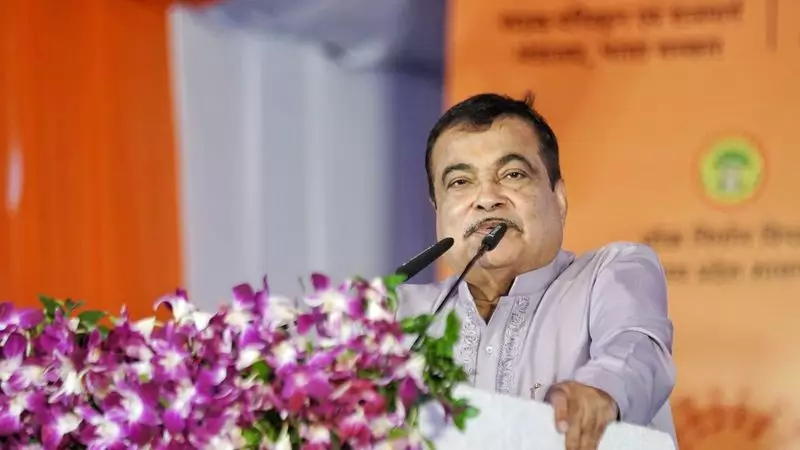
Union Minister for Road Transport and Highways, Nitin Gadkari, has powerfully articulated that knowledge stands as the most crucial instrument for India to realize its ambitious goal of transforming into a USD 5 trillion economy. He made these significant remarks while addressing a gathering in Nagpur, Maharashtra, underscoring the pivotal role of intellectual capital in national development.
The Centrality of Knowledge in Economic Transformation
Gadkari elaborated that while physical infrastructure like roads and highways forms the backbone of growth, it is the power of ideas, innovation, and informed policymaking that will truly propel the nation forward. He stressed that in the contemporary global landscape, economic strength is increasingly derived from a country's ability to generate, disseminate, and effectively utilize knowledge across all sectors. This perspective shifts the focus from traditional resources to human intellect and technological advancement as primary economic drivers.
Infrastructure as a Catalyst for Growth
The senior minister, who is renowned for his hands-on approach to infrastructure projects, connected the dots between tangible development and knowledge. He pointed out that the massive expansion of India's road network, including expressways and logistics parks, is designed not just for connectivity but to create a fertile ground for knowledge-based industries to thrive. Efficient infrastructure reduces logistical costs, improves supply chains, and enhances competitiveness, thereby creating an ecosystem where knowledge-intensive services and manufacturing can flourish. Gadkari's vision positions infrastructure as the physical framework upon which the knowledge economy can be built.

Policy Reforms and Future Roadmap
Gadkari also highlighted the importance of supportive government policies and reforms that encourage research, development, and entrepreneurship. He expressed confidence in India's demographic dividend and its vast pool of talented youth, asserting that with the right direction and opportunities, they can be the architects of the new economic paradigm. The minister's comments reinforce the government's multi-pronged strategy, which combines heavy investment in physical infrastructure with initiatives aimed at boosting digital literacy, skill development, and startup innovation. The underlying message is clear: achieving the $5 trillion GDP target requires a synergistic approach where cutting-edge knowledge informs infrastructure creation, and robust infrastructure, in turn, enables the application of that knowledge at scale.
In conclusion, Nitin Gadkari's emphasis on knowledge redefines the pathway to economic supremacy. It moves beyond mere quantitative targets to highlight the qualitative transformation needed. For India, the journey to a $5 trillion economy is increasingly being seen as a journey towards becoming a global knowledge powerhouse, where intellectual capital drives sustainable and inclusive growth for all its citizens.






