

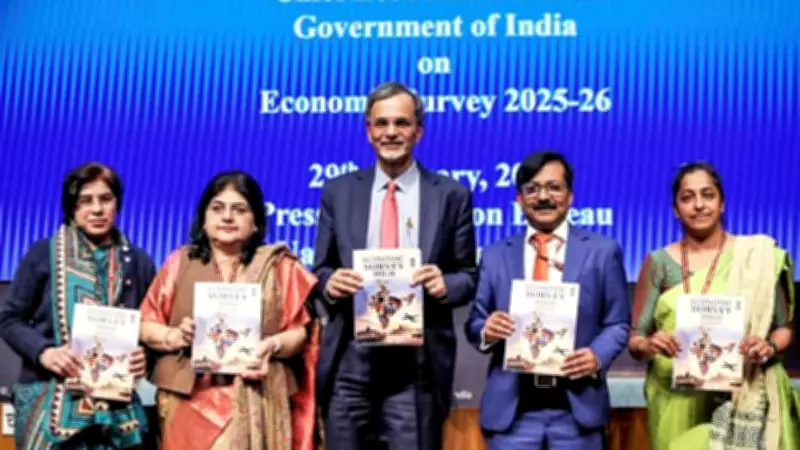
Economic Survey Advocates for RTI Act Re-evaluation to Balance Transparency and Governance
The Economic Survey 2025-26, tabled in Parliament on Thursday, has sparked significant discussion by calling for a comprehensive re-examination of the Right to Information (RTI) Act, 2005. While acknowledging the legislation as a powerful democratic reform and a crucial tool for accountability and anti-corruption efforts, the survey highlights potential risks associated with its current implementation.
Concerns About RTI Becoming an "End in Itself"
The survey, prepared under the guidance of Chief Economic Advisor V Anantha Nageswaran and his team, argues that the RTI Act carries the risk of becoming an "end in itself." This phenomenon occurs when disclosures are celebrated regardless of their actual contribution to improved governance. The document emphasizes that the Act was never intended to serve as a tool for idle curiosity or as a mechanism to micromanage government operations from outside official channels.
Proposed Adjustments and Exemptions
Among the key suggestions put forward by the Economic Survey are several adjustments aimed at refining the Act's scope. These include:

- Exempting brainstorming notes, working papers, and draft comments until they become part of the final decision-making record.
- Providing protection for service records, transfers, and confidential staff reports.
- Exploring a "narrowly defined" ministerial veto, subject to parliamentary oversight, to prevent disclosures that could "unduly constrain governance."
The survey clarifies that these proposals are not aimed at promoting secrecy by default. Instead, it argues that democracy functions best when officials can deliberate freely and are held accountable for the decisions they endorse, rather than for every half-formed thought expressed during the policy-making process.
International Comparisons and Indian Context
The Economic Survey draws parallels between India's RTI Act and similar transparency laws in countries like the United States, the United Kingdom, and Sweden. It notes that, unlike these international counterparts, the Indian legislation leaves "far less space" for carve-outs. For instance, internal personnel rules, inter-agency memos, and financial regulations are often exempt from disclosures in other nations.
In contrast, India lacks a general "deliberative process" exemption, which means that file notings, internal opinions, and draft notes fall squarely within the Act's definition of information. Only Cabinet papers are temporarily protected until a decision is finalized. This broad scope, the survey warns, could lead officials to "hold back" during deliberations, resorting to cautious language and fewer bold ideas if every draft or remark is subject to public disclosure.
Balancing Transparency and Effective Governance
The Economic Survey's recommendations aim to strike a delicate balance between maintaining the RTI Act's role as a cornerstone of democratic accountability and ensuring that governance processes remain effective and uninhibited. By suggesting adjustments to exempt certain aspects of the deliberative process and introducing safeguards like a ministerial veto with parliamentary oversight, the survey seeks to refine the Act's application without undermining its fundamental principles.
This call for re-examination comes at a time when transparency and governance are increasingly under scrutiny, highlighting the ongoing evolution of India's democratic institutions in response to contemporary challenges.






