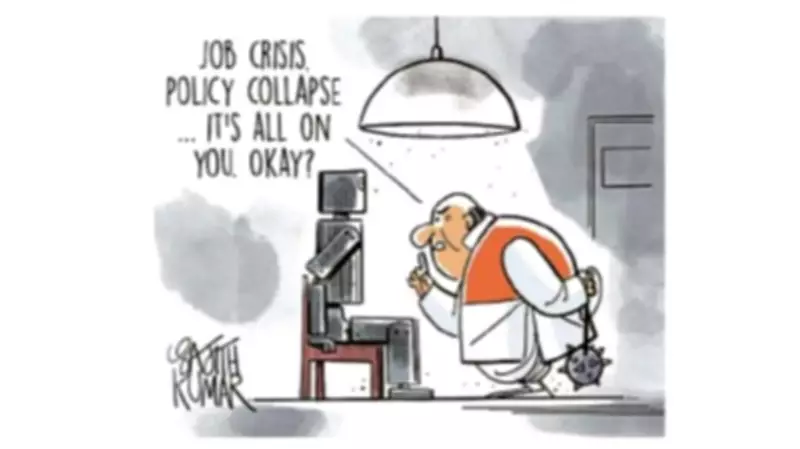
Deccan Herald Cartoon Critiques India's Job Crisis and Policy Failures
A recent editorial cartoon published by Deccan Herald, titled "DH Toon: Job Crisis, Policy Collapse," has ignited significant public discourse by sharply highlighting the pressing issues of unemployment and governance shortcomings in India. The cartoon, which serves as a satirical commentary, underscores the growing concerns among citizens and experts regarding the nation's economic trajectory and policy effectiveness.
Visual Depiction of Economic Struggles
The cartoon artistically portrays the grim reality of India's job market, using symbolic imagery to represent the struggles faced by millions of job seekers. It depicts scenes of long queues outside employment offices, frustrated individuals holding empty resumes, and factories with closed gates, alluding to industrial slowdowns and lack of opportunities. This visual narrative effectively captures the anxiety and despair prevalent in various sectors, from rural areas to urban centers.
The policy collapse aspect is illustrated through broken pillars labeled with key government initiatives, suggesting a failure in implementation or design. Elements like crumbling infrastructure projects and confused policymakers add to the critique, emphasizing a perceived disconnect between announced schemes and ground-level outcomes.

Broader Implications and Public Reaction
This cartoon has resonated widely, sparking debates on social media and in public forums about the root causes of India's job crisis. Observers note that it reflects broader economic challenges, including slow growth in manufacturing, skill mismatches, and the impact of global uncertainties. The depiction of policy collapse has prompted discussions on governance, with critics pointing to bureaucratic hurdles, regulatory complexities, and inconsistent economic strategies as contributing factors.
In response, some defenders of current policies argue that the cartoon oversimplifies complex issues, highlighting ongoing efforts like digitalization and infrastructure development. However, the overwhelming public sentiment leans towards concern, with many calling for urgent reforms to boost job creation and enhance policy coherence.
Historical Context and Comparative Analysis
India's job crisis is not a new phenomenon, but recent data shows worsening trends, with youth unemployment rates remaining high. The cartoon draws attention to this by contrasting past promises with present realities, using visual metaphors to question the efficacy of flagship programs. Compared to previous decades, where economic liberalization spurred job growth, current scenarios indicate stagnation in key employment sectors like agriculture and small-scale industries.
Internationally, similar cartoons in other countries have often preceded policy shifts, serving as a barometer of public discontent. In India, this Deccan Herald piece adds to a growing body of media criticism urging policymakers to address structural issues. Experts suggest that without targeted interventions, such as skill development and investment in emerging sectors, the crisis could deepen, affecting social stability and economic progress.
Ultimately, the "DH Toon" serves as a powerful reminder of the urgent need for actionable solutions. It encapsulates widespread frustration while encouraging a national dialogue on revitalizing India's job market and strengthening governance frameworks to ensure sustainable development for all citizens.