

India's Fiscal Framework Shifts to Debt-to-GDP Anchor in Budget 2026-27
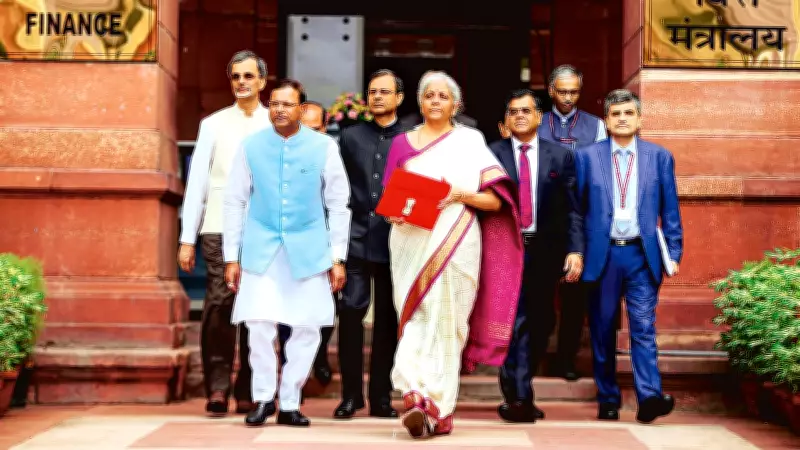
In a significant move, the Indian government is set to transition its fiscal consolidation target from the fiscal deficit to the debt-to-GDP ratio, as Finance Minister Nirmala Sitharaman prepares to present the Budget for 2026-27. This change, detailed for the first time in the upcoming Budget, marks a pivotal shift in the Centre's fiscal arithmetic, aiming to provide more flexibility for development spending while maintaining long-term sustainability.
Policy Makers Emphasize Enhanced Development Spending
Policy makers within the government view this transition, which aligns with global practices, as a strategic step to lend greater space for enhancing development expenditures. They anticipate that the pace of fiscal consolidation will become more gradual under this new framework. The Centre has projected a reduction in the debt-to-GDP ratio to 50±1% by March 2031, down from an estimated 56.1% in March 2026. Economists widely expect the Budget to peg this ratio at around 55% of GDP for the financial year 2026-27.
Globally, anchoring fiscal policy to the debt-to-GDP ratio offers governments the flexibility to respond to economic shocks while ensuring sustainability. In India, this approach is seen as a means to rebuild buffers and allocate resources for growth-enhancing expenditures as needed, according to analyses from financial institutions like UBS Securities India.

Factors Influencing the Debt-to-GDP Trajectory
The debt-to-GDP ratio is contingent upon several factors, including nominal GDP growth, government borrowing, and repayment obligations. Additionally, the implementation of recommendations from the 8th Pay Commission is expected to increase the government's financial burden in the coming years, further influencing this metric.
For instance, achieving the 50±1% target by 2031 would require an annual reduction of approximately one percentage point in the ratio. This translates to a fiscal deficit of around 4.2% of GDP in FY27, as noted by ICICI Bank Economic Research. Even at this level, high gross borrowings are anticipated due to the repayment trajectory over the next few years.
Historical Context and Future Projections
After a period of digression during the Covid-19 pandemic, the Centre has steadily refocused on fiscal consolidation. The Economic Survey for 2025-26 highlighted that India has reduced its general government debt-to-GDP ratio by about 7.1 percentage points since 2020, all while sustaining high public investment. Moving forward, the Survey emphasized that the Central government's credible medium-term goal to converge towards a 50±1% debt-to-GDP ratio serves as a policy anchor for sustaining consolidation at both the central and state levels.
General government debt, which encompasses both state and central liabilities, is a key metric used by global rating agencies to assess the country's fiscal health. While the Centre will detail its fiscal numbers linked to the debt-to-GDP ratio, the role of states in managing their public finances is expected to face increased scrutiny.
State-Level Fiscal Management Under Spotlight
When questioned about whether states should adopt explicit debt reduction targets similar to the Centre, Chief Economic Advisor V Anantha Nageswaran indicated that further reflection and analysis are necessary. He suggested that the right metric for states should be determined after considering the recommendations of the 16th Finance Commission, which will be effective from 2026-27 to 2030-31.
"We need to do some scenario analysis to see which approach plays out better and come to a considered decision," Nageswaran stated in a post-Survey interview. "After the Finance Commission's report is tabled, empirical work and scenario planning will be essential before deciding on the appropriate fiscal parameter for states."
States account for a significant share of general government debt, and experts like Soumya Kanti Ghosh from the State Bank of India advocate for state budgets to explicitly chart medium-term, scenario-based debt-to-GSDP trajectories. This approach should align with realistic growth assumptions and development needs, rather than relying solely on annual deficit targets.

Challenges and Opportunities in State Debt Management
Ghosh noted that while the Centre was the primary contributor to overall debt during 2000-2005, states played a major role in the period from 2015-2020, partly due to power sector reforms like UDAY in 2015, which involved states taking over debt. The Reserve Bank of India has urged states to target debt reduction, warning that high debt levels can impede investment and growth.
In its study of states' budgets for 2025-26, the RBI observed that while combined state debt declined to 28.1% of GDP by March 2024 from a peak of 31% in March 2021, it is expected to rise to 29.2% by the end of the current fiscal year. The RBI emphasized that highly leveraged states should frame clear glide paths for debt consolidation, especially in light of the Centre's shift to a debt-to-GDP framework.
States' borrowings have increased substantially over the past two decades, with a 21% rise in the first half of the current fiscal compared to the same period in 2024-25. They are slated to borrow Rs 5 lakh crore in the quarter ending March 31, highlighting the ongoing fiscal pressures at the state level.
Central Government's Fiscal Outlook and Economic Implications
On the central front, the government is on track to meet its commitment of keeping the fiscal deficit below 4.5% of GDP by FY26, despite recent tax cuts. However, economists caution that headwinds from reductions in income tax and Goods and Services Tax may weigh on future deficit projections.
Analysts from BofA Securities, Rahul Bajoria and Smriti Mehra, project that the government will target a debt-to-GDP ratio of 55% in FY27, which corresponds to a deficit range of 4.3-4.4% of GDP, depending on spending mix and nominal GDP growth assumptions. They note that while easing monetary conditions may positively influence funding costs, the government is likely to maintain a cautious approach in its deficit projections.
This strategic shift to a debt-to-GDP anchor not only aligns India with international fiscal practices but also aims to balance growth-enhancing expenditures with long-term fiscal stability, setting a new course for the country's economic trajectory in the coming years.





