

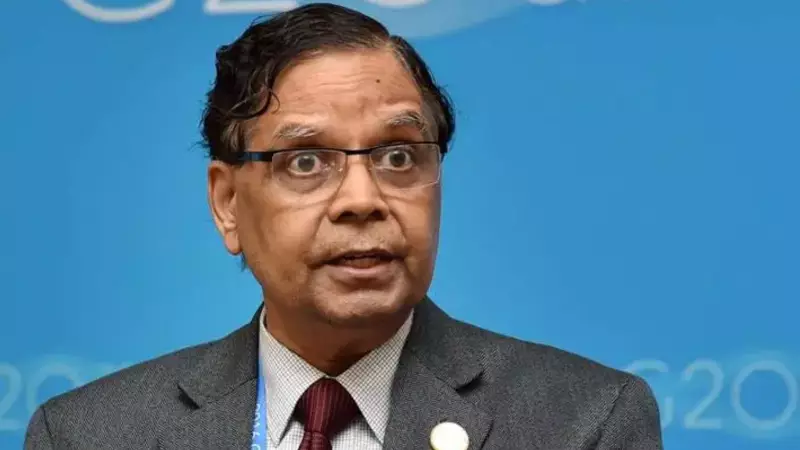
In a recent opinion piece, former Finance Minister P Chidambaram has voiced sharp criticism of the Narendra Modi-led government's economic policies, drawing attention to the subtle yet pointed advice from noted economist Arvind Panagariya. Chidambaram highlights that despite Panagariya being a favored economist of Prime Minister Modi, his recent recommendations serve as an implicit indictment of the administration's reform record over the past 11 years.
Panagariya's Stature and Discreet Criticisms
Arvind Panagariya, a tenured professor at Columbia University and a staunch advocate of free trade, has held significant roles in the NDA government, including as the first Vice Chairman of NITI Aayog and India's G20 Sherpa. His longevity and influence make his critiques particularly noteworthy. Chidambaram notes that Panagariya's criticisms are often disguised as encouragement, using phrases like 'shabash, dil maange more' to subtly push for more substantial reforms.
2025: A Year Lacking in Economic Reforms
Chidambaram challenges Panagariya's assertion that 2025 will be remembered as a year of economic reforms in India. He argues that a thorough review of media reports and parliamentary proceedings reveals no significant measures under the label of 'economic reforms' during that year. Examples cited include the simplification of GST rates, which he views as a correction of past errors, and the consolidation of labor laws, which has faced opposition from trade unions, including the BJP-affiliated Bharatiya Mazdoor Sangh.

Furthermore, Chidambaram points to the enactment of the VB G-RAM-G Act, which he claims dismantled a crucial welfare program for rural poor, as evidence of the government's anti-reform stance. He emphasizes that he cannot identify any measure from 2025 that qualifies as a significant economic reform, setting the stage for Panagariya's six-point agenda for 2026.
Six Key Recommendations for 2026
In a clever rhetorical move, Panagariya has outlined six measures the government should adopt in 2026, which Chidambaram interprets as a tacit admission of past failures. These recommendations include:
- Rollback Customs Duties: Panagariya advocates for a uniform 7% customs duty rate across imports, criticizing the NDA's protectionist policies that reversed earlier liberalization efforts under the UPA. Chidambaram links this to Modi's protectionist mindset from his tenure in Gujarat, which has influenced national policy.
- Finish QCO Withdrawal: Despite the government withdrawing 22 Quality Control Orders in 2025, Panagariya notes that over 700 such non-tariff barriers remain in force, hindering trade and economic openness.
- Sign Off Trade Deals: The economist calls for an end to the government's resistance to import liberalization, referencing missed opportunities like the CPTPP and RCEP withdrawals, which have stifled international trade agreements.
- Restrain DGTR: Panagariya urges a re-scripting of the Directorate General of Trade Remedies' mandate to reduce anti-dumping and other duties, as India's high tariff barriers contrast with its modest share in global trade.
- Don't Overvalue the Rupee: He recommends allowing market forces and the RBI to determine the rupee's value, intervening only during extreme volatility to avoid negative impacts on exports.
- Monitor Exports: To boost exports, Panagariya suggests simplifying regulations and compliance requirements, advocating for an annual review to eliminate bureaucratic hurdles.
Implications for Budget 2026-27
Chidambaram speculates that Panagariya's article may signal expectations for the upcoming Budget 2026-27 or reflect his frustration with the current economic trajectory. He concludes by urging the government to heed this advice, celebrating it as a potential turning point and calling for further steps to propel India's economic growth forward. Emphasizing that India has 'miles to go,' Chidambaram's analysis underscores the need for genuine reforms to address longstanding issues in the economy.






