

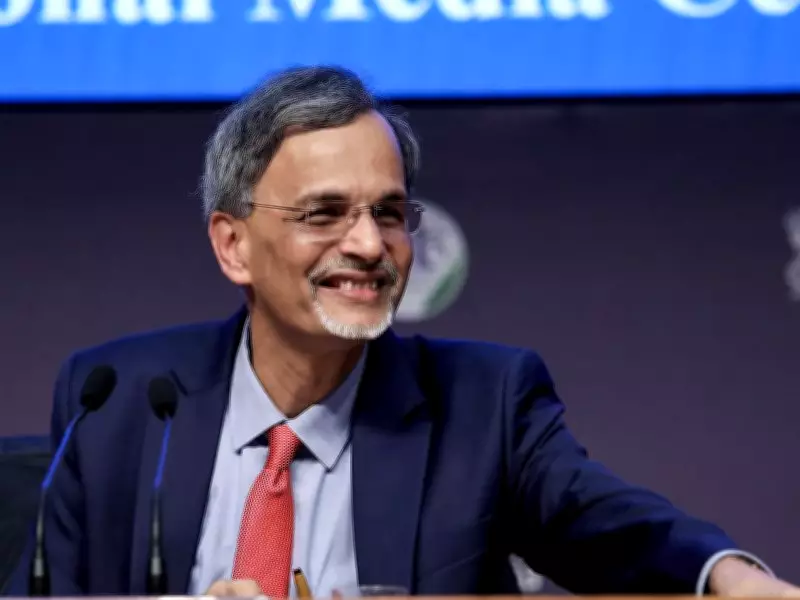
CEA Nageswaran Emphasizes Capital Efficiency for India's Economic Growth
Chief Economic Adviser V. Anantha Nageswaran has articulated a pivotal perspective on India's economic trajectory, asserting that enhanced capital efficiency holds the key to achieving robust growth, even in the context of a 30% savings rate. This insight underscores a strategic shift in focus from merely accumulating savings to optimizing their deployment across the nation's economic landscape.
The Core Argument: Efficiency Over Mere Accumulation
In his recent remarks, Nageswaran highlighted that while a high savings rate is traditionally viewed as a cornerstone for economic expansion, its true potential is unlocked only through efficient capital allocation. He pointed out that India's current savings rate, hovering around 30%, provides a substantial foundation. However, the critical challenge lies in channeling these resources into productive investments that yield higher returns and foster sustainable development.
The emphasis on capital efficiency reflects a nuanced understanding of economic dynamics, where the quality of investment often outweighs the quantity. Nageswaran suggested that by improving processes such as project implementation, reducing bureaucratic delays, and enhancing infrastructure outcomes, India can amplify the impact of its savings, thereby driving growth without necessitating an increase in the savings rate itself.

Implications for Policy and Investment
This perspective carries significant implications for policymakers and investors alike. It calls for a renewed focus on reforms that streamline capital deployment, such as:
- Strengthening financial markets to ensure better access to credit for productive sectors.
- Enhancing public-private partnerships to leverage private sector efficiency in infrastructure projects.
- Implementing governance improvements to reduce leakages and corruption in public spending.
Nageswaran's analysis suggests that by addressing these areas, India can achieve a multiplier effect, where each unit of savings generates more economic output, thus supporting robust growth trajectories even if the savings rate remains stable at 30%.
Broader Economic Context and Future Outlook
This discussion comes at a time when India is navigating global economic uncertainties and domestic challenges. By prioritizing capital efficiency, the country can enhance its competitiveness, attract more foreign investment, and create jobs, all while maintaining fiscal prudence. Nageswaran's remarks serve as a reminder that sustainable growth is not just about saving more but about investing smarter, aligning with broader goals of economic resilience and prosperity.






