

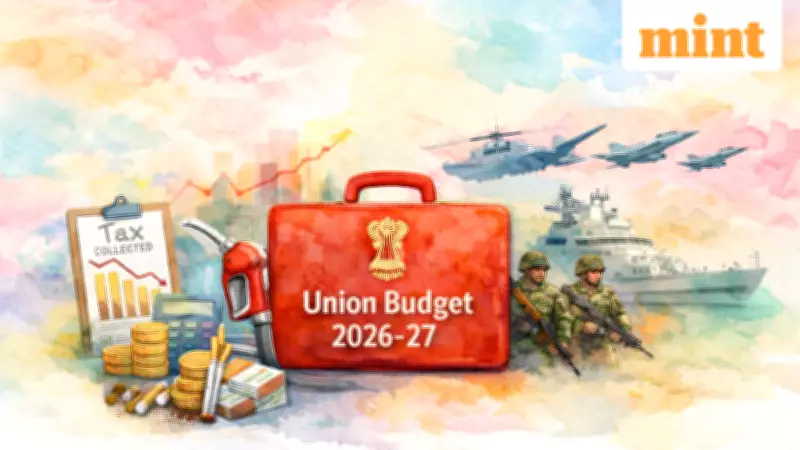
Budget 2026 in Charts: Decoding India's Fiscal Priorities Through Taxes, Excise, and Defence
Finance Minister Nirmala Sitharaman presented the Union Budget for the fiscal year 2026-27 on Sunday, 1 February 2026. This crucial financial blueprint arrives amidst a landscape of renewed geo-economic disruptions that continue to impact India's economic trajectory. The budget serves as a strategic response to these pressing challenges, offering a clear window into the government's priorities and policy directions for the coming year.
A Five-Part Data Series on Key Budgetary Concerns
This analysis is part of a comprehensive five-part series that meticulously examines the Union Budget 2026-27 across fifteen key areas of concern. Using visual charts and data-driven insights, this installment specifically focuses on three critical components: tax collections, excise duty mechanisms, and defence outlays. Each topic is explored through a pair of charts—one illustrating the contextual challenges faced, and another detailing the budgetary responses delivered.
Navigating Taxing Times: Revenue Outlook and Economic Growth
Nominal GDP growth experienced a slowdown, decelerating to 8% in FY26, primarily due to a significant plunge in inflation rates throughout the year. This subdued growth environment led to muted government tax collections, with the decline surpassing the initial impact of income tax cuts introduced in the previous budget. However, the outlook appears more optimistic for the upcoming fiscal period.

Economic growth at current prices is anticipated to accelerate, driven by rising inflation expectations. This upward trend, combined with a projected recovery in consumption patterns, suggests a much more robust revenue outlook. These factors collectively indicate that the government's overall tax growth is poised for improvement, providing a stronger fiscal foundation for future initiatives.
The Strategic Excise Lever: Responsive Economic Tool
Excise duty, currently levied on petroleum products and tobacco, represents a flexible fiscal lever that the government can adjust swiftly in response to evolving economic conditions. During periods of sharply rising oil prices, such as those witnessed during the pandemic and the Russia-Ukraine conflict, the duty was strategically reduced to mitigate broader inflationary pressures.
Conversely, last year, as oil prices slumped to a four-year low, the duty was increased even while retail prices remained stable. In the current fiscal year, the government has imposed additional excise duties on cigarettes and other tobacco products, a move expected to bolster excise duty collections significantly. This adaptive approach underscores the government's commitment to using excise mechanisms as a responsive economic tool.
Defence Spending: Balancing Global Standing and Domestic Needs
India's defence expenditure ranks as the third-largest globally among major economies, reflecting the nation's strategic importance on the world stage. However, defence spending as a percentage of GDP has shown a steady decline in recent years, slipping below the 2% threshold. This trend has raised concerns about adequate funding for national security needs.
The necessity for enhanced defence funding has become increasingly pressing amid heightened regional tensions over the past year. Incidents such as the aftermath of the Pahalgam terrorist attack and ongoing political instability in neighboring Bangladesh have underscored the importance of robust military preparedness. In response, the budget for FY27 projects an uptick in defence spending, expected to rise to 2.2% of GDP.
With global geopolitical risks intensifying, sustaining military readiness is paramount for ensuring national security. An increased budgetary outlay will facilitate the modernization of armed forces and enhance capabilities to counter emerging threats within today's complex and often hostile regional landscape.

Conclusion: A Budget of Strategic Responses
The Union Budget 2026-27 emerges as a document of strategic responses to multifaceted challenges. Through careful adjustments in tax policies, excise duties, and defence allocations, the government aims to navigate economic uncertainties while reinforcing national security. This analysis, presented through clear charts and detailed explanations, provides valuable insights into how fiscal priorities are being shaped in response to both domestic and international pressures.





