

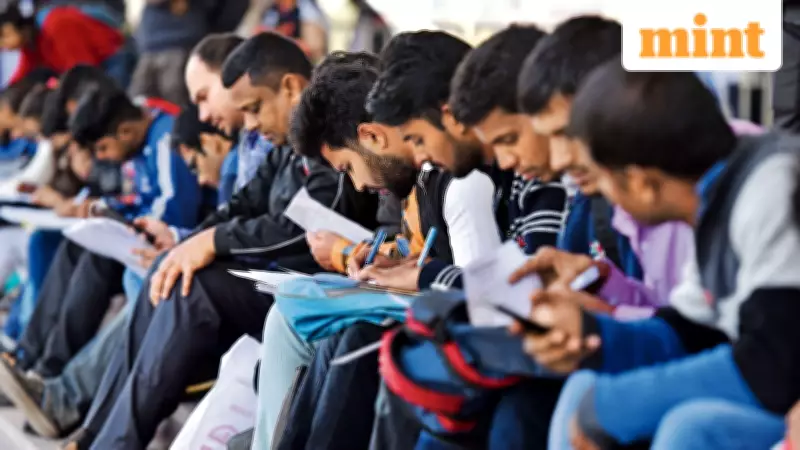
Budget 2026 Unveils Comprehensive Skilling Strategy for Tier-II and Tier-III Cities
In her budget speech on Sunday, Finance Minister Nirmala Sitharaman outlined the government's ambitious plan to enhance workforce skilling, with a particular emphasis on tier-II and tier-III cities. The initiative targets labour-intensive sectors such as textiles, small-scale enterprises, tourism, and medical tourism, aiming to bridge the gap between training efforts and tangible labour-market outcomes.
High-Level Committee to Address Skill Gaps and AI Impact
A high-level committee will be established to examine skill gaps across various industries and assess the impact of emerging technologies, including artificial intelligence (AI), on employment. This committee will also focus on upgrading education curricula to incorporate an understanding of AI, ensuring that the workforce is prepared for future technological shifts.
The Economic Survey 2025-26 highlighted a critical challenge in India's skilling landscape: the weak translation of training into durable labour-market value. This underscores the need for more effective implementation and alignment with industry demands.

Integrated Programme for Textile Sector and Other Labour-Intensive Industries
Sitharaman proposed an integrated programme for the labour-intensive textile sector, which includes the Textile Expansion and Employment Scheme. This scheme aims to modernise traditional clusters by providing capital support for machinery, technology upgradation, and establishing common testing and certification centres.
The proposed High-Powered Education-to-Employment and Enterprise Standing Committee will recommend measures to optimise growth, employment, and exports, particularly in the services sector, which is seen as a core driver of India's vision of Viksit Bharat.
AI's Impact on Jobs and the Need for Reskilling
These measures come at a time when AI is significantly impacting jobs across sectors globally, with many roles being automated. While Indian companies are actively reskilling their workforce in AI, the demand for ready-to-use talent remains critical. The committee will propose specific measures to embed AI in education curricula from the school level onwards and upgrade State Councils of Educational Research and Training (SCERTs) to strengthen teacher training.
Sunil Chemmankotil, country manager of Adecco India, noted that while skilling is crucial, much will depend on implementation. He emphasised that measures supporting manufacturing, services, and digital infrastructure can help generate formal employment.
Tax Incentives to Boost Employment and Attract Global Talent
The budget also includes proposals to attract global business and investment. A tax holiday until 2047 is proposed for foreign companies providing cloud services from Indian data centres, which is expected to encourage more data centres and global capability centres to establish their base in India, leading to increased employment in both metros and tier-II cities.
Additionally, to attract global talent, the budget proposes tax exemption on global income (other than Indian-sourced income) for experts who visit India and stay for five years, providing tax certainty and encouraging them to work in India for longer periods.
Focus on Semiconductor Industry and Rare-Earth Corridors
India plans to focus on research and training centres to develop technology and a skilled workforce in the semiconductor industry. The government's push for rare-earth minerals includes forming four rare-earth corridors to promote mining, processing, research, and manufacturing, which is expected to boost employment in these sectors.
Tourism and Sports Sectors as Key Employment Generators
Tourism was another key focus in the budget, with Sitharaman highlighting its potential for employment generation and foreign exchange earnings. A National Institute of Hospitality is proposed to bridge the gap between industry and academia, along with a pilot scheme to upskill 10,000 tourist guides across 20 iconic tourist sites.
According to a 2025 study by the World Travel & Tourism Council (WTTC), travel and tourism are expected to contribute nearly ₹42 trillion and generate about 64 million jobs in India by 2035.

Upskilling in the sports industry is also under focus under the Khelo India Mission, which aims to enhance skills among coaches, players, and support staff.
Corporate Mitras and Healthcare Hubs to Support SMEs and Healthcare
The government will support institutions like the Institute of Chartered Accountants of India in developing short-term, modular courses to create a cadre known as "Corporate Mitras," who will help medium and small-scale enterprises meet compliance requirements at affordable costs.
A proposal to establish five regional medical hubs, in partnership with the private sector, is expected to create diverse job opportunities for healthcare professionals.
Neeti Sharma, CEO of TeamLease Digital, emphasised that the link between school education, apprenticeships, internships, and work-integrated learning is key to success. However, she noted that intent alone is not enough, and real outcomes will depend on effective execution and collaboration between industry, education institutions, and employers.





