

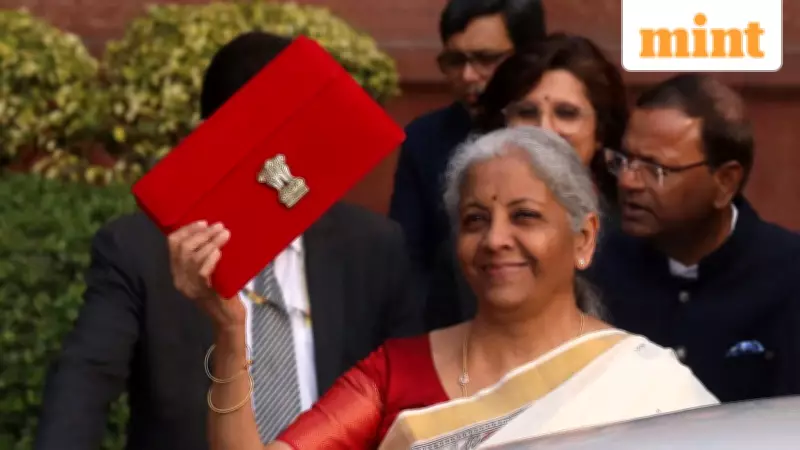
Budget 2026: Sitharaman's Sunday Speech to Break Tradition with Focus on Part B
Finance Minister Nirmala Sitharaman's Budget speech today is anticipated to mark a significant departure from previous Budget addresses in multiple ways, as per media reports citing government sources familiar with the developments. This year's presentation is poised to set new precedents in both timing and content, reflecting a strategic shift in India's fiscal communication.
Unusual Sunday Presentation and Record Ninth Budget
First, it will be a rare occasion for Finance Minister Nirmala Sitharaman to present the Budget on a Sunday, adding a unique dimension to this year's fiscal announcement. This scheduling anomaly underscores the government's intent to capture widespread attention and engagement from citizens and stakeholders alike. FM Sitharaman will present her record ninth consecutive Union Budget, with expectations running high around potential reforms and planned government expenditure that could shape India's economic trajectory in the coming years.
Shift in Focus from Part A to Part B
Unlike previous years where the Finance Minister's speech has largely concentrated on Part A—outlining planned initiatives and sectoral strategies—this year's address is expected to devote substantial time and detail to Part B. Traditionally, Part B has been limited to brief policy statements and concluding remarks, but government sources indicate a deliberate expansion of this section's scope and significance.

Government sources told Hindustan Times that the FM is likely to speak at length in Part B, marking a clear departure from earlier budget speeches where this section consisted of only a few announcements. This strategic shift suggests a move toward more comprehensive economic storytelling and vision-setting.
Emphasis on Short-Term and Long-Term Goals
"Part B of the Budget speech will place strong emphasis on both short-term and long-term goals," sources told HT. They elaborated that it would reflect India's economic vision and priorities as the country moves deeper into the second quarter of the 21st century. This balanced approach aims to address immediate fiscal needs while laying groundwork for sustained growth and development.
The reimagined Part B will tackle both immediate priorities and strategic objectives spanning multiple years, sources told MoneyControl. This dual approach seeks to balance the pressing needs of the current fiscal environment with preparations for sustained economic growth, according to the report. The government's unconventional approach represents a deliberate choice to emphasise strategic vision over traditional numerical presentations, signalling a new chapter in how India communicates its fiscal and economic planning.
Showcasing India's Global Strengths
Part B will also offer a roadmap for showcasing India's local strengths on the global stage, highlighting the country's current capabilities as well as its future potential, the Hindustan Times report said. This focus on international positioning aligns with India's growing economic influence and aspirations for greater global leadership in various sectors.
Heightened Global Attention and Economic Context
The second part of the Budget is expected to draw significant attention from economists and experts in India and around the world, given its broader implications for the economy and policy direction, the report said, quoting sources. This heightened scrutiny reflects the interconnected nature of global economies and India's pivotal role in regional and international financial systems.
The Union Budget 2026 comes amid global uncertainties. While domestic demand has held up and recent GDP growth reached a 6-quarter high of 8.2%, it arrives against a backdrop of volatile commodity prices and uneven monetary easing by major central banks. These external factors add complexity to the government's fiscal planning and increase the importance of clear, forward-looking economic communication.
Overall, Finance Minister Nirmala Sitharaman's Budget 2026 speech represents a transformative moment in India's fiscal presentation style, moving beyond conventional formats to articulate a more holistic economic narrative that addresses both domestic priorities and global ambitions.






