

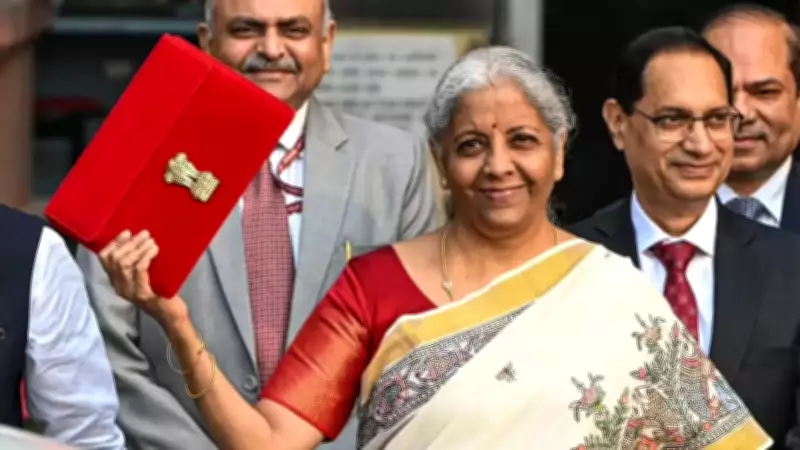
Budget 2026: FM Sitharaman to Break Tradition with Strategic Part B Focus
As Union Budget 2026 approaches, all eyes are on Finance Minister Nirmala Sitharaman, who is set to deliver her budget speech in just hours. In a significant departure from decades of convention, sources indicate that Sitharaman might utilize Part B of her address to present the country's long-term vision for investors, rather than limiting it primarily to taxation matters.
Historic Shift in Budget Format
Traditionally, Part A of the budget speech has carried core policy measures and major economic announcements, while Part B has been largely confined to taxation proposals. However, this year's presentation is expected to mark a clear shift in this established format.
According to sources cited by economic publications, the finance minister is likely to place greater emphasis on Part B, transforming it from a technical tax document into a strategic economic roadmap. This represents a fundamental change in how the government communicates its economic priorities to both domestic and international stakeholders.

Comprehensive Economic Vision
The revamped Part B is expected to cover both near-term economic priorities and long-term structural ambitions, providing investors with a clearer sense of where the Indian economy is headed. Government officials suggest that this section will not be confined to tax proposals but will include a broader strategic outline aimed at boosting India's global standing.
The narrative is anticipated to highlight domestic strengths, existing economic capacity, and future growth prospects, alongside the policy path required to maintain progress. "The idea is to lay out a broader, long-term vision," a government official explained, emphasizing the strategic nature of this year's budget presentation.
Addressing Global Uncertainties
The timing of this format shift appears closely linked to current geopolitical uncertainties, including higher tariffs imposed by major trading partners like the United States. The government intends to use the budget speech to present a long-term policy message that offers reassurance to foreign investors concerned about global economic volatility.
This strategic approach aligns with recommendations from the Economic Survey presented in Parliament earlier this week, which highlighted the need for a multi-pronged strategy to improve India's investment environment. The survey emphasized tackling both structural and cyclical issues while underscoring the importance of showcasing India's stability, macroeconomic strength, sustained growth, and large market size.
Investment Climate Enhancement
The Economic Survey specifically noted that foreign direct investment inflows have yet to reach their full potential despite the government's stated intent and track record in economic management. By using Part B of the budget speech to articulate a comprehensive economic vision, the finance minister aims to address this gap and create a more favorable environment for both domestic and international investment.
This innovative approach to budget presentation represents a significant evolution in how India communicates its economic strategy to the world. As global economic conditions remain challenging, the government's decision to provide greater clarity and long-term direction through the budget mechanism could prove crucial in maintaining investor confidence and sustaining economic momentum.
The budget speech is expected to balance immediate fiscal measures with visionary economic planning, creating a bridge between current policy actions and future economic aspirations. This dual focus reflects the government's recognition that in today's interconnected global economy, clear communication of economic strategy is as important as the policies themselves.






