

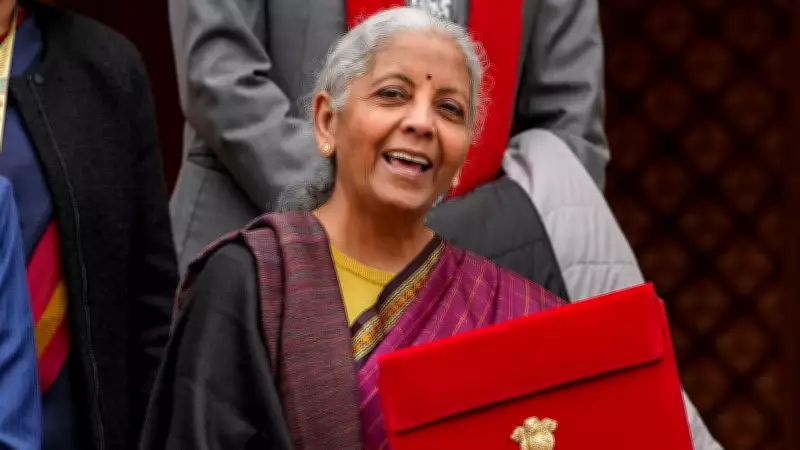
Budget 2026: The Significance of a Short and Boring Presentation
In a departure from the usual fanfare, Finance Minister Nirmala Sitharaman delivered what many are calling the most uneventful Budget presentation in recent memory. Budget 2026 was conspicuously short on rhetoric, lacking the customary Thirukkural quotes and dramatic announcements that typically characterize such events. This deliberate simplicity, however, might be exactly what India's economy needs at this juncture.
A Strategic Shift in Government Focus
The Finance Minister's decisions clearly indicate a reorientation of governmental priorities. By increasing transaction taxes on speculative stock market activities and refusing to grant long-term capital gains tax exemptions for investors, the government has sent a powerful message. Its attention is firmly fixed on bolstering the real economy rather than catering to the financial markets. This move, while disappointing to stock market participants, underscores a commitment to sustainable economic foundations.
Addressing Fiscal Challenges and Revenue Shortfalls
The government faced significant fiscal headwinds heading into this Budget. The "GST Bachat" initiative of September 2025 created a substantial Rs 1.3 lakh crore shortfall in the 2026 tax estimates, an amount roughly equivalent to the nation's entire education expenditure. With limited options to increase income taxes on salaried individuals and corporate tax collections diminished following the 2019 tax cuts, the Finance Minister turned to excise duties as a revenue source.

Excise duties are projected to rise by an estimated 16 percent in the coming year, with basic duties on petroleum products and sin goods seeing a dramatic 100 percent increase. This move coincides with reports of India's potential agreement to purchase cheaper Venezuelan oil, raising questions about whether the government plans to levy higher duties without passing savings to consumers.
Expenditure Priorities and Capital Investment
On the spending front, the Budget addresses several critical areas. A substantial and unexpected increase in allocation for VB-G RAM G appears designed to counter opposition criticism regarding MGNREGA. Defense expenditure also sees a material increase, reflecting global trends amid an increasingly complex international landscape.
One consistent hallmark of the Narendra Modi government's budgetary approach has been the steady rise in capital expenditure. Capital spending has climbed from 14 percent of total expenditure in 2014 to 23 percent in Budget 2026, demonstrating a continued emphasis on infrastructure and long-term investments.
The Persistent Challenge of Government Debt
Fiscal discipline remains a pressing concern, with the government budgeting to spend 20 percent more than its tax collections, continuing a decades-long pattern. The Union government's debt-to-GDP ratio stands at 56.1 percent, with a commitment to reduce this to 55.6 percent next year and ultimately reach 50 percent by 2031.
However, the more alarming debt situation exists at the state level. States' debt-to-GDP ratio has increased from 22 percent in 2014 to 28 percent currently, driven by populist policies. Even traditionally well-managed states like Tamil Nadu and Punjab have seen their total debt increase nearly tenfold over the past 15 years. This growing state debt represents a significant economic vulnerability that global investors and ratings agencies monitor closely.
Manufacturing: A Renewed but Challenging Focus
The Finance Minister's emphasis on manufacturing in her speech inadvertently highlights the struggles of the "Make in India" initiative. Manufacturing's share of the economy has actually declined from 17 percent in 2014 to just 13 percent currently, despite ambitious targets to double its contribution. The Budget's tepid announcements in this sector suggest recognition that government intervention through schemes may not be the solution.

As noted in last year's Economic Survey by the Chief Economic Advisor, boosting India's manufacturing sector requires the government to "get out of the way" rather than create more bureaucratic hurdles. In this context, a short, boring Budget that avoids grandiose schemes and dramatic interventions might represent the most productive approach for fostering genuine industrial growth.
The overall message of Budget 2026 is one of pragmatic realism over political spectacle. By focusing on transaction taxes, addressing fiscal gaps through excise duties, and maintaining capital expenditure priorities, the government appears to be adopting a more restrained economic management style. Whether this approach will successfully navigate India's complex fiscal challenges while stimulating manufacturing growth remains to be seen, but the deliberate simplicity of this Budget suggests a recognition that sometimes less government intervention can be more effective.





