

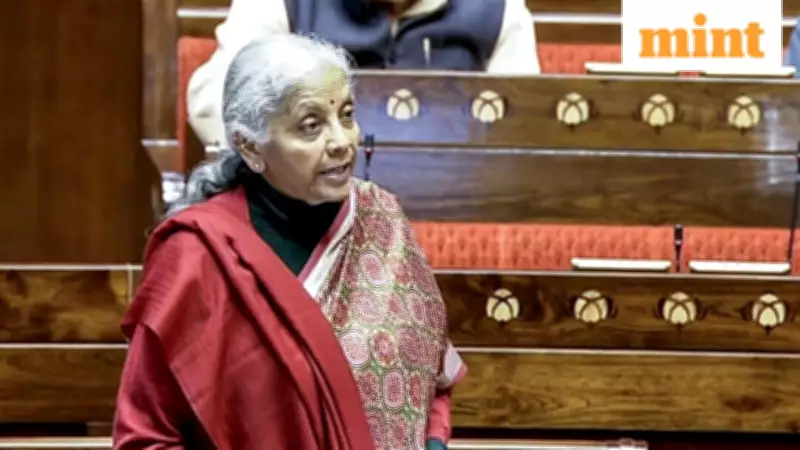
With just two days remaining until Finance Minister Nirmala Sitharaman delivers the highly anticipated Union Budget 2026 speech on Sunday, February 1, 2026, the nation's attention is firmly fixed on North Block. This landmark presentation marks Sitharaman's ninth consecutive budget address and represents the first time in over a decade that the Union Budget will be unveiled on a Sunday, adding a unique dimension to this crucial fiscal event.
Budget 2026 Preparation and Key Ceremonies
The traditional Halwa ceremony, symbolizing the final stage of budget preparation, was conducted on January 27 at the Budget Press in North Block. This significant ritual, attended by Union Finance Minister Nirmala Sitharaman, precedes the lockdown period during which officials finalize the budget documents in complete secrecy. The ceremony underscores the meticulous planning and tradition that characterize India's budget-making process.
Economic Survey 2026: A Robust Outlook with Cautions
Tabled in Parliament on January 29, the Economic Survey 2026 serves as the government's comprehensive health report on the Indian economy. According to the survey, India's economy is projected to expand within a range of 6.8% to 7.2% during FY27. This optimistic growth forecast is attributed to strong macroeconomic fundamentals and a series of regulatory reforms implemented over recent years.

However, the survey also highlights potential challenges, noting that both core and headline inflation rates are likely to be higher in FY27 compared to FY26. Despite this upward trend, the survey suggests that inflation is unlikely to become a major concern for policymakers. On the fiscal front, as of November 2025, India's fiscal deficit stood at 62.3% of the Budget Estimates. The government maintains its commitment to achieving a fiscal deficit target of 4.4% of GDP by FY26, as emphasized in the survey findings.
Budget 2026: Key Dates and Parliamentary Schedule
The Budget Session follows a carefully structured timeline:
- January 28: The Budget Session commences with President Droupadi Murmu's joint address to both Houses of Parliament.
- January 29: The Lok Sabha meets as per the provisional calendar, and at 11 AM, Chief Economic Adviser V Anantha Nageswaran presents the Economic Survey.
- February 1: Finance Minister Nirmala Sitharaman presents Union Budget 2026 at 11 AM in the Lok Sabha.
- February 13: The first half of the Budget Session concludes.
- March 9: The second half of the Budget Session begins.
- April 2: The Budget Session ends, with both Houses adjourned sine die.
Sectors in the Spotlight for Budget 2026
Budget 2026 is expected to focus on propelling India to historic economic heights through strategic allocations across key sectors. Industry stakeholders have identified several priority areas likely to receive significant attention:
- Infrastructure and Development: Railways, urban development, and logistics.
- Manufacturing and Technology: Electronics, defense, automotive, and artificial intelligence (AI).
- Economic Enablers: Micro, Small, and Medium Enterprises (MSME) and renewable energy.
Additionally, sectors such as healthcare, tourism, and agriculture are anticipated to benefit from government allocations aimed at enhancing their growth and sustainability.
Reflecting on Budget 2025: Major Tax Reforms
In the previous budget, Finance Minister Sitharaman delivered substantial relief to Indian taxpayers by reducing income tax on earnings up to ₹12 lakh, a move that benefited millions of middle-class citizens. For salaried individuals, the non-taxable income under the new tax regime increased to ₹12.75 lakh after accounting for the standard deduction. Furthermore, the announcement of the New Income Tax Act, 2025, set to take effect from April 1, marked a significant overhaul of the tax framework.
As the countdown to Budget 2026 continues, all eyes remain on the government's fiscal strategy to balance growth, inflation management, and sectoral development. The Sunday presentation adds a distinctive element to this year's budget, with expectations running high across industries and the public alike.






