

Budget 2026 Unveils Strategic Measures to Shield Exporters from US Tariff Impact
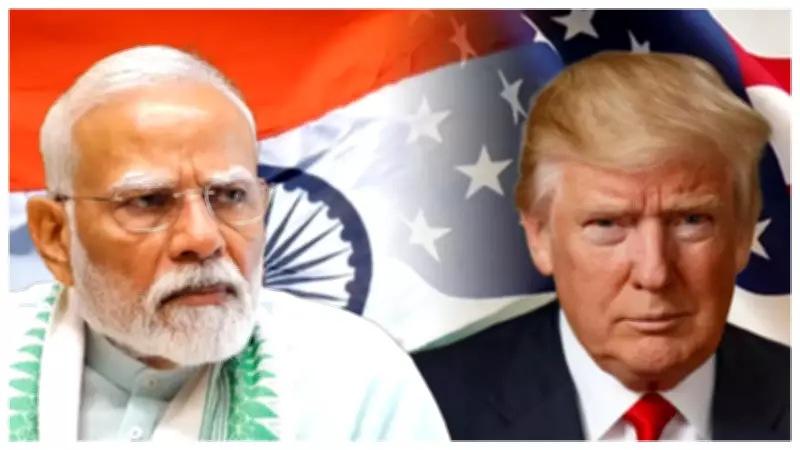
In a decisive move to protect key export sectors from the brunt of steep US tariffs, Finance Minister Nirmala Sitharaman announced a series of targeted customs and manufacturing initiatives in the Union Budget 2026. These measures are strategically positioned as India's response to the up to 50% duties imposed by US President Donald Trump on imports of Indian goods, aiming to recalibrate the nation's trade posture amid escalating global economic risks.
Customs Duty Reductions and Export Sector Relief
Seeking to provide immediate relief, Sitharaman proposed reducing the tariff rate on all dutiable goods imported for personal use from 20% to 10%. This adjustment is part of a broader effort to enhance consumer affordability while navigating international trade challenges. The Budget specifically addresses industries like textiles and seafood, which have been significantly affected by the US tariff hikes, with measures designed to bolster export competitiveness.
In a significant boost for the seafood industry, the finance minister proposed increasing the limit for duty-free imports of specified inputs used for processing seafood for export. The limit will rise from 1% to 3% of the FOB value of the previous year's export turnover. "I propose to increase the limit for duty-free imports of specified inputs used for processing sea foods for export from the current one per cent to three per cent of the FOB value of the previous year's export turnover," Sitharaman stated during her Budget speech.

Additionally, the duty-free imports of specified inputs, currently available for exports of leather or synthetic footwear, will be extended to exports of shoe uppers. "I also propose to allow duty-free imports of specified inputs, which is currently available for exports of leather or synthetic footwear, to exports of shoe uppers as well," she added. These labour-intensive sectors have faced substantial challenges in the US, a major export destination, following Trump's tariff decision.
Recent trade data underscores the urgency of these measures. During April-December 2025-26, India's leather and leather products shipments dipped marginally by 0.23% to $3.3 billion. Conversely, seafood exports showed resilience, rising 15.53% to $6.5 billion in April-December 2025, up from $5.67 billion in the same period last year.
Manufacturing Push Through Duty Exemptions
As part of a comprehensive manufacturing push, Sitharaman announced a string of basic customs duty exemptions across critical sectors. In a boost to the defence industry, raw materials imported for manufacturing aircraft parts used in maintenance, repair, or overhaul (MRO) requirements by defence sector units will be exempted from basic customs duty. The Budget also provides for exempting customs duty on components and parts required for manufacturing civilian training and other aircraft.
Key exemptions include:
- Basic customs duty exemption on specified parts used in the manufacture of microwave ovens.
- Extension of duty exemption to capital goods used for manufacturing lithium-ion cells for batteries and critical minerals, including those for battery energy storage systems.
- Exemption on the import of sodium antimonate for use in manufacturing solar glass.
- Duty exemption on capital goods required for processing critical minerals in India.
In the nuclear power segment, Sitharaman proposed extending the basic customs duty exemption on imports of goods required for nuclear power projects until 2035, expanding this benefit to "all nuclear plants irrespective of their capacity."
Rare Earth Corridors and Fiscal Discipline
Sitharaman also proposed support for mineral-rich states such as Odisha, Kerala, Andhra Pradesh, and Tamil Nadu to establish dedicated rare earth corridors. This initiative aligns with the government's focus on critical minerals and aims to enhance domestic production capabilities.

The Budget marked a strategic spending push while maintaining fiscal discipline. Capital expenditure will be increased by 9% to Rs 12.2 trillion in the fiscal year beginning April 1, with focus areas including railways, small businesses, and health. The fiscal deficit will be curbed to 4.3% of GDP in the coming year from an estimated 4.4% in the current year, while government debt is projected to decline to 55.6% from 56.1%.
"Our first duty is to accelerate and sustain economic growth by enhancing productivity and competitiveness and building resilience to volatile global dynamics," Sitharaman emphasized earlier in her address. She presented the Union Budget for a record ninth time, underscoring her experience in navigating complex economic landscapes.





