

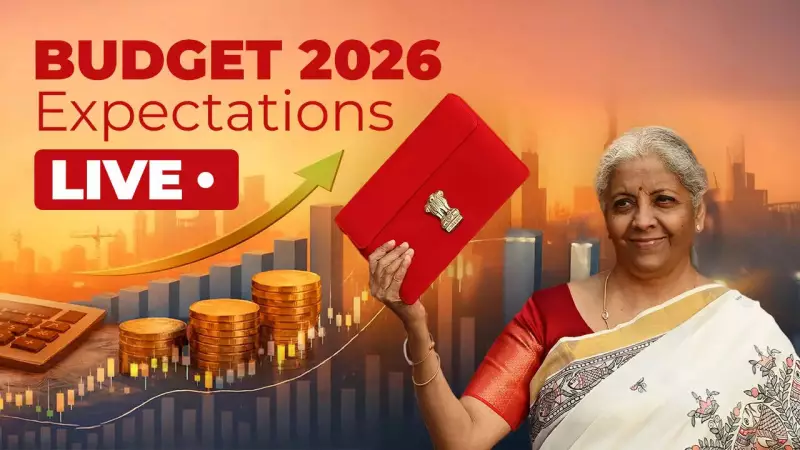
Budget 2026 Expectations: Comprehensive Reforms Anticipated in FM Sitharaman's Ninth Budget
As Finance Minister Nirmala Sitharaman prepares to present the Union Budget 2026 on February 1, 2026, expectations are soaring across various sectors. This budget, reportedly the first to be presented on a Sunday, comes at a critical juncture when the global economy faces turbulence due to trade and tariff wars initiated by US President Donald Trump. The budget speech is scheduled to commence at 11:00 AM, marking a pivotal moment for India's economic trajectory.
Key Focus Areas and Sectoral Demands
The budget is anticipated to address multiple pressing issues, with a strong emphasis on providing relief to export-facing sectors grappling with the impact of 50% tariffs. Middle-class and salaried taxpayers are eagerly awaiting income tax relief, alongside calls for simplified compliances and rationalized TDS and TCS requirements. Post-Operation Sindoor, the defence sector's budget allocation is also under scrutiny, highlighting the diverse expectations from this fiscal blueprint.
Healthcare and Medical Devices Sector
In the healthcare domain, there is a significant push for a Production Linked Incentive (PLI) infusion of ₹10,000 crore for medical devices. This initiative aims to accelerate India's self-reliance in pharmaceuticals and medtech, covering oncology, imaging, and implants. By reducing the 70% import dependence, it could foster domestic production worth ₹1.2 lakh crore by 2030. Additionally, proposals include a 95% increase in PM-ABHIM funding for rural health infrastructure, zero customs duties on essential APIs, and the extension of Ayushman Bharat to 50 crore more citizens, including gig workers. R&D credits of up to 200% for the biotech sector are also sought to position India as a global pharmacy hub with a projected market size of $130 billion by the end of the decade.

Green Energy and Sustainability
The budget is viewed as a defining moment for India's green energy ambitions. Experts advocate for an innovative, integrative approach that embeds sustainability across economic, social, and environmental dimensions. Enhancing financial incentives, investing in infrastructure, fostering innovation, promoting sustainable finance, and ensuring inclusive energy access are key recommendations. Such measures could energize India's transition to a low-carbon economy, aligning with climate commitments while unlocking opportunities for economic growth, job creation, and global leadership in clean energy.
Real Estate and Homebuyers' Expectations
For the real estate sector, particularly in high-growth areas like the NCR, Budget 2026 presents a crucial opportunity to improve homeownership. Proposals include raising the affordable housing cap from ₹45 lakh to around ₹90 lakh to extend benefits like 1% GST and tax incentives to mid-income projects. Reviving the first-time buyer additional interest deduction under Section 80EEA and easing credit for developers could reduce acquisition costs and EMI burdens. Coupled with sustained investment in metro, expressway, and urban infrastructure, these measures are expected to boost demand in peripheral corridors and ensure stable, long-term growth for the sector.
Digital Trust and Cybersecurity
In the digital realm, there is a call to build guardrails for digital trust, moving beyond the success of digital payments. Experts emphasize the need to treat fraud detection as critical infrastructure rather than a private compliance cost. The budget is urged to incentivize AI-driven defense mechanisms to counter AI-driven fraud, which is essential for scaling avenues like digital lending and enhancing overall cybersecurity.
Maritime Sector Reforms
The maritime sector has outlined three key expectations: capital allocation for the Maritime Amrit Kaal Vision, advancing Atmanirbhar Bharat through container manufacturing and indigenous shipping lines, and trade facilitation through digitization. Scaling up the Sagarmala Programme, developing trunk infrastructure in ports, and promoting port-led industries are prioritized to attract private participation and strengthen India's global trade competitiveness.

Historical Context and Broader Implications
Traditionally presented on February 28, the budget's timing was changed in 2017 by the Narendra Modi government to allow ministries more planning time. The separate Railway Budget was also discontinued, with Suresh Prabhu being the last minister to present it. The Budget 2026 session of Parliament begins on January 28, 2026, with the Economic Survey 2025-26 set to be tabled this week. This survey, prepared by the Department of Economic Affairs, provides a roadmap for economic growth and development, underscoring the budget's significance in shaping India's future.
Top sectors in focus for Budget 2026 include infrastructure, railways, roadways, export-facing industries, manufacturing, services, agriculture, education and skilling, and defence. As stakeholders await the unveiling, the budget is poised to address both immediate challenges and long-term strategic goals, reflecting the government's commitment to fostering economic resilience and growth.





