

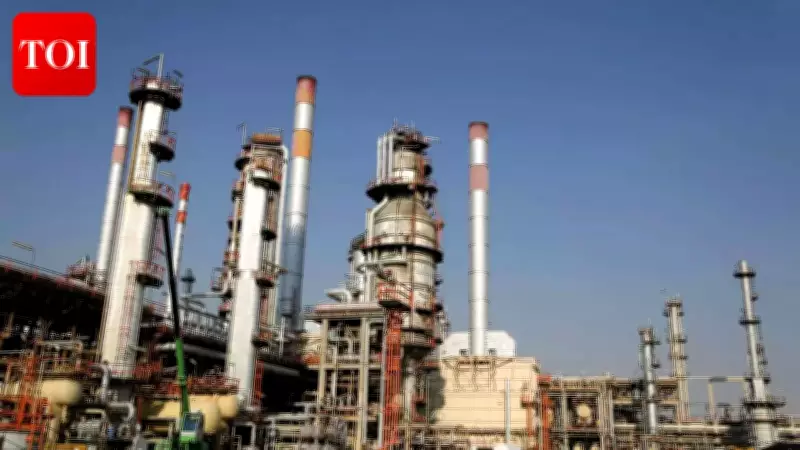
Saudi Aramco Stock Soars Amid Escalating Iran-Israel Conflict
Saudi Aramco, the state-backed oil giant, experienced its most significant single-day surge since April 2023 on Sunday, as the ongoing war between Iran and Israel entered its second week. This geopolitical turmoil has triggered substantial disruptions in global oil supply chains, with analysts predicting a sharp rise in oil prices when international markets resume trading.
Market Reaction and Price Movements
Shares of Aramco climbed as much as 4.9% during trading in Riyadh before settling at a 4.1% gain by the close. This rally coincided with Brent crude prices surpassing the $90 per barrel threshold on Friday, marking a critical psychological level for energy markets. The stock's performance reflects heightened investor anxiety over potential supply constraints and escalating regional tensions.
Supply Disruptions and Production Adjustments
The conflict has led to near-closure conditions at the Strait of Hormuz, a vital maritime chokepoint for global oil exports. In response, the United Arab Emirates (UAE) and Kuwait have initiated reductions in oil production, exacerbating worldwide energy supply interruptions. These developments are expected to propel Brent crude prices even higher in the coming days.

Junaid Ansari, Head of Research and Strategy at Kamco Investment Co., commented on the situation, stating, "For Aramco, we believe that the gain in oil prices would offset a decline in exports. We also believe that Aramco should be able to re-route a bulk of its shipments to the Red Sea. It's just about logistics and handling the excess capacity."
Strategic Redirection of Oil Cargoes
To mitigate risks associated with the Strait of Hormuz, Aramco has been actively redirecting oil cargoes to Red Sea facilities located on Saudi Arabia's west coast. This logistical shift aims to ensure continuity in exports despite the volatile security environment. The company's ability to adapt its supply routes is seen as a key factor in maintaining operational stability during the crisis.
Broader Geopolitical Context
The Iran-Israel war has introduced significant uncertainty into global energy markets, with implications extending beyond immediate price fluctuations. The deployment of a third US aircraft carrier to the region and Israel's extensive strikes on Iran underscore the escalating military posture, further complicating supply logistics. Additionally, efforts like LuLu's airlift of 80,000 kg of Indian produce into the UAE highlight broader trade disruptions affecting various sectors.
As the conflict persists, market observers are closely monitoring Aramco's capacity to navigate these challenges while capitalizing on higher oil prices. The interplay between geopolitical risks and energy economics will likely define market dynamics in the weeks ahead.






