

Andhra Pradesh's Electricity Demand Set for Dramatic Surge by 2036
A recent report from the Central Electricity Authority, under the Union Ministry of Power, projects a sharp increase in electricity demand for Andhra Pradesh by 2036. The findings indicate that the state's energy requirements will grow at a rate significantly faster than the national average, necessitating substantial investments in power generation and transmission infrastructure.
Current and Projected Demand Figures
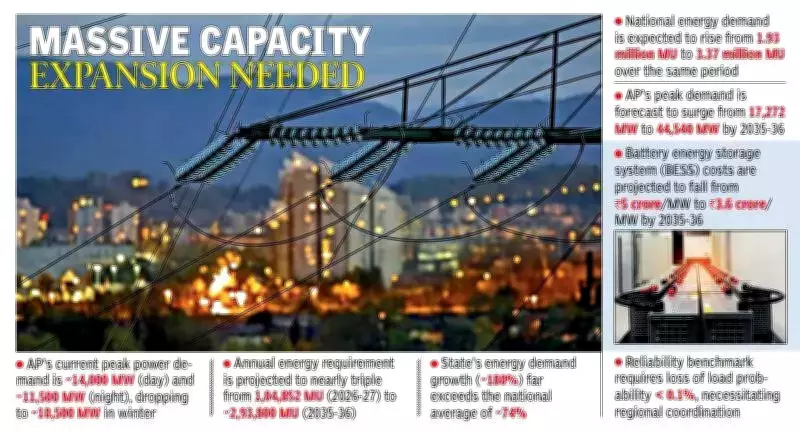
Currently, Andhra Pradesh experiences a peak demand of approximately 14,000 MW during daytime hours and around 11,500 MW at night. Demand peaks in summer months and declines to about 10,500 MW in winter. However, the report forecasts a dramatic shift over the next decade.
The annual energy requirement is expected to rise from 1,04,852 million units in 2026-27 to nearly 2,93,800 million units by 2035-36. This represents an almost threefold increase, with peak demand projected to jump from 17,272 MW to 44,540 MW over the same period.

Comparison with National Trends
While Gujarat and Maharashtra are anticipated to remain the states with the highest overall energy consumption, Andhra Pradesh's demand growth of approximately 180% far exceeds the national average growth of around 74%. Nationally, demand is expected to increase from 1.93 million million units to 3.37 million million units.
This rapid growth underscores the need for a robust expansion of generation and transmission systems to ensure reliability. The report emphasizes the importance of an optimal capacity mix that incorporates renewable energy sources and battery energy storage systems.
Infrastructure and Cost Advantages
Andhra Pradesh holds a competitive edge in infrastructure costs. The transmission cost for renewable energy in the state is estimated at Rs 1 crore per MW, which is significantly lower than in Rajasthan (Rs 3 crore per MW) and Gujarat (Rs 1.5 crore per MW). This cost-effectiveness facilitates smoother integration of renewable energy into the grid.
Additionally, the report highlights a declining cost trajectory for storage technologies. Battery energy storage system costs are projected to decrease from Rs 5 crore per MW in 2025-26 to Rs 3.6 crore per MW by 2035-36. This reduction will be crucial for managing high renewable energy penetration, especially during non-solar hours when night-time demand remains substantial.
Ensuring Power Supply Adequacy
The adequacy of power supply is assessed using metrics such as loss of load probability and expected energy not served. The national benchmark aims to maintain an LOLP of less than 0.1%, minimizing the probability of demand exceeding supply. For Andhra Pradesh, achieving this standard will require coordinated efforts with the Southern Region's shared resources.
The Central Electricity Authority's generation adequacy plan anticipates a significant surge in both total energy consumption and peak power demand over the next decade. This projection calls for strategic planning to enhance infrastructure resilience and support sustainable energy development.






