In a crucial pre-Budget consultation, leading economists presented a roadmap to Prime Minister Narendra Modi, emphasizing the urgent need to catalyze private investment, deepen structural reforms, and harness artificial intelligence to propel India towards its Viksit Bharat 2047 vision.
Key Recommendations for Sustained Growth
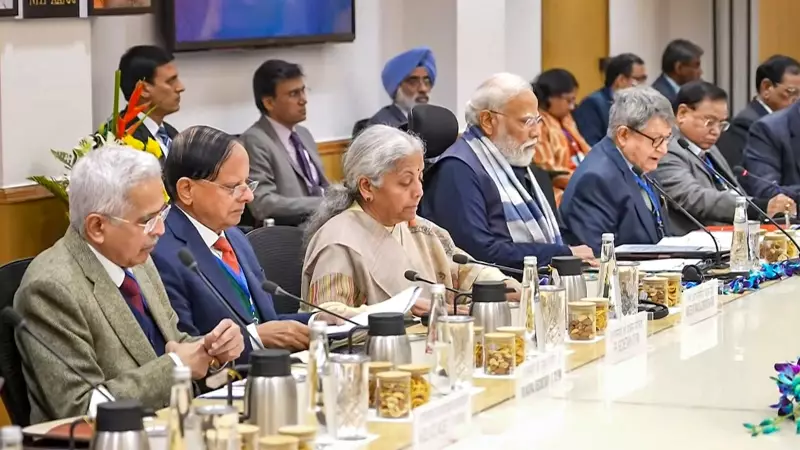
The meeting, held at Niti Aayog on Tuesday, saw over 20 experts, including Shankar Acharya, NR Bhanumurthy, and Ashima Goyal, share strategic insights with the Prime Minister and Finance Minister Nirmala Sitharaman. The central theme was 'Aatmanirbharta and Structural Transformation'.
The economists pressed for extending the reform push to critical yet complex sectors like land and agriculture. They advocated for rationalising subsidies, diversifying trade partnerships, and offering clear incentives for philanthropy and research & development. A significant consensus emerged on maintaining the government's capital expenditure focus while ensuring fiscal discipline.

Technology and Talent at the Forefront
A major highlight was the focus on frontier technology. Multiple participants proposed establishing centres of excellence for Artificial Intelligence (AI), recognising AI's potential as a cross-sectoral productivity multiplier. Linked to this was the suggestion to introduce measures, such as grants, to encourage the return of skilled Indian talent from abroad, creating a powerful synergy for innovation.
The discussion also covered scaling India's Digital Public Infrastructure (DPI) and using cutting-edge tech to enhance competitiveness in manufacturing and services.
Addressing Investment and Fiscal Challenges
Concerns over sluggish private investment were met with ideas for a "carrot and stick" policy—penalising polluting industries while rewarding those that scale up investments. The worrying trend of net Foreign Direct Investment (FDI) outflow, which continued for a second month with a $1.55 billion outflow in October, was flagged, with calls for policy stability to reverse this trend.
On government finances, suggestions ranged from reducing populist freebies and rationalising subsidies to ensuring states adopt more disciplined spending. Experts also urged measures to boost household savings and protect consumers from financial mis-selling.
Prime Minister Modi, in his remarks, stressed the need for "mission-mode reforms" to achieve global integration. He asserted that India's policymaking must remain anchored in the long-term goal of 2047. In a separate LinkedIn post, he listed key reforms of 2025, including GST rationalisation, the SHANTI Act for nuclear energy, and the Viksit Bharat Rozgar Guarantee framework, stating India has "boarded the Reform Express."