

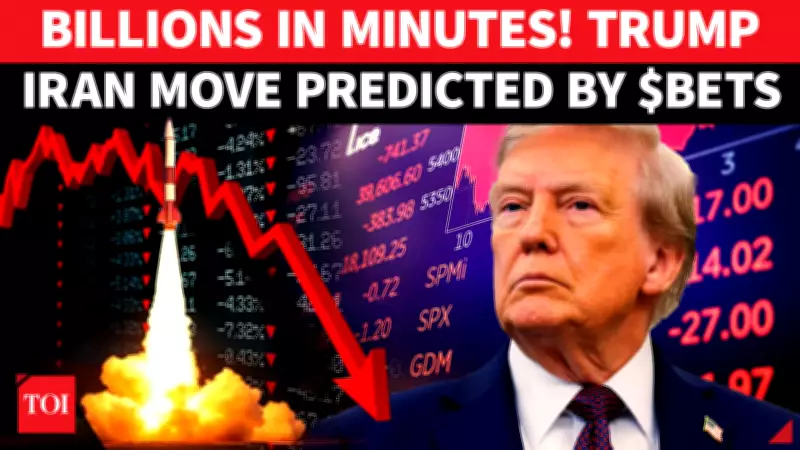
Massive $9 Billion Bets Placed Minutes Before Trump's Iran Strike Pause
The financial markets exhibited a highly unusual pattern just before a major geopolitical announcement. Minutes prior to former President Donald Trump declaring a pause in military strikes against Iran, massive trades totaling approximately $9 billion were executed across global equities and oil markets.
Perfectly Timed Market Movements
These substantial bets were perfectly aligned with what transpired immediately following Trump's announcement. Within minutes of the statement, global markets experienced a significant surge while oil prices dropped sharply. This coordinated movement resulted in profits estimated to be worth hundreds of crores of rupees for those positioned correctly.
The timing raises critical questions about market integrity. At the precise moment these trades were placed, there was absolutely no public information available that would indicate such a dramatic policy shift was imminent. The announcement came as a surprise to most geopolitical analysts and market observers.

Extraordinary Foresight or Information Access?
This situation presents a fundamental dilemma for financial regulators and market observers. Was this demonstration of extraordinary market foresight by sophisticated traders who accurately predicted a complex geopolitical development? Or does it point toward potential early access to privileged information about the impending policy announcement?
In high-stakes financial markets, timing represents everything. The ability to position substantial capital moments before a major announcement that moves markets significantly can generate enormous profits. Sometimes, the timing of trades reveals more about market dynamics than the trades themselves.
Market Reactions and Regulatory Scrutiny
The market didn't merely react to the news—it moved decisively before the news became public knowledge. This discrepancy between public information availability and market positioning inevitably attracts regulatory scrutiny. Financial authorities typically investigate such patterns to determine whether they represent legitimate market prediction or potential violations of securities laws.
The scale of these trades—$9 billion across multiple asset classes—suggests coordinated action rather than isolated decisions. Such substantial positioning requires significant capital and conviction, especially when betting against prevailing market expectations regarding geopolitical tensions.
This incident highlights the ongoing challenge financial regulators face in maintaining market fairness, particularly when geopolitical developments intersect with trading opportunities. The question of who profited from these perfectly timed trades, and how they achieved such precise market timing, remains at the center of this developing story.






