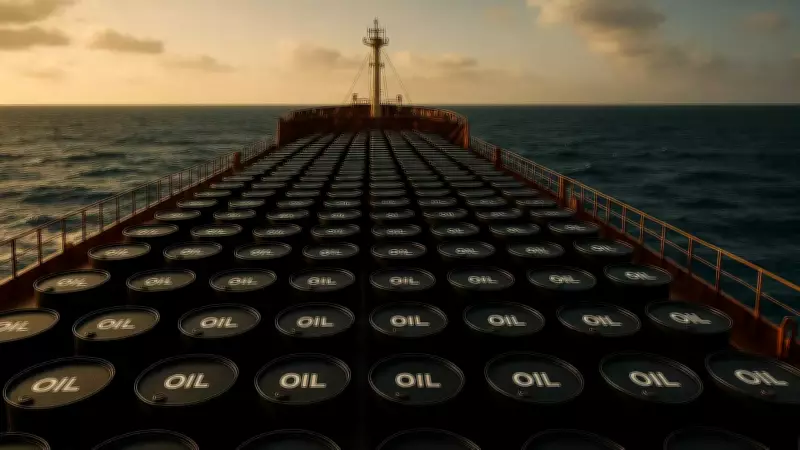
US Announces Temporary Sanctions Waiver for Iranian Crude Oil
Amid escalating tensions in the Middle East and surging global oil prices, the Donald Trump administration has declared a temporary relaxation of sanctions targeting Iranian crude oil. This significant policy shift, announced by the US Treasury Department, specifically applies to petroleum products that were already loaded onto vessels before March 20. The authorization is set to remain effective until April 19, providing a narrow window for the delivery and sale of this pre-loaded Iranian oil.
What This Sanctions Waiver Means for India
India, which halted all crude oil imports from Iran in mid-2019 following the withdrawal of previous US sanctions waivers, could potentially resume purchases after a gap of over six years. Historically, India has been a major importer of Iranian crude, particularly favoring Iranian Light and Heavy grades due to their compatibility with domestic refineries and advantageous commercial terms. At its peak, Iranian oil constituted approximately 11.5% of India's total crude imports.
Sumit Ritolia, Lead Research Analyst for Refining and Modelling at Kpler, emphasized India's strategic position. "India has historically been a major importer of Iranian crude," Ritolia noted. "Given their prior experience in processing Iranian grades and existing trading arrangements, Indian refiners are well-positioned to reintegrate these supplies with minimal operational adjustments." He further suggested that India could re-emerge as a significant demand center alongside Chinese buyers and other Asian markets.

Context of Global Supply Disruptions and India's Response
The backdrop to this US decision is Iran's effective blockade of the Strait of Hormuz—a critical maritime passage handling about 20% of global oil and gas flows—coupled with repeated strikes on energy infrastructure across the Middle East. These events have driven crude prices sharply higher and disrupted supplies.
India, which typically meets 35–40% of its oil requirements via shipments routed through the Strait of Hormuz, has faced significant supply challenges. To cushion the impact, India has dramatically increased its purchases of Russian crude in recent weeks, acquiring about 30 million barrels within a week of the conflict escalating, according to a Bloomberg report.
The temporary US waiver could enable India to ramp up procurement from Iran, adding another crucial source to its import mix and enhancing energy security. Treasury Secretary Scott Bessent described the measure as a "limited and short-term step" aligned with the objective to boost global energy availability and maintain market stability. He indicated that allowing this already-loaded oil to enter global markets could release nearly 140 million barrels, easing short-term supply constraints.
Iran's Response and Market Reactions
Iran has contested the US claims, asserting that it does not possess surplus crude available for export. Iranian oil ministry spokesperson Saman Ghoddoosi stated on social media platform X that "Iran has virtually no surplus oil either at sea or ready for international supply," suggesting the US remarks were intended to reassure buyers.
Despite the geopolitical tensions, oil prices closed higher on Friday, though they remained below the $120 per barrel mark. North Sea Brent crude rose 3.26% to settle at $112.19 per barrel, while US benchmark West Texas Intermediate (WTI) climbed 2.27% to $98.32 per barrel.
The Treasury clarified that the latest authorization excludes shipments destined for Cuba, North Korea, and Russian-occupied regions of Ukraine, maintaining targeted restrictions amidst the broader temporary easing.