US Corporate Giants Continue Job Cuts to Reverse Pandemic Hiring Spree
Major American corporations are continuing their aggressive workforce reduction strategies, aiming to reverse the extensive hiring sprees that characterized the pandemic years of 2020 and 2021. Companies that generously expanded their employee bases during the health crisis now face economic headwinds and are implementing substantial layoffs to streamline operations and control expenses.
The Scale of Workforce Reductions
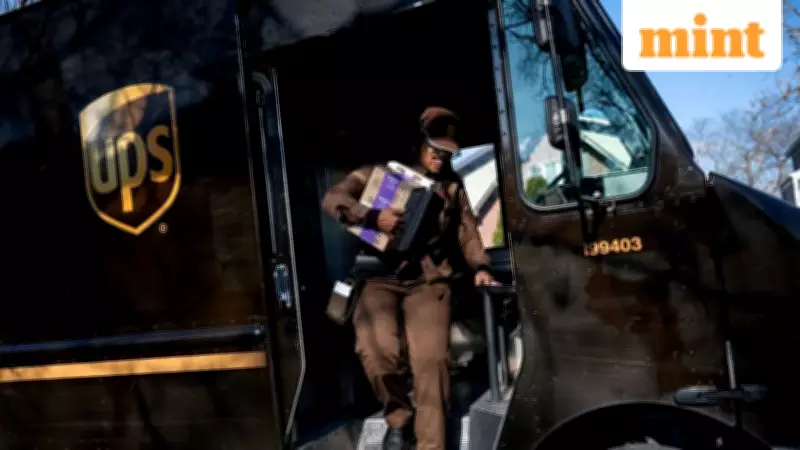
Recent announcements highlight the significant scope of these corporate cutbacks. Amazon revealed on Wednesday that it would eliminate an additional 16,000 corporate positions, following 14,000 layoffs in the fall. This combined reduction represents approximately 10% of Amazon's corporate workforce. Similarly, UPS stated on Tuesday that it expects to slash 30,000 jobs this year, adding to 48,000 cuts implemented last year, as the company seeks to "right-size" its operations.
The trend extends beyond logistics giants. Social media platform Pinterest announced plans to reduce its workforce by up to 15%, while Nike confirmed it would cut 775 positions, primarily at distribution centers in Tennessee and Mississippi, as part of automation initiatives. These moves reflect a broader pattern where sectors that experienced the most dramatic hiring surges during the pandemic—particularly technology and logistics—are now witnessing the most pronounced layoffs.

Root Causes: Pandemic Overhiring and Economic Pressures
Corporate executives and economic analysts point to pandemic-era overhiring as the primary driver behind current workforce reductions. "This is still about the overhiring or hiring boom that happened in that immediate post-pandemic era," explained Laura Ullrich, director of economic research at jobs platform Indeed. During 2020 and 2021, companies rapidly expanded their workforces, concerned about potential shortages of skilled labor and responding to increased consumer demand for online services.
Now, facing economic uncertainty, high interest rates, and tariff tensions, many corporations find themselves with bloated organizational structures. "A lot of these companies found that they are too big," noted Guy Berger, a senior fellow at the Burning Glass Institute. U.S.-based employers announced 1.2 million job cuts in 2025, the highest annual figure since 2020, according to outplacement firm Challenger, Gray & Christmas. The technology sector led private industries with 154,445 cuts, followed by warehousing with 95,317 reductions.
The Evolving Role of Artificial Intelligence
While artificial intelligence has been widely discussed as a potential catalyst for workforce displacement, current layoffs appear more directly tied to organizational restructuring than to immediate AI implementation. However, companies are increasingly investing billions in AI technologies, shifting resources from labor to technological infrastructure.
Pinterest explicitly linked its workforce reduction to a strategic pivot toward AI-focused roles and products, stating in a filing that it was "prioritizing AI-powered products and capabilities." Economists at Goldman Sachs estimate that AI contributed to 5,000 to 10,000 monthly net job losses in vulnerable industries during 2025, with projections suggesting this figure could rise to 20,000 monthly in 2026. Over time, AI could potentially displace 6% to 7% of current jobs, though it may also create new positions through economic growth stimulation.
Verizon Communications CEO Dan Schulman emphasized the transformative impact of technological advancement during a World Economic Forum panel discussion, stating, "Machines can do most anything we do better than we can do it." Verizon itself announced plans in November to cut more than 13,000 jobs, its largest reduction ever.
Broader Economic Context and Workforce Implications
Despite concentrated layoffs at major corporations, the U.S. economy maintains a relatively healthy job market by historical standards. Unemployment remains below pre-pandemic levels, and many industries continue to retain their workforce. However, hiring has slowed significantly, creating challenges for displaced workers.

According to Labor Department data, the average duration of unemployment reached 24.4 weeks in December, compared to 19.4 weeks in December 2022. "People who lose their job today often have a hard time finding a new one, and they stay out of work for longer," observed Lisa Simon, chief economist at workforce data company Revelio Labs. High interest rates and tariff uncertainty have prompted many companies to pause hiring initiatives.
Corporate Restructuring and Future Workforce Evolution
Executives framing these workforce reductions emphasize operational efficiency and organizational agility. Beth Galetti, Amazon's senior vice president of people experience and technology, explained in a staff memo that the company's cuts aimed to "trim management layers and remove bureaucracy." Similarly, Starbucks CEO Brian Niccol indicated that the company would likely hire fewer people in corporate-support centers while maintaining growth in cafe positions, examining where technology could enhance staffing efficiency.
Recruitment experts anticipate continued organizational streamlining across industries. "I do think we're going to find more streamlining of large organizations for the foreseeable future, and that will create different jobs," predicted Andy Decker, CEO of Goodwin Recruiting. He advises job seekers that "what they've done might not be what they're going to be doing forward" and emphasizes the need for continuous skill evolution in a changing employment landscape.
As corporations navigate post-pandemic economic realities, workforce reductions represent a strategic correction to pandemic-era expansion. While artificial intelligence looms as a transformative force in future employment patterns, current layoffs primarily address organizational bloat and economic pressures, reshaping corporate structures and workforce dynamics across America's economic landscape.