Industrialist's Dramatic Helicopter Escape from 36-Hour Mumbai-Pune Expressway Gridlock
The Mumbai-Pune Expressway, a critical arterial route connecting two of India's major economic hubs, descended into utter chaos recently, transforming from a bustling highway into a vast, immobile parking lot. This paralysis was triggered by a single catastrophic incident that left thousands stranded in a grueling ordeal lasting over a day and a half.
The Incident That Paralyzed a Highway
On the evening of February 3, 2026, around 5 PM, a speeding tanker transporting highly flammable propylene gas lost control on a slope near the Adoshi tunnel. The vehicle overturned, resulting in an immediate and dangerous gas leak. Authorities, prioritizing public safety above all, had no choice but to implement a complete traffic shutdown on the Mumbai-bound carriageway to prevent a potential disaster.
What began as a localized safety measure rapidly escalated into a logistical nightmare. The traffic snarl extended for kilometers, with some sections experiencing a complete standstill for an astonishing 36 hours. Lakhs of vehicles, including passenger cars, buses, and freight trucks, found themselves trapped in an endless metallic queue.

The Human Cost of the Standstill
Commuters faced an exceptionally difficult night. Families with young children, elderly passengers, and long-distance travelers were caught unprepared. Reports emerged of people going without access to basic necessities like drinking water, food, and, most critically, restroom facilities. The situation highlighted a severe lack of emergency preparedness and support systems for such large-scale disruptions on one of the country's busiest expressways.
The Helicopter Escape That Made Headlines
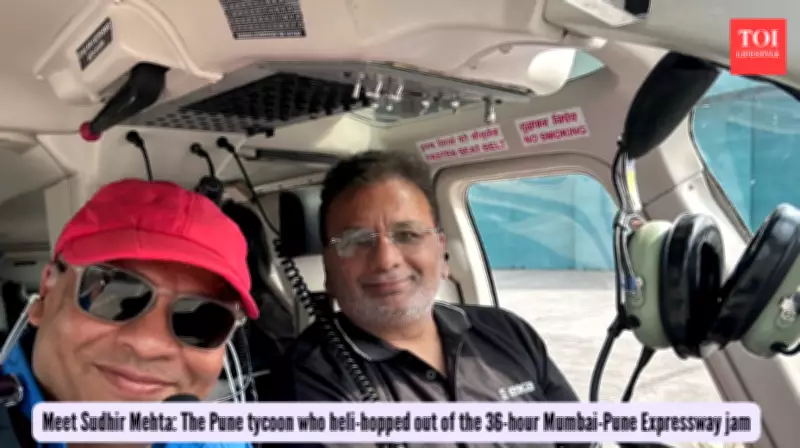
Amid this widespread helplessness, one individual orchestrated a remarkable exit. Dr. Sudhir Mehta, a prominent Pune-based industrialist and Chairman of Pinnacle Industries, found himself similarly ensnared in the gridlock. After enduring eight frustrating hours, he arranged for a private helicopter to airlift him from the scene.
From his aerial vantage point, Mehta captured the surreal scale of the jam, describing it as a serpentine line of vehicles stretching beyond the horizon. He shared videos and images on social media platform X, stating, "Lakhs of people are stuck on the #Mumbai #Pune expressway for the last 18 hours for 'one gas tanker'."
Calls for Infrastructure Overhaul
Using his platform, Dr. Mehta did not just document his escape but proposed concrete solutions to prevent such crises in the future. He advocated for the mandatory construction of emergency helipads at regular intervals along the expressway.
"Helipads cost less than Rs 10 lakhs to make and require less than one acre of open area. These need to be mandatory at various points near the expressway for emergency evacuation," he argued in his post. He also emphasized the need for more emergency exits to manage traffic flow during disasters, thanking helicopter consultant Nitin Welde for facilitating his evacuation.
Who is Sudhir Mehta?
Dr. Sudhir Mehta is a heavyweight in the Indian automotive and manufacturing sector. As the founder and head of Pinnacle Industries, established in 1996, his company specializes in automotive seating, interiors, and railway components. A serial entrepreneur, he also founded EKA Mobility, an electric vehicle venture, in 2022. With an estimated net worth of around $7.58 billion, he has held leadership roles in industry bodies like the CII Western Region.
Social Media Erupts with Criticism and Debate
The incident and Mehta's escape triggered a firestorm on social media, revealing a deep divide in public perception.

- One user questioned the practicality of helipads, asking, "Why do we need a helipad? Can't they land on the highway just like how it happens in Dubai? Especially on newly constructed highways?"
- Another criticized the scalability of such a solution: "How will a helipad solve the problem? How many can it evacuate from the lakhs stranded on the highway?"
- The episode also sparked anger over perceived privilege. A stranded commuter expressed frustration: "I got stuck for 12 hours and was very furious… Lack of empathy for aam aadmi (regular taxpayer) is bothering."
The overwhelming online sentiment called for greater accountability from civic authorities, demanding robust emergency protocols and equitable solutions that serve all citizens, not just those who can afford a helicopter rescue. The event has become a stark case study in India's infrastructure challenges and the societal conversations around privilege during public crises.