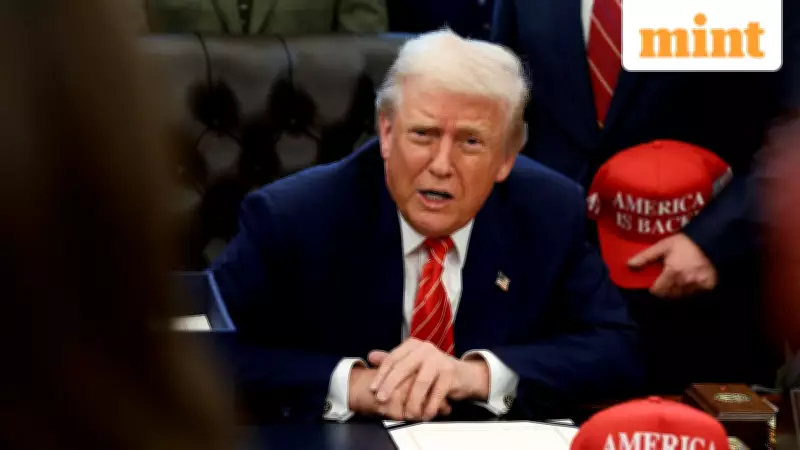
In a significant development that could reshape the global media landscape, former President Donald Trump has announced he will not personally intervene in the intensifying corporate battle between streaming giant Netflix and media conglomerate Paramount Skydance over Warner Bros. Discovery. This marks a notable reversal from his previous comments suggesting potential involvement in a deal that has captivated the entertainment industry.
Trump Reverses Course on Media Mega-Deal
During an exclusive interview with NBC Nightly News anchor Tom Llamas on Wednesday, Trump explicitly stated his decision to remain uninvolved in the high-stakes transaction. "I haven't been involved," Trump declared. "I must say, I guess I'm considered to be a very strong president. I've been called by both sides. It's the two sides, but I've decided I shouldn't be involved. The Justice Department will handle it."
This represents a clear departure from his December position, when Trump publicly questioned whether regulators should approve Netflix's acquisition of key Warner Bros. Discovery assets. At that time, he noted "They have a very big market share. When they have Warner Bros., that share goes up a lot" and indicated he would consult economists, adding "I'll be involved in that decision."

The $72 Billion Streaming War Intensifies
The corporate conflict centers on Netflix's monumental $72 billion agreement announced in December to acquire Warner Bros. Discovery's film studio, HBO, and the HBO Max streaming service. This blockbuster proposal carries profound implications for:
- Streaming competition dynamics
- Content licensing arrangements
- Theatrical production ecosystems
Paramount Skydance has mounted a competing bid for the broader Warner Bros. Discovery business, including its cable networks. After Warner Bros. Discovery rejected Paramount's approaches in favor of Netflix's offer, Paramount escalated its efforts into a hostile takeover attempt. In response, Netflix amended its proposal to an all-cash bid, a strategic move widely interpreted as designed to deter rival interest and strengthen completion certainty.
Political and Personal Connections Under Scrutiny
The bidding war has attracted additional attention due to personal connections between Trump and Paramount Skydance leadership. The company is led by David Ellison, son of billionaire Oracle co-founder Larry Ellison, a prominent Trump supporter. The Ellisons serve as controlling shareholders of Paramount, and Trump has maintained a close relationship with the elder Ellison.
Trump's decision to step back could potentially benefit Netflix, which already has an agreed transaction in place, though the deal remains subject to rigorous antitrust approval processes. Historically, U.S. presidents have rarely intervened directly in antitrust reviews, though Trump has shown unusual willingness to comment publicly on major corporate transactions.
Regulatory Hurdles and Political Pressure Mount
Despite Trump's changed position, the fate of the Netflix-Warner Bros. Discovery deal ultimately rests with regulatory bodies. Warner Bros. Discovery shareholders could vote on Netflix's proposed acquisition as early as March, according to CNBC reports. However, any agreement would still require approval from:
- The Justice Department's Antitrust Division
- European Commission regulators
- Other international regulatory bodies
The controversy has expanded beyond corporate boardrooms into political arenas. On Tuesday, Netflix co-CEO Ted Sarandos testified before the Senate Judiciary subcommittee on Antitrust, Competition Policy and Consumer Rights, defending the transaction as strengthening competition rather than weakening it. Sarandos characterized the deal as "not a typical media merger" and rejected claims it would limit consumer choice or cause widespread job losses.

Financial and Political Complexities Deepen
The media showdown has gained additional layers of complexity through Trump's personal financial interests and political history. In January, Trump disclosed purchasing up to $2 million worth of Netflix and Warner Bros. Discovery bonds shortly after Netflix's deal announcement, according to White House financial disclosure forms. The White House has maintained there are no conflicts of interest between Trump's presidential role and his personal investments.
Trump's shifting stance also occurs against the backdrop of his repeated criticism of major media groups, particularly Warner-owned CNN, which he has frequently attacked and previously called for ownership changes. Notably, CNN is not included in Netflix's proposed acquisition.
High-Stakes Implications for Global Media
For Netflix, successful acquisition would cement control over one of the world's most valuable entertainment brands while accelerating its push into premium film and prestige television production. For Paramount Skydance, the hostile challenge represents a final effort to prevent a rival from consolidating power across streaming and studio production sectors.
As lawmakers from both parties express concerns—with Democrats focusing on consolidation and labor impacts, and Republicans criticizing what they describe as politically biased programming—the media showdown now moves decisively toward regulatory review, with Trump's unexpected withdrawal from potential intervention adding another twist to this corporate drama with global implications.