

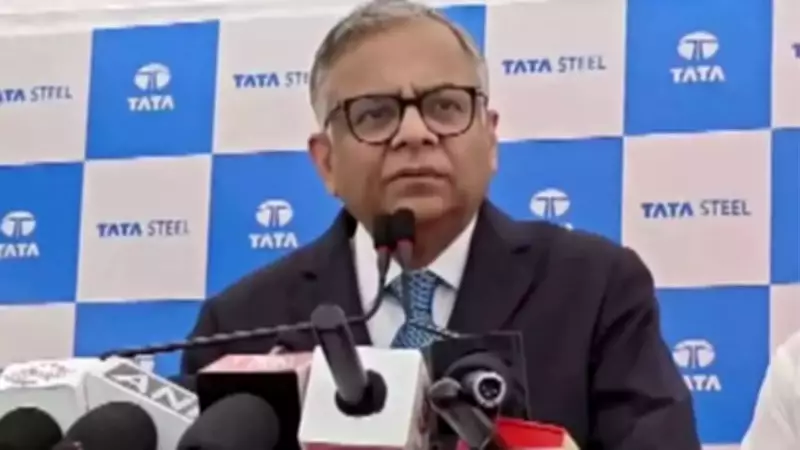
Tata Chairman Discusses West Asia Conflict Impact on Business Operations
Tata Sons chairman N Chandrasekaran, speaking in Jamshedpur on Tuesday, acknowledged that the ongoing conflict in West Asia will have some impact on the supply chain for the conglomerate's companies. However, he emphasized that the group has proactively worked out alternative measures to mitigate these effects on their diverse business operations.
Supply Chain Disruptions and Mitigation Strategies
Chandrasekaran expressed confidence that while business may be affected for some days and months, recovery is expected as the situation stabilizes. He provided specific examples, noting that Tata Steel, which purchases limestone from West Asia, currently maintains sufficient inventory for risk mitigation. Additionally, the company is actively exploring alternative sources to meet its raw material requirements, ensuring continuity in production.
The chairman highlighted the unpredictable nature of the geopolitical landscape, referencing last year's challenges as well. "I think things will settle down soon, and I hope supply chain would not be a problem. As uncertainty prevails, we have planned to mitigate risks, not only for the Tata Group but also for the country," he stated, underscoring a broader commitment to national economic resilience.

Top Priority: Employee Safety in Conflict Zones
Chandrasekaran stressed that for the Tata group, the safety of employees working in war-torn regions is the foremost priority. He mentioned that Air India flights continue to operate over the affected airspace, and several service companies and hotels remain functional in the area. "Safety of all employees is the first priority. For the last three days, group companies are working on that end," he assured, indicating ongoing efforts to secure staff well-being amidst the turmoil.
Expansion and Technological Investments Amidst Challenges
Despite the geopolitical headwinds, Chandrasekaran revealed that Tata group companies are firmly in expansion mode, continuously investing in advanced technology tools to enhance future business prospects. Key initiatives include:
- Tata Motors developing hydrogen engines to pioneer sustainable automotive solutions.
- Tata Steel making heavy investments in technologies aimed at reducing its carbon footprint and promoting environmental stewardship.
- Tata Power similarly advancing its technological capabilities to support green energy transitions.
Furthermore, he pointed out that artificial intelligence (AI) is set to unlock new opportunities for Tata Consultancy Services (TCS), with necessary skill upgradation programs being implemented for employees to harness this potential. The chairman also projected that the coming years will witness a substantial increase in new manufacturing jobs, driven by the investment and expansion plans of Tata Steel.
Context of the Remarks
Chandrasekaran, along with Tata Trusts chairman Noel Tata, Tata Steel CEO & MD TV Narendran, and other senior executives, was in Jamshedpur to pay tribute to Tata Steel founder Jamsetji Nusserwanji Tata on his birth anniversary. This event provided a platform to address current business challenges and future strategies in light of global uncertainties.






