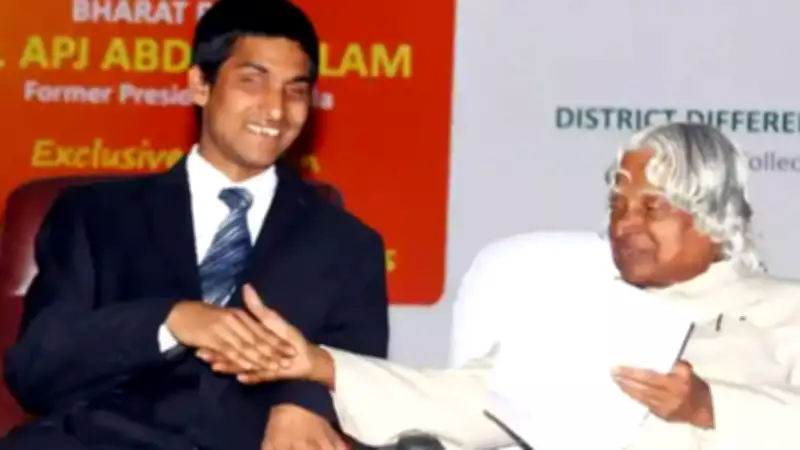
From Rural Andhra Pradesh to Global Recognition: The Srikanth Bolla Story
In a modest village in Andhra Pradesh, Srikanth Bolla entered a world where his visual impairment was initially met with societal pity rather than optimism. Born without sight, his future appeared narrowly defined by prevailing attitudes in rural India, where disability was frequently misunderstood as a permanent limitation rather than a condition requiring support and accommodation.
Early Life and Parental Support
Despite limited resources, Srikanth's parents cultivated a different perspective within their home. They rejected the notion that their son's life should be constrained by social assumptions, making education their primary form of resistance. Through encouragement of curiosity, independence, and dignity, they instilled in Srikanth the fundamental belief that ability transcends physical sight.
Educational Barriers and Legal Battle
The educational journey proved challenging from the outset. Classrooms were ill-equipped for diverse learning needs, textbooks remained inaccessible, and teaching methods lacked flexibility. The pivotal moment arrived after Class 10 when Srikanth expressed his desire to study science, only to have authorities reject his request based on his visual impairment.

This decision reflected a widespread mindset that ambition should remain modest for individuals with disabilities. Rather than accepting this limitation, Srikanth pursued legal action as a teenager, challenging whether educational opportunities could be legitimately restricted by disability. His landmark victory made him one of India's first visually impaired students permitted to pursue science at the higher secondary level.
Academic Perseverance and International Opportunity
Studying science demanded extraordinary effort, with diagrams requiring verbal explanation, lessons converted to audio formats, and concepts mastered through relentless repetition and imagination. Despite academic excellence, India's premier engineering institutions subsequently denied him admission, again citing his disability.
This rejection ultimately redirected his path toward international recognition. Srikanth gained admission to the Massachusetts Institute of Technology, becoming the first international blind student to study at this prestigious institution. At MIT, he encountered an environment where accessibility represented innovation rather than inconvenience, fundamentally reshaping his understanding of educational possibility.
Entrepreneurial Vision and Social Impact
Exposure to global ideas at MIT transformed Srikanth's perspective on social change. He recognized entrepreneurship as a potent mechanism for addressing inequality, surpassing traditional charitable approaches. Rather than pursuing a comfortable career abroad, he returned to India with a mission to create opportunity through enterprise.
In 2012, Srikanth founded Bollant Industries, focusing on eco-friendly packaging products manufactured from areca leaves and recycled materials. The company's innovative model integrated environmental sustainability with social inclusion, actively employing individuals with disabilities and marginalized community members.
Building an Inclusive Business Model
Initial investor skepticism gradually gave way to recognition as Bollant Industries demonstrated commercial viability alongside social impact. The organization's philosophy emphasized capability over sympathy, with adapted workspaces ensuring genuine accessibility. For employees long excluded from formal employment, these positions restored dignity through meaningful contribution and skill recognition.
Srikanth consistently emphasized that inclusion represents investment in human potential rather than charitable obligation. As the company expanded, it challenged entrenched assumptions about disability in the workplace, proving that inclusive businesses could achieve financial success while driving social transformation.

Legacy and Cultural Impact
Srikanth Bolla's journey has inspired broader cultural recognition, including the biographical film Srikanth starring Rajkummar Rao, which brought his story to mainstream audiences. His frequently quoted statement, "I lack eyesight, but not vision," encapsulates a philosophy that transcends personal achievement to redefine societal conversations about ability, education, and employment.
Through persistent determination, innovative thinking, and empathetic leadership, Srikanth transformed systemic rejection into purposeful social entrepreneurship. His story demonstrates that true vision begins not with physical sight but with the courage to imagine and build alternative possibilities, even when prevailing systems cannot yet envision them.