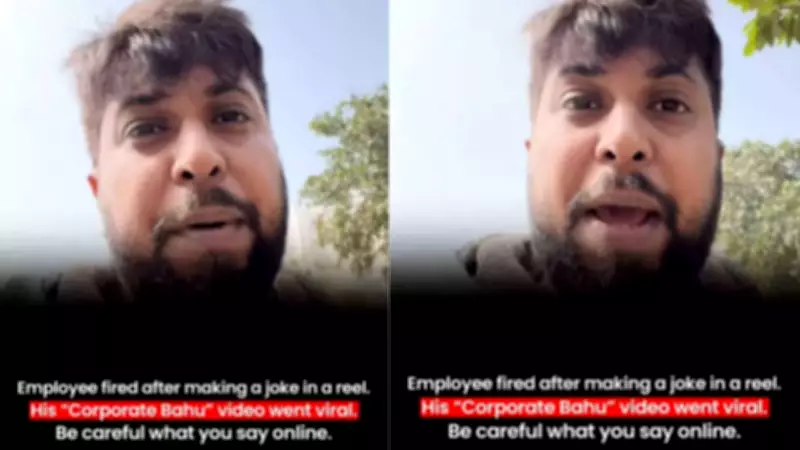
It took Ajay Sharma nearly three months to gather the courage to speak openly about the distressing events that unfolded in his professional life. "It wasn't easy," he confesses with a hint of lingering apprehension. "I'm still actively searching for employment opportunities, and I was genuinely concerned that discussing my ordeal might negatively impact my future career prospects."
The Promising Career That Took an Unexpected Turn
Described by colleagues as soft-spoken, diligent, and exceptionally talented, Ajay Sharma was a valued member of the content team at a prominent OTT media company headquartered in Noida. His performance reviews consistently reflected excellence, and just months before his unexpected departure, he received a substantial 20 percent salary increase. This financial recognition reinforced his belief that his contributions were highly valued, naturally leading him to anticipate potential promotional opportunities in the near future.
The Instagram Reel That Changed Everything
Outside his corporate responsibilities, Ajay nurtured a passion for comedy as a part-time stand-up performer. Like many contemporary young creatives, he regularly shared humorous content on social media platforms. On September 24, he posted a comedy reel that resonated deeply with thousands of viewers, rapidly gaining viral traction overnight. The video cleverly satirized common corporate frustrations—portraying an overbearing manager with maternal-in-law-like surveillance tendencies and an HR department seemingly aligned with senior management interests. Importantly, the content avoided naming any specific company or individuals, maintaining its lighthearted, satirical nature.

The Abrupt Termination and Its Aftermath
When the viral reel eventually reached his manager's attention, events unfolded with alarming swiftness. "I remember that afternoon vividly," Ajay recalls. "Around 2 pm, my manager summoned me and demanded my resignation. When I inquired about the reason, I was abruptly informed it was due to poor performance."
This explanation left him bewildered and shocked. "I was consistently among the top performers in our team. The recent salary hike clearly indicated satisfactory work. There were absolutely no indicators—no prior warnings, no performance reviews, no documentation—suggesting any performance deficiencies."
Ajay alleges he was then threatened with immediate termination if he refused to resign voluntarily. When he requested to serve his notice period to facilitate a smoother transition and begin job hunting, his appeal was denied. He was instructed to surrender his company laptop immediately and vacate the premises without delay, not even granted a single day to retrieve personal data from the device.
The Psychological and Professional Impact
"For several days, I felt completely disoriented," Ajay admits. "The experience left me feeling humiliated and profoundly disappointed." What pains him most extends beyond mere job loss to encompass missed creative opportunities. "I was working in an OTT company where creative ideas are paramount. I possessed numerous concepts, skills, and creative energy that could have benefited the organization. They could have simply approached me with, 'Can you develop similar content for our platform?' I would have enthusiastically collaborated."
Instead, he perceives that workplace insecurity prevailed over creative potential. "Many organizations harbor managers who feel threatened by creative minds," Ajay observes. "Rather than nurturing and leveraging talent, they instinctively attempt to suppress it." He believes this dynamic explains why the same employee might excel under one manager's leadership while struggling under another's supervision.
The Systemic Challenges in Corporate Environments
Ajay highlights deeper systemic issues within corporate structures. "Some managers invest more energy in protecting their positions than in building robust teams, driving revenue, or achieving organizational goals. Office politics gradually drains motivated employees, sapping vitality from high performers."

He also emphasizes the limited recourse available to employees facing such situations. "Senior management often remains disconnected from ground realities, relying heavily on reports from managers and HR departments. Even when employees attempt to voice concerns, the information frequently circles back to the very individuals being complained about."
The Broader Implications for Indian Corporations
The long-term consequences, Ajay argues, ultimately harm the organizations themselves. "Talented individuals are quietly pushed out. Innovative ideas never materialize. Business performance suffers—yet those in leadership positions often remain too distant to recognize these losses."
He shares a concrete example: a script he developed demonstrated strong commercial potential and even attracted interest from a popular film star. "It represented genuine revenue potential. However, it never progressed because my manager felt insecure about its success."
Ajay's experience reflects a broader reality within corporate India, where numerous employees aspire to perform, grow, and contribute meaningfully but find themselves constrained by environments dominated by fear, rigid hierarchies, and internal politics.
A Warning and Reflection
"It's a profoundly disappointing state of affairs," he reflects. "People don't work solely for financial compensation. They work because they genuinely care about their contributions and derive satisfaction from their achievements. When professional growth is perceived as a threat rather than an organizational asset, everyone ultimately loses."
He offers a sobering warning to corporate employees: "Avoid making any remarks—even in jest—against your manager or HR department if you wish to sustain your career." Despite his creative drive and willingness to deliver exceptional work, the entire experience has significantly shaken his faith in the rewards of hard work and dedication.
Ajay Sharma's story illuminates a quiet yet damaging corporate reality: when insecure leadership prevails, companies don't merely lose employees—they forfeit innovative ideas, organizational momentum, and workplace trust.