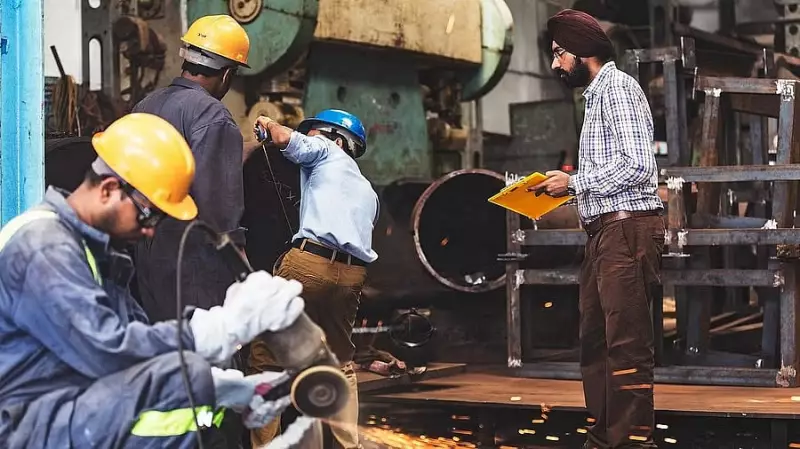
India's manufacturing sector, a key engine of the economy, witnessed a noticeable deceleration in its growth momentum during November. The latest survey data indicates that business conditions improved at the slowest pace in nine months, pointing towards a period of moderation after a robust performance.
Key Indicator Signals Cooling Momentum
The most definitive evidence of this slowdown comes from the seasonally adjusted HSBC India Manufacturing Purchasing Managers' Index (PMI). This closely watched business activity index fell to 56.6 in November 2025 from a significantly higher reading of 59.2 recorded in October. This drop marks the lowest point for the index since February 2025, highlighting a clear easing in the sector's expansion rate.
What Drove the Slowdown?
The primary factors behind November's softer PMI reading were a milder increase in both new orders and production output. While demand and factory activity continued to grow, the pace of expansion was not as sharp as seen in previous months. This suggests that the explosive growth phase may be transitioning into a more sustainable, steady expansion trajectory.

Despite the dip, it is crucial to note that any PMI reading above the neutral 50.0 mark signifies expansion. Therefore, a figure of 56.6 still represents a solid month of growth for Indian manufacturers, just not at the blistering speed observed earlier in the year.
Implications and the Road Ahead
The November data provides critical insights for policymakers and businesses. A moderation in growth could reflect a combination of factors, including:
- Normalization of demand after a period of exceptionally high growth.
- Global economic headwinds affecting export orders.
- Potential domestic market adjustments.
Analysts will be watching the upcoming months' data closely to determine if this is a temporary blip or the beginning of a longer-term trend. The resilience of the manufacturing sector remains vital for India's overall economic health and employment generation. The focus will now be on whether underlying demand fundamentals remain strong enough to support a robust, if slower, growth phase in the coming quarters.