India's largest airline, IndiGo, is facing a severe operational crisis after admitting to a major miscalculation in its pilot requirements. The Directorate General of Civil Aviation (DGCA) revealed that the airline grossly underestimated the number of crew needed to run its current flight schedule under the newly implemented Flight Duty Time Limitation (FDTL) rules. This admission has led to days of chaos for passengers, with hundreds of flights cancelled and delayed across the country.
The Root of the Crisis: A Planning Failure
According to the aviation regulator, the disruptions stem from misjudgment and planning gaps in implementing the second phase of the FDTL norms, which came into effect on November 1. IndiGo has accepted that the actual crew requirement under the new fatigue management rules far exceeded their anticipation. This miscalculation was compounded by the airline increasing its domestic flights by 6% for the winter schedule, which began on October 26. The winter schedule saw flights rise from 14,158 in summer to 15,014, creating a perfect storm of demand and inadequate staffing.
In a meeting with DGCA, IndiGo presented data showing it was facing significant transitional challenges in roster planning and crew availability. The airline has now sought operational exemptions from specific FDTL provisions for its Airbus A320 fleet until February 10, 2026, to help it recover. The DGCA stated that IndiGo has assured it that normalised and stable operations will be fully restored by that date.

Passenger Chaos and Wider Airport Impact
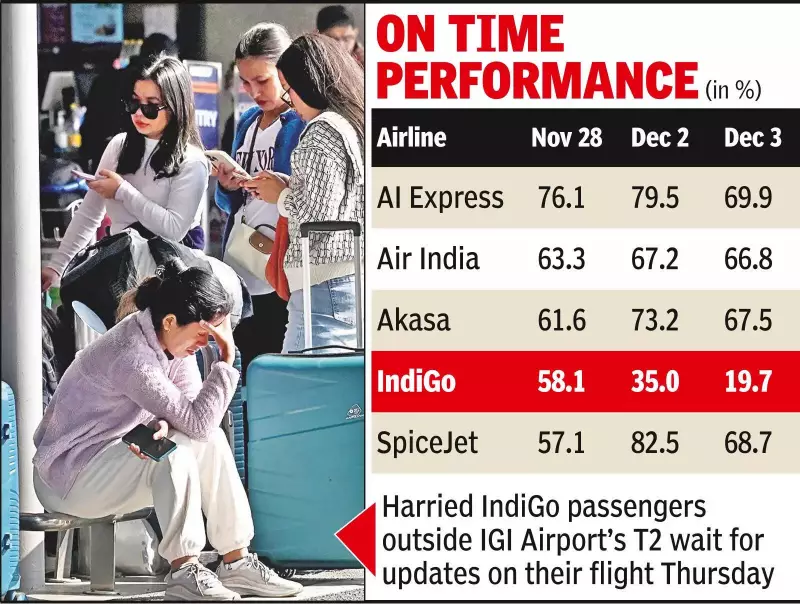
The fallout from IndiGo's planning failure has been severe and widespread. On Wednesday, the airline's on-time performance plummeted to a dismal 19.7%. Angry passengers, fed up with long waits and vanishing flight information, protested at departure gates at several airports. The situation became so dire that it began affecting operations of other airlines.
For instance, at Pune airport, IndiGo aircraft were stuck without pilots, preventing other carriers from operating their flights. An official at a smaller airport reported that food stalls quickly ran out of supplies due to the sheer number of stranded passengers. Following an inspection at Delhi's Terminal 1, which witnessed the highest passenger impact, the DGCA found that IndiGo's passenger-handling manpower was inadequate to manage the disruption-induced crowding.
"IndiGo has crossed all limits. They show the flight is on time, check in people and baggage, and then the flight number just vanishes. We're stuck and helpless," fumed a passenger stranded on a Delhi to Bengaluru flight.
Regulatory Scrutiny and the Road to Recovery
The DGCA has taken a firm stance, instructing IndiGo to urgently increase manpower and strengthen passenger support services at all affected terminals. The regulator has also directed its officials to conduct real-time inspections at major airports to monitor the airline's handling of the disruptions. Civil Aviation Minister Ram Mohan Naidu has stepped in, instructing the DGCA and ministry officials to keep a close watch on the network and ensure IndiGo normalises operations at the earliest.
The minister also directed the Airports Authority of India (AAI) and other airport operators to provide all necessary support to stranded passengers. Furthermore, the DGCA has been asked to closely monitor airfares to prevent predatory pricing during this period of reduced capacity.
A decision on granting IndiGo the requested exemptions from FDTL rules could be taken as early as Friday. Restoring a semblance of normalcy is crucial before the annual fog season envelops North India around mid-December, which traditionally starts disrupting flights all over again. For now, IndiGo has told the DGCA that flight cancellations will continue for two to three days, and from Monday, December 8, it will reduce flight operations to minimise further disruption for travellers.