

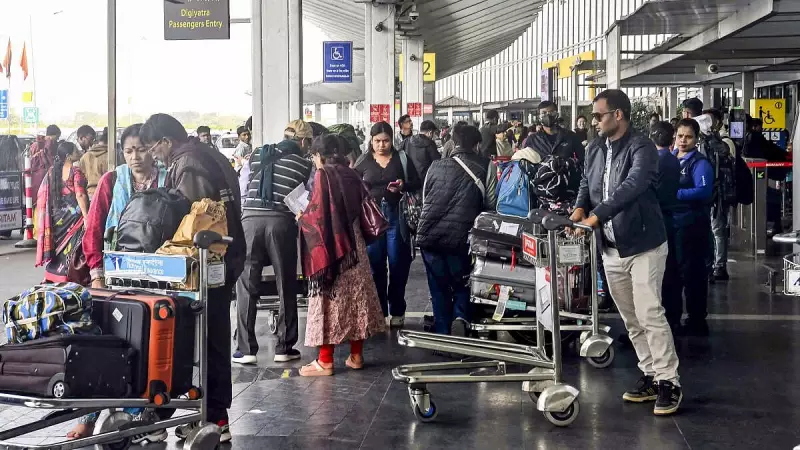
The aviation sector in India is facing significant turbulence as a major crisis at IndiGo, the country's largest airline, leads to widespread flight disruptions. The situation has escalated with the pilots' representative body issuing a strong condemnation of a regulatory exemption granted by the Directorate General of Civil Aviation (DGCA), labeling it as 'unsafe'. This development comes amidst a wave of mass cancellations that have left thousands of passengers stranded.
Pilots' Union Raises Safety Concerns
The core of the controversy lies in a specific exemption provided by the aviation regulator, the DGCA, to IndiGo. The Indian Pilots' Guild or a similar collective body representing flight crew has publicly voiced severe criticism against this move. They have explicitly stated that the exemption compromises safety standards, creating a potentially hazardous environment for both crew and passengers. This strong rebuke was formally issued on 05 December 2025, as reported by Mrityunjay Bose, highlighting the deepening rift between operational staff and regulators.
A Tactic for Relaxed Norms?
Aviation industry experts analyzing the chaotic scenario have put forward a concerning theory. They suggest that the cascading effect of delays and cancellations across multiple airlines might not be merely a logistical failure. Instead, some view it as an "immature pressure tactic". The alleged objective is to arm-twist the DGCA into granting further relaxations or dispensations in the newly implemented Flight Duty Time Limitation (FDTL) norms. These norms are crucial for managing pilot fatigue and ensuring safety, making any push for their dilution a serious matter.

Impact and Ongoing Fallout
The immediate consequence has been operational chaos. Mass cancellations have become a daily occurrence, disrupting travel plans during a peak season and eroding passenger trust. The exemption at the center of the storm, intended as a temporary relief for the airline, has backfired by drawing fierce opposition from the very professionals responsible for safe flight operations. The situation presents a complex challenge for the DGCA, which must balance airline viability with non-negotiable safety protocols. The standoff underscores the intense pressures within the Indian aviation industry as it navigates post-pandemic recovery, crew management, and stringent regulatory compliance.
The coming days will be critical in seeing how the regulator, the airline management, and the pilots' bodies resolve this impasse. The priority remains restoring normal flight schedules without compromising the stringent safety culture that Indian aviation is built upon.






