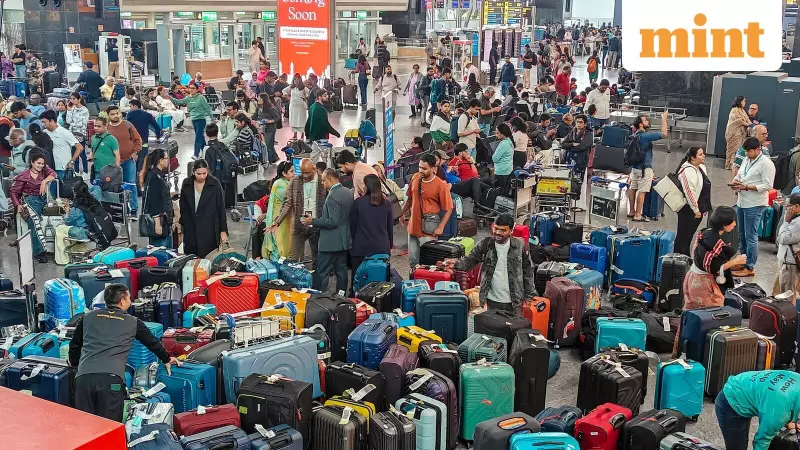
India's largest domestic airline, IndiGo, is grappling with a severe operational crisis that has led to massive flight cancellations and delays across the country for five consecutive days. The disruption has left thousands of passengers stranded and prompted urgent intervention from the aviation regulator.
Scale of the Disruption: A Timeline of Chaos
The troubles for the 20-year-old carrier began visibly on December 2, with passengers reporting significant delays at major hubs like Delhi, Mumbai, and Kolkata. The situation escalated rapidly over the following days. On December 3, at least 150 flights were cancelled. The next day, December 4, witnessed a staggering more than 550 flight cancellations. The turmoil continued on December 5, with sources reporting another 400 flights grounded.
Data from the Civil Aviation Ministry revealed a shocking drop in the airline's on-time performance (OTP) at six metro airports: from 35% on December 2 to 19.7% on December 3, and a dismal 8.5% on December 4. In a summary to the Ministry, IndiGo disclosed it had cancelled a total of 1,232 flights in November alone, with crew constraints being a primary cause.

Causes and Official Response
IndiGo attributed the meltdown to a "multitude of unforeseen operational challenges." In detailed statements, the airline cited a combination of factors: minor technology glitches, winter schedule changes, adverse weather, airport congestion, and the critical implementation of new Flight Duty Time Limitations (FDTL) rules from November 1, which impacted crew rostering.
The crisis reached the highest levels of government. Civil Aviation Minister Kinjarapu Ram Mohan Naidu expressed his displeasure and chaired a high-level review meeting on December 4 with IndiGo's senior management, officials from the DGCA, and the Airports Authority of India (AAI). The Directorate General of Civil Aviation (DGCA) has launched a probe, demanding a report from the airline and ordering it to scale back operations from December 8 to limit further disruptions.
Passenger Impact and the Road Ahead
The human cost of the crisis is substantial. Reports indicate that around 16,500 domestic and international passengers were impacted at Delhi's airport alone on December 5. Social media is flooded with harrowing accounts of stranded travelers, including reports of a Singapore High Commissioner being affected.
IndiGo CEO Pieter Elbers acknowledged the failure in an internal message, stating, "We could not live up to the promise of providing a good experience to customers." The airline has apologised repeatedly and is making "calibrated adjustments" to its schedule. It has warned passengers that cancellations will continue for the next two to three days as part of stabilisation efforts. In response to the DGCA, IndiGo has assured that stable operations will be fully restored by February 10, 2024.
As India's aviation market leader with a 60% domestic share, operating about 2,300 daily flights, IndiGo's instability sends shockwaves through the entire national travel ecosystem, highlighting systemic vulnerabilities.