

India is accelerating a strategic shift in its defence sector, driven by policy changes, rising regional tensions, and a global surge in military demand. As one of the largest defence spenders globally, India is increasingly investing in both modernisation and self-reliance.
Budget and Spending Increases
In this year's union budget, the defence capital acquisition budget stood at Rs 2.2 trillion, an 18% increase over the previous year. Roughly three-quarters of procurement is expected from domestic suppliers. Last year, Defence Secretary RK Singh signalled an intent to lift defence spending from about 1.9% to 2.5% of GDP over the next five years, while production and export growth targets for the coming period are ambitious.
Historical Challenges
Historically, India’s defence sector suffered from structural weaknesses: constrained budgets, heavy import dependence, underdeveloped supply chains, lengthy procurement practices that favoured public sector units, and recurring quality-control issues. These limitations reduced bargaining power for offsets and technology transfers and slowed the emergence of the private sector.

Policy Reforms
The recent policy pivot under 'Make in India' and 'Aatmanirbhar Bharat' seeks to correct those deficits by creating a more enabling environment for domestic manufacturing and foreign collaboration. A new set of rules, titled Defence Acquisition Procedure (DAP 2020), now governs the procurement process, reshaping the ecosystem. Procurement rules introduced in 2020 prioritise Indian vendors through Buy (Indian) and Buy & Make (Indian) categories, while Positive Indigenisation Lists restrict imports of hundreds of items.
Production-linked incentives have been extended to strategic areas such as drone manufacturing, FDI caps in defence have been liberalised, and two defence industrial corridors in Uttar Pradesh and Tamil Nadu are being developed to attract investment and spur innovation. The policy mix encourages co-development and co-production arrangements that transfer technology while expanding local manufacturing footprints. The Defence Acquisition Procedure (DAP 2026), now in the draft phase, will simplify the process further.
Visible Results
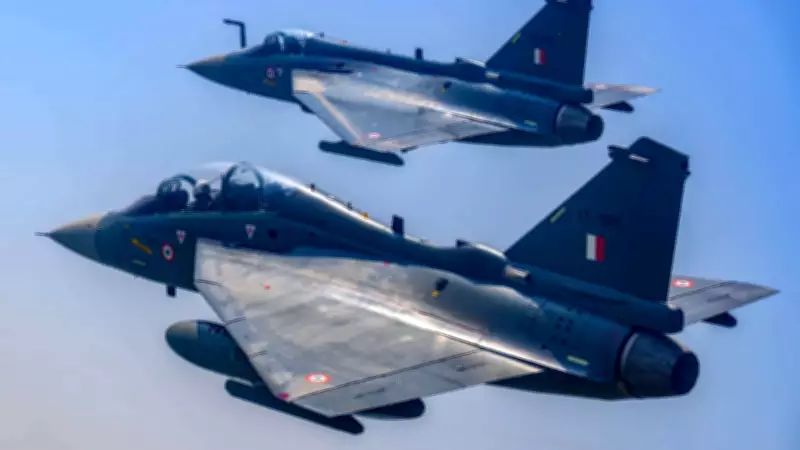
The results are already visible: indigenous defence production and exports have increased substantially. Global supply-chain pressures and a worldwide surge in defence orders do pose risks to delivery timelines, as experienced in the case of the Tejas, India's flagship fighter aircraft program. South Block is managing these constraints through prioritised procurements, emergency purchase powers, and negotiated joint production deals to build capacity domestically.
Opportunities and Trade-offs
Sustained higher defence spending offers growth opportunities in advanced manufacturing, R&D, job creation, and technology spillovers, but also fiscal and external trade-offs. Balancing industrial ambition with fiscal prudence and supply-chain resilience will determine whether policy intent translates into durable capability, greater strategic autonomy, and a competitive defence industry with export potential.






