India's electricity system is entering a synchronized reset across generation, transmission, and distribution, with transmission capital expenditure and energy storage emerging as critical enablers for the next decade, according to a research report by Macquarie Equity Research.
Installed Capacity to Reach 900 GW by FY32
The brokerage expects India's installed capacity to expand from the current 538 GW to 900 GW by FY32. This growth will follow a dual-track path: coal will continue to anchor baseload stability with plant load factors above 65 per cent, while renewables drive the bulk of incremental capacity. However, the transition is contingent on deploying 74 GW of energy storage by the end of 2032 to manage intermittency and meet evening peak demand.
Record Peak Demand and Fastest Consumption Growth
Peak power demand hit a record 271 GW in May 2026 during an intense heatwave, leaving minimal operating headroom. The Central Electricity Authority projects power demand to grow at a 6 per cent CAGR by 2030. Industrial activity accounts for 50 per cent of consumption, structurally rising cooling demand contributes more than 20 per cent of incremental growth, and new high-load segments such as data centres and electrified transport are emerging. The International Energy Agency expects India's electricity consumption to grow at 6.4 per cent annually through 2030, the fastest among major economies.

Transmission-Led Capex Super-Cycle
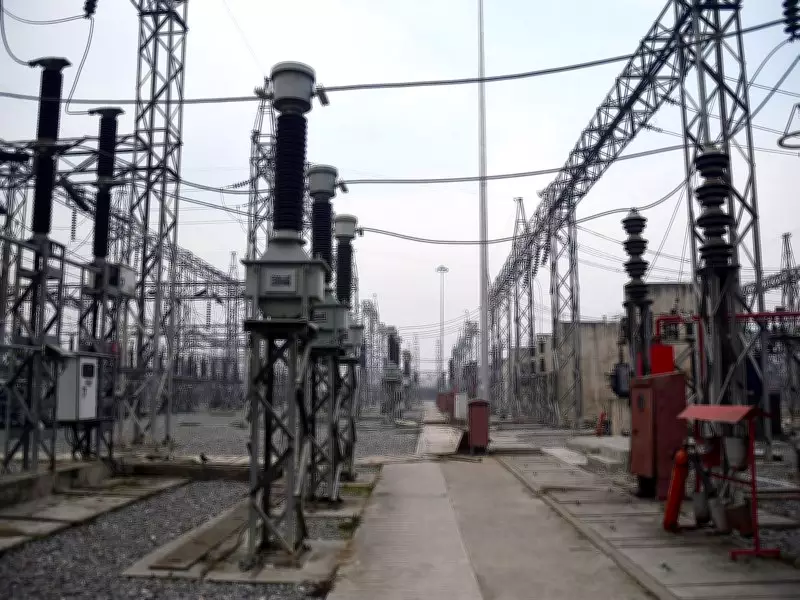
The report highlights a clear pivot to a transmission-led capex super-cycle. To evacuate 500 GW of non-fossil capacity by 2030 and 900 GW by 2035-36, India will need US$51 billion in transmission investment. A key challenge is timing: generation assets take 12-18 months to build, while transmission corridors take 36-48 months. Without proactive inter-regional development, curtailment risk rises. The grid lost 2,300 GWh between May and December 2025 when mid-day solar surges exceeded absorption capacity.
Distribution Sector Turnaround Under RDSS
In distribution, Macquarie sees a structural turnaround. Under the Revamped Distribution Sector Scheme (RDSS), Rs 2.83 trillion has been sanctioned for infrastructure upgrades and 203 million smart meters are planned. This has led to a drop in AT&C losses to 15 per cent from 22 per cent in FY 2021. DISCOMs posted a Rs 25 billion profit in FY 2025 after decades of losses. Overdue payables to generators have also dropped to under Rs 500 billion from Rs 1.4 trillion earlier, aided by Late Payment Surcharge rules. The RDSS is a Government of India initiative launched in 2021 to improve operational efficiencies and financial sustainability of state-owned power distribution companies.
Regulatory Reforms Reinforcing Shift
Regulatory reforms are reinforcing the shift. The Draft National Electricity Policy 2026 signals a move to market-based systems, with coal repositioned as flexible balancing capacity rather than rigid baseload. The Electricity (Amendment) Bill 2026 aims for cost-reflective tariffs and regulated competition in distribution. The India Energy Stack is being built to enable peer-to-peer trading and monetisation of distributed assets.
Outlook: Interlocking Central Framework
Overall, Macquarie said the sector is moving from sporadic state-led initiatives to an interlocking central framework spanning the entire value chain. With 50 GW per year of capacity addition underway and Rs 9.15 trillion earmarked for transmission by 2032, the next phase of growth will be defined by how quickly transmission and storage can keep pace with demand.