

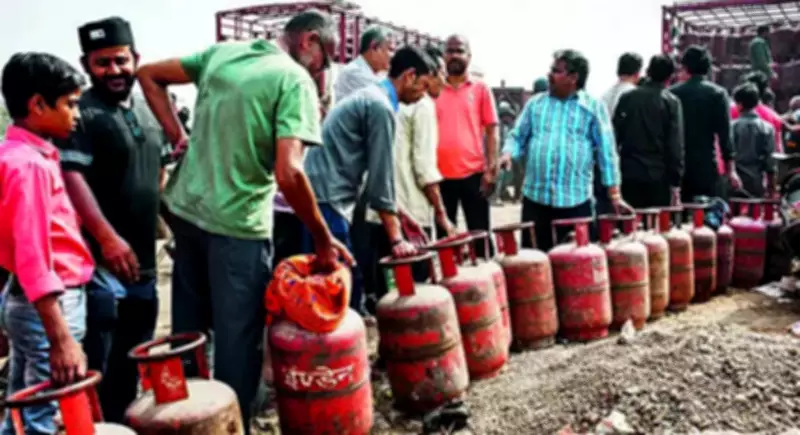
Government Addresses LPG Supply Concerns Amid Middle East Tensions
In response to growing concerns over energy security, the Indian government on Wednesday provided comprehensive reassurances regarding the nation's LPG supply chain. Petroleum ministry officials confirmed that oil marketing companies have successfully increased domestic LPG production by 25%, helping to mitigate potential shortages caused by import disruptions.
Normal Delivery Cycles Maintained
Sujata Sharma, joint secretary in the petroleum ministry, emphasized during a press conference that "our normal delivery cycle for domestic LPG remains around two-and-a-half days." She directly addressed public anxiety, stating that "feedback suggests panic booking and hoarding behaviour triggered by misinformation" and firmly advised against unnecessary rush-booking of cylinders.
Sharma revealed that states have been formally notified about adequate stock levels to meet domestic consumer requirements. The government has established clear priorities for LPG distribution:

- Domestic households
- Hospitals and medical facilities
- Educational institutions
Enhanced Security Measures and Diversified Imports
Addressing concerns about cylinder diversion, Sharma explained the robust security protocol: "domestic cylinders cannot be delivered without the one-time password sent to the customer's phone." Additionally, a three-member committee has been formed to investigate commercial LPG cylinder usage and ensure transparent distribution practices.
The petroleum joint secretary highlighted India's strategic diversification of energy imports, noting procurement from nearly 40 countries. "Through diversified procurement, the volumes we have secured today exceed what would normally have arrived through Strait of Hormuz in this period," Sharma stated, referencing the critical Middle Eastern shipping channel.
Crude Supply Strengthening
Significant progress has been made in securing alternative crude oil routes. Officials reported that approximately 70% of crude imports now arrive through pathways outside the Strait of Hormuz, a substantial increase from the previous 55%. Sharma announced that "two cargoes are headed for India and will arrive within a few days, which will further strengthen the crude supply position in the country."
Regarding liquefied natural gas (LNG), procurement from new sources continues despite some supply disruptions affecting about 47.4 million metric standard cubic meters per day due to force majeure conditions.
Safety of Indian Ships and Citizens
The government provided detailed updates on maritime security in the Persian Gulf region. Rajesh Sinha, special secretary in the shipping ministry, confirmed that 28 India-flagged vessels with 708 Indian seafarers remain in the area, with their safety designated as a top priority. Approximately 10 ships have been relocated to safer waters in recent days.
The Ministry of External Affairs has activated comprehensive support mechanisms for Indian citizens in affected regions. Aseem R Mahajan, MEA additional secretary, explained that ambassadors and consuls general are actively engaged with Indian communities, while a dedicated control room provides assistance. "Assistance is also being provided for land border crossings into Armenia and Azerbaijan," Mahajan added.
Price Stability and Future Outlook
Sharma noted that domestic LPG prices in India remain comparatively lower than international markets, providing additional stability for consumers. With daily consumption at approximately 55 lakh barrels, the government's multi-pronged approach—combining increased domestic production, diversified imports, and alternative shipping routes—aims to ensure continuous energy security despite regional tensions.






