

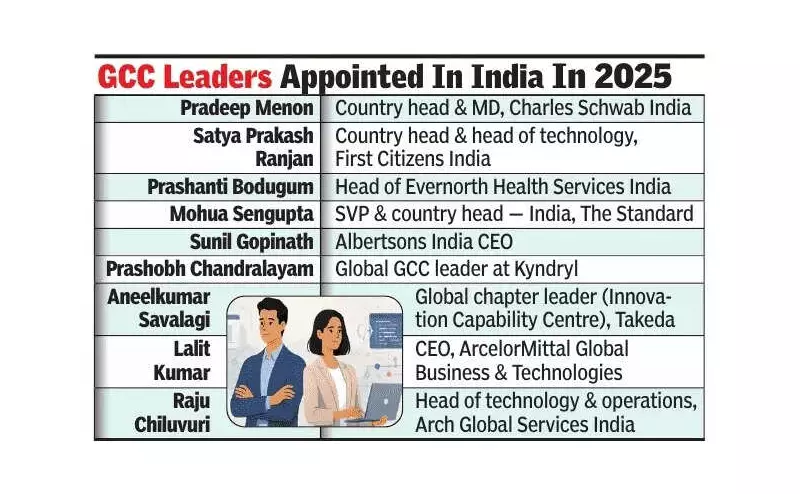
A significant transformation is underway in the leadership landscape of India's Global Capability Centres (GCCs). Driven by technology, GCC heads are now being selected primarily for their deep engineering expertise and ability to drive artificial intelligence (AI) adoption, marking a decisive shift from their traditional administrative and operational roles.
From Site Managers to Global Technology Owners
The mandate for leaders in India's GCC ecosystem has evolved dramatically. It has moved well beyond establishing a sourcing base, liaising with global headquarters, or scouting for talent. The new imperative is to demonstrate strong engineering leadership and rapidly implement AI strategies. According to industry experts, advisory firms are increasingly handling the archetypal India leadership tasks of the past, pushing GCC heads to claim deeper technology ownership.
This shift elevates the GCC's role within the parent organization. Leaders are now expected to raise the bar on innovation and delivery across the entire client ecosystem. The leadership expectation has decisively changed from mere operational oversight to owning global technology outcomes with direct business impact.

A Year of Leadership Reshuffles and Rising Expectations
The past year proved to be an inflection point for GCCs in India, with a wave of leadership changes. Over two dozen leaders were appointed during this period as part of broader reshuffles and mandate revisions. This movement reflects both rising expectations from global firms and a growing confidence in India's deep talent pool, enabling companies to reset leadership quickly.
Several high-profile moves characterized this trend:
- Pradeep Menon transitioned from CEO and Country Head of HSBC SDI to become the Country Head and Managing Director of Charles Schwab India.
- Satya Prakash Ranjan was appointed Country Head of Technology at First Citizens India, part of a top-20 US financial institution.
- Prashanti Bodugum joined as head of Evernorth Health Services India, moving from a Vice President role at Walmart Global Tech India.
Lalit Ahuja, founder of ANSR, explained that as GCCs take on larger product, platform, and engineering mandates, leaders are chosen based on the specific business outcomes they must deliver—be it in digital transformation, AI, cloud, or cybersecurity.
"Today, site leaders spend nearly 80% of their time in global functional roles, with only about 20% focused on traditional site responsibilities like brand building and culture," Ahuja noted. This is a major departure from when site leaders were largely administrative heads. They are now domain experts and strategic partners, deeply embedded in core enterprise priorities.
Shortened Patience Cycles and a Maturing Ecosystem
The metrics for judging GCC success have also transformed. Venkat Shastry, CEO of QuantumV, stated that GCCs are no longer assessed as cost or delivery centres but as product, platform, and intellectual property engines. The tolerance for slow transformation has shrunk dramatically.
"Boards have dramatically shortened their patience cycles. If a GCC leader can’t articulate an AI-led transformation within 6 to 12 months, companies are far quicker to reset leadership than even two years ago," Shastry observed. India's GCC ecosystem has matured, making leadership replacement seem a lower-risk proposition. With a robust bench of experienced leaders, companies are confident they can 'upgrade' leadership rapidly.
Arindam Sen, GCC partner at EY India, views the rise in leadership roles as a sign of natural career progression and enhanced capability. It signifies a shift from execution-led archetypes to globally embedded, advisory-driven leaders. This new league requires a blend of strategic thinking, business insight, and execution excellence—qualities abundantly demonstrated by India's talent.

Pari Natarajan, CEO of Zinnov, pointed to Generative AI as a key accelerator of this shift. As automation handles routine tasks, enterprises are deliberately moving engineering judgment, product ownership, and architectural decisions into GCCs. "We’ve seen centres once measured on headcount now being asked to own global engineering roadmaps or AI platforms," Natarajan said. When the mandate changes so fundamentally, leadership evolution is a natural consequence, not merely a reaction to failure.





