Elon Musk's Candid Confession: The 'Pixie Dust' Resume Trap in Early Hiring
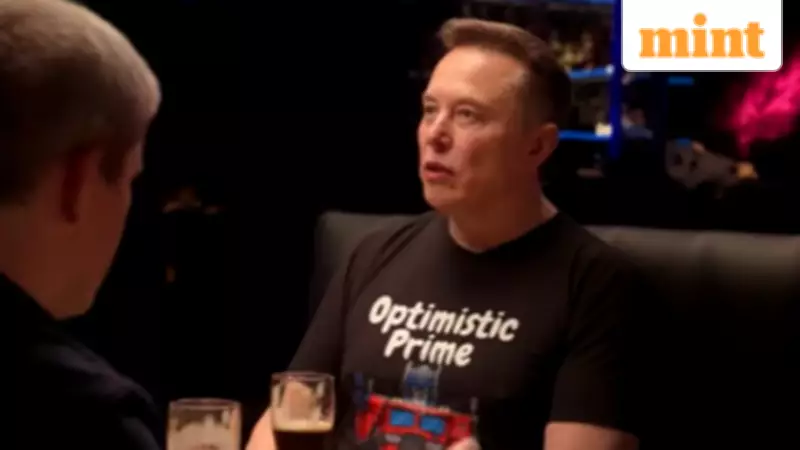
In a revealing podcast discussion, the world's wealthiest individual, Elon Musk, has openly admitted to being ensnared by what he terms "pixie dust" resumes during the initial phases of building his companies. The CEO of Tesla and SpaceX shared these insights during a special podcast hosted by Stripe cofounder John Collison and tech commentator Dwarkesh Patel, emphasizing that identifying the ideal employee is far from straightforward.
The Illusion of Instant Success from Big-Name Companies
Musk recounted that in the early years of SpaceX, he personally hired several thousand employees before his schedule no longer permitted such direct involvement. It was during this period that he encountered the pervasive "pixie dust" phenomenon. He described a time when Tesla's leadership and engineering teams were aggressively targeted by recruiters from other firms, operating under the mistaken belief that merely working at the electric vehicle giant endowed employees with a magical success formula.
"I've fallen prey to the pixie dust thing as well, where it's like, 'Oh, we'll hire someone from Google or Apple, and they'll be immediately successful,'" Musk confessed. However, he quickly learned that this is not how it works. "People are people. There's no magical pixie dust. So when we had the pixie dust problem, we would get relentlessly recruited from," he explained, highlighting the flawed assumption that pedigree guarantees performance.

Musk's Evolved Hiring Philosophy: Beyond the Resume
Moving beyond these early missteps, Musk has developed a more nuanced approach to recruitment. He now delegates to his staff the task of seeking out the 'wow factor' in potential hires or compiling "evidence of exceptional ability." His advice is straightforward: "Generally, what I tell people—I tell myself, I guess, aspirationally—is, don't look at the résumé," he stated.
Musk elaborated, "Just believe your interaction. The résumé may seem very impressive…but if the conversation after 20 minutes is not 'Wow,' you should believe the conversation, not the paper." This shift underscores a prioritization of personal engagement and demonstrable talent over mere credentials.
The Core Qualities Musk Now Values in Candidates
Central to his revised hiring criteria is the "goodness of heart." Reflecting on past oversights, Musk noted, "I underweighted that at one point. So, are they a good person? Trustworthy? Smart and talented and hard working? If so, you can add domain knowledge." This holistic evaluation places character and intrinsic qualities ahead of specific technical expertise.
Furthermore, Musk's leadership style, often characterized by micromanagement, extends to his expectations of employees. He made it clear that performance is paramount: "If somebody gets things done, I love them, and if they don't, I hate them. So it's pretty straightforward. It's not like some idiosyncratic thing. If somebody executes well, I'm a huge fan, and if they don't, I'm not." This results-driven attitude reinforces the importance of execution over empty promises.
Elon Musk's journey from being swayed by glittering resumes to focusing on substantive interactions and core values offers a compelling lesson for businesses worldwide. His experiences highlight the critical need to look beyond superficial accolades and instead assess the genuine potential and character of candidates, ensuring a more effective and sustainable hiring process.