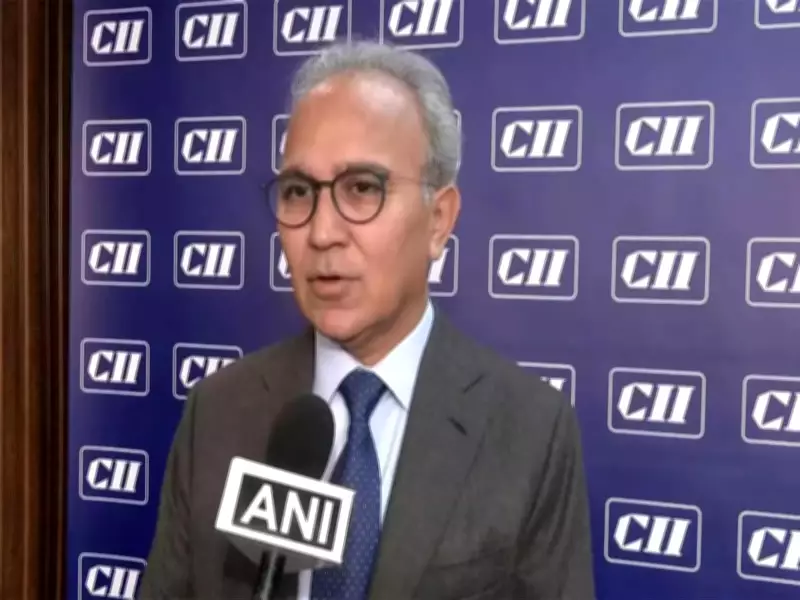
NEW DELHI: Days after chief economic adviser V Anantha Nageswaran expressed concerns over slow growth in corporate investments, CII president Rajiv Memani on Tuesday stated that investment announcements by the corporate sector in FY26 surged by 50% to Rs 41 lakh crore. This growth follows a 20% rise in the gross block of assets recorded in the previous year.
Distinction Between Profitability and Investment
Memani, who also serves as the chairman and CEO of consulting firm EY for the India region, highlighted the need to differentiate between profits from sectors such as pharmaceuticals, IT, and finance, and those from other industries. He noted that conglomerates exhibit strong pipelines with significant investments in energy and utilities. However, uncertainty has made companies cautious, leading them to focus on supply chains, risk management, maintaining strategic buffers, and healthy debt-equity ratios. Investments have experienced a pattern of momentum, slowdown due to disruptions, and subsequent recovery. Overall, companies remain conservative, and large projects often face delays due to approval processes, particularly in sectors like mining where timelines can extend to five to six years.
Sector-Specific Investment Trends
Memani observed substantial investment inflows in sectors such as footwear, especially as foreign players view India as a manufacturing hub. However, he acknowledged that the textiles sector requires further capacity expansion. His comments come after Nageswaran noted that private sector capital formation has been disappointing, despite post-Covid profit increases of over 30% among the top 500 listed companies.

Reducing Imports and Building Resilience
Memani emphasized the need for the government and Indian companies to reduce imports and enhance resilience. The industry body has identified 80-90 products, including electronic components and compressors, for this purpose. When questioned about the lack of domestic investment in these segments, he explained that global supply is abundant, and pricing in India is often unviable due to aggressive pricing strategies by certain countries. Additionally, insufficient global or domestic demand, along with technology availability issues, hinder progress. He called for clear direction through technology transfer, production-linked incentives (PLI), and protective policies.
Overall Economic Outlook
Despite challenges, Memani expressed optimism about how Indian industry is navigating the crisis, noting that the government has responded swiftly to address flagged issues. While it is too early to assess the full impact, some industry players are witnessing signs of a slowdown, with price pressures building partly due to a weaker currency. He added that cost increases have been partially passed on in B2B transactions, but retail prices have seen only marginal rises in most cases.
Key Risks and GDP Forecast
The CII chief identified potential disruptions to logistics and energy markets as key risks. Higher crude prices could pose a significant challenge if global tensions persist, impacting supply chains. He warned that continued disruptions and elevated crude prices would create difficulties. Memani also noted that broader uncertainty has affected financial markets, with IPO activity slowing, capital markets correcting, and currency volatility increasing. While no sharp visible impact has emerged yet, a prolonged crisis could weigh on growth. He pegged GDP expansion for the year at 6.5%.
Policy Recommendations
CII has called for targeted policy support to navigate emerging pressures, including easing non-performing asset (NPA) recognition norms and addressing cost pressures related to freight and logistics. Efficient gas allocation is also seen as critical. Over the longer term, Memani stressed the need to strengthen energy resilience and domestic manufacturing capabilities.