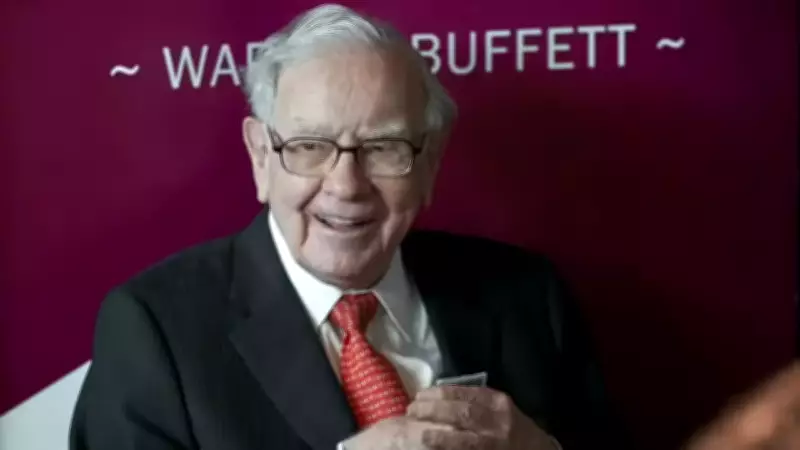
Berkshire Hathaway's $350 Million Investment in The New York Times Signals Major Shift
In a surprising turn of events, Berkshire Hathaway has disclosed a new $350 million investment in The New York Times, marking a stark reversal from Warren Buffett's previous stance on the newspaper industry. This move comes six years after Buffett sold off all of Berkshire's newspapers and predicted unending declines for most of the sector. The investment was highlighted in the quarterly update filed with the Securities and Exchange Commission, covering Buffett's last quarter as CEO before handing over the title to Greg Abel in January.
A Full Circle Moment for Berkshire Hathaway
Tim Franklin, a professor and chair of local news at Northwestern University's Medill School of Journalism, described this as a "full circle moment" for Berkshire Hathaway. He emphasized that it represents a significant vote of confidence in the business strategy of The New York Times. Franklin noted that while the Times has its roots in the newspaper business, it has evolved into a thriving digital powerhouse with over 12 million digital subscribers, popular games like Wordle, and a well-known sports platform called The Athletic.
This development suggests that struggling local newspapers might draw lessons from the Times' transformation into a digital news leader. Franklin pointed out that they could explore offering online games and showcasing unique local sports coverage to attract readers in ways that larger outlets cannot replicate.

Uncertainty Over Investment Decisions and Market Impact
The quarterly stock portfolio filings do not clarify whether Buffett personally made the investment decision or if it was handled by one of Berkshire's other investment managers. Historically, Buffett managed investments worth more than $1 billion, so given the size of this Times investment, it remains uncertain if this was one of his direct bets. Nonetheless, many investors are likely to follow suit due to Buffett's remarkable track record over decades of leading Berkshire.
Following the disclosure, shares of The New York Times jumped nearly 3% in after-hours trading, indicating positive market reception to Berkshire's move.
Other Notable Moves in Berkshire's Portfolio
In addition to the Times investment, Berkshire made several other significant adjustments to its stock holdings in the last quarter of 2025:
- Chevron Investment: Berkshire increased its stake in Chevron by acquiring about 8 million more shares, bringing its total to over 130 million shares in the oil giant. This bet appears well-timed, as Chevron's stock has soared since President Donald Trump promised to reinvigorate Venezuela's oil business. Chevron is the only major American oil company with significant operations in Venezuela, producing approximately 250,000 barrels a day through joint ventures with state-owned Petroleos de Venezuela SA (PDVSA). Since the start of 2026, Chevron's stock is up nearly 19%, partly driven by geopolitical events including the U.S. capture of Venezuela's President Nicolas Maduro.
- Bank of America and Apple Sales: Berkshire sold off roughly 50 million Bank of America shares, though it still holds nearly 81 million shares of the bank, which Buffett first started buying in 2011 during the subprime mortgage crisis. Additionally, Berkshire trimmed about 10 million shares from its massive Apple stake, maintaining nearly 228 million shares at the end of last year.
Broader Context of Berkshire Hathaway's Holdings
Beyond its stock portfolio, Berkshire Hathaway owns dozens of companies outright, including insurance giants like Geico, a collection of major utilities, BNSF railroad, and various manufacturing and retail companies with well-known brands such as Dairy Queen and See's Candy. This diverse portfolio underscores Berkshire's strategic approach to long-term investments across multiple sectors.
The investment in The New York Times not only reflects a shift in perspective on the news industry but also highlights Berkshire's adaptability in navigating evolving market landscapes under new leadership.