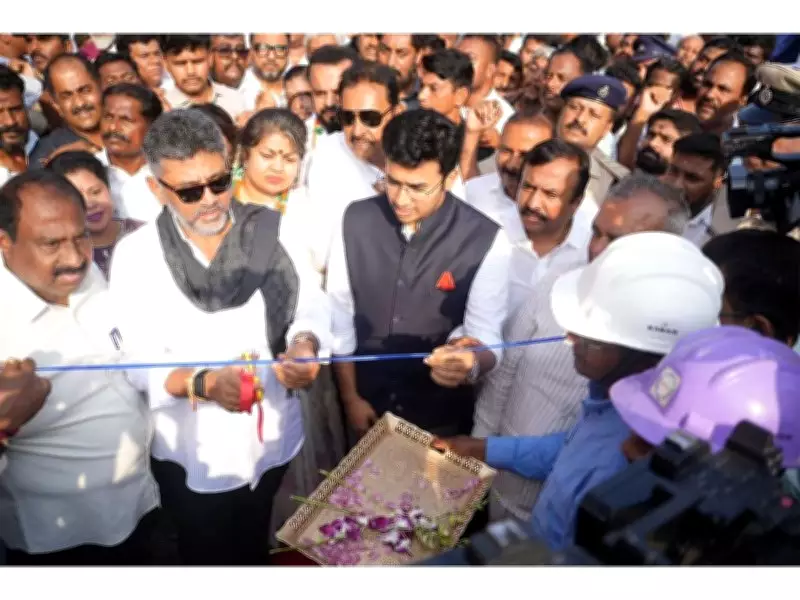
Bengaluru's most difficult metro stretch, built by Afcons Infrastructure at the Silk Board junction, was officially inaugurated on Thursday. The 2.1-kilometer elevated section is part of the city's expanding metro network, aimed at reducing traffic congestion on one of India's busiest roads.
Challenging Construction
The stretch posed significant engineering challenges due to the heavy traffic flow and the need to maintain traffic movement during construction. Afcons employed innovative techniques, including the use of a launching girder and precast segments, to minimize disruption. The project also involved the construction of a station at Silk Board, which is expected to serve thousands of commuters daily.
Key Features
- Length: 2.1 kilometers
- Construction Method: Use of launching girder and precast segments
- Station: Silk Board metro station
- Impact: Expected to reduce travel time and traffic congestion
Benefits for Commuters
The new stretch is expected to significantly cut travel time for daily commuters. With the Silk Board junction being a major bottleneck, the metro line offers a reliable alternative to road transport. The integration with existing metro lines will provide seamless connectivity to other parts of the city.

Future Plans
The Bangalore Metro Rail Corporation Limited (BMRCL) has plans to further extend the network, with several other stretches under construction. The completion of this stretch marks a milestone in the city's efforts to improve public transportation and reduce pollution.
This project is a testament to the engineering capabilities of Afcons and the commitment of the Karnataka government to enhance urban mobility. The inauguration was attended by state officials and metro authorities.