

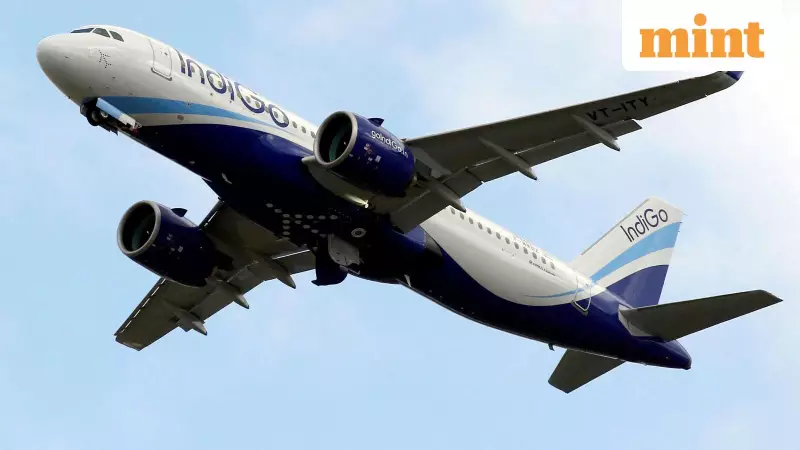
The Airlines' Pilots Association (ALPA) India has raised a stern objection to the aviation safety regulator's decision to grant domestic carrier IndiGo a temporary exemption from stricter night duty rules for pilots. The pilots' body labeled the Directorate General of Civil Aviation's (DGCA) move as "selective and unsafe," warning it sets a dangerous precedent for the industry.
A Controversial Exemption Amid Operational Turmoil
This development comes against the backdrop of widespread flight cancellations by IndiGo, which has caused significant passenger disruption. In a letter to the DGCA on Friday, ALPA India stated that the regulator's decision not only establishes a perilous precedent but also undermines the core principle of the Civil Aviation Requirement (CAR) under which the Flight Duty Time Limitation (FDTL) norms were created.
The association accused IndiGo of seeking relief "on the pretext of passenger inconvenience," despite having knowingly expanded its winter schedule while fully aware of the implementation timeline for the second phase of the revised FDTL norms. ALPA India had earlier this week pointed to a "failure of proactive resource planning" by the dominant airline, suggesting efforts to pressure the regulator into diluting the new rules for commercial benefit.

The Root of the Conflict: Stricter FDTL Norms
The heart of the dispute lies in the latest FDTL regulations, which were rolled out by the DGCA following directives from the Delhi High Court. These norms, introduced in January 2024 with a March 2024 implementation deadline, mandate increased weekly rest periods to 48 hours, extended night hour definitions, and a reduction in permitted night landings from six to just two.
IndiGo was the first airline to oppose these rules when they were announced. Other carriers, including Tata Group-owned Air India, also initially resisted. The norms were implemented in a phased manner after a delay of over a year. While the first phase took effect in July, the more stringent second phase, which includes the critical night landing reduction, was enforced from November 1, 2024.
On Thursday, the DGCA stated it had directed IndiGo to submit the required FDTL relaxations after the airline reported "significant transitional challenges in roster planning and crew availability" under the new Phase-2 requirements.
Pilots' Body Fears a Cascade of Safety Dilution
ALPA India expressed deep concern that the selective exemption for IndiGo will encourage other operators to demand similar dispensations based on their own operational or commercial reasons. "By granting selective exemptions to IndiGo, the DGCA has opened the door for all other operators," the body stated.
The pilots' association revealed that during a meeting with the DGCA on November 24, it was unequivocally agreed that no exemption or variation, especially those driven by commercial interests, would be granted to any airline. The consensus was that FDTL norms exist "solely to safeguard human life" and diluting them would expose pilots, passengers, and aircraft to unacceptable risk.
"Yet, in complete contradiction to this understanding, your office has extended selective dispensation to IndiGo for Phase II implementation, allowing them to operate beyond the safety envelope prescribed by the CAR," ALPA India's letter asserted.
The body also highlighted that Phase II of the norms already included transitional relaxations tailored for operators. Granting IndiGo further, exclusive relief creates a scenario where an airline "already benefiting from relaxed provisions is given additional layers of relaxation on top of it, without any safety justification." ALPA India concluded that such a precedent is "not only indefensible but also dangerous."






